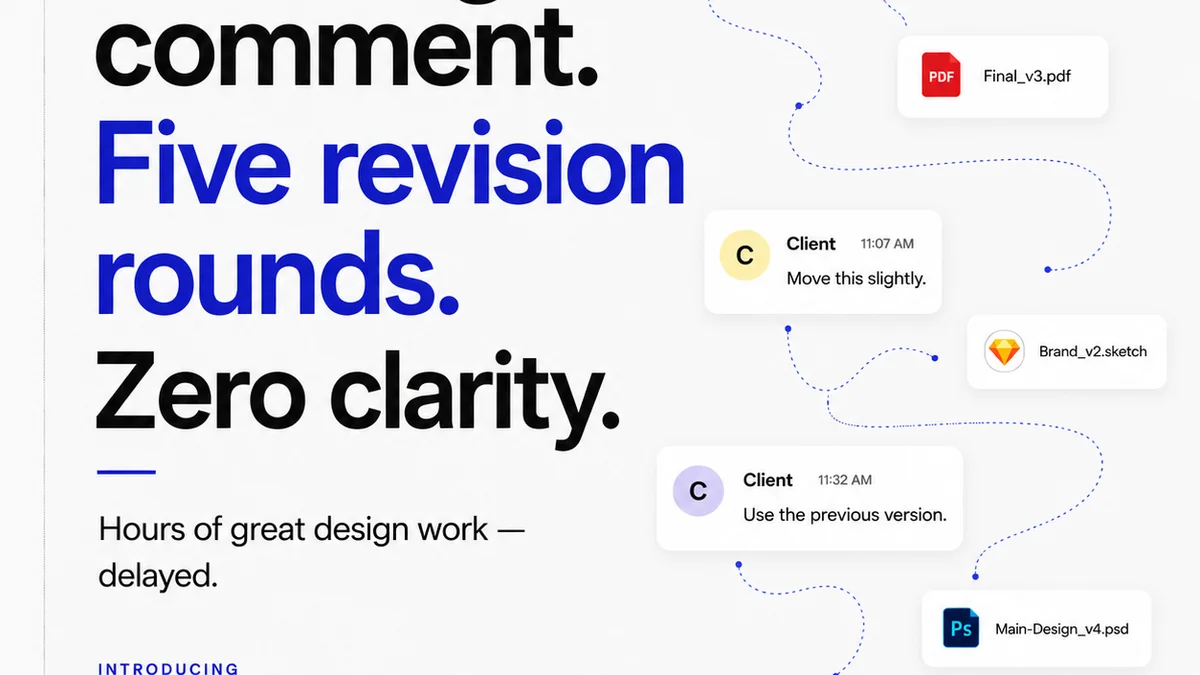
You hear it all the time: enterprise creative teams struggle with asset management. They need better DAMs, more organized folders, and clearer naming conventions.
None of that is wrong. But it’s incomplete.
The real problem isn’t just about finding a file. It’s about the *flow* of creative work, the constant churn of revisions, and the sheer volume of decisions that get lost in the shuffle. Managing thousands of design assets at an enterprise level is less about digital filing cabinets and more about orchestrating a complex ecosystem of people, processes, and projects.
1. The Myth of the Centralized Source of Truth
Everyone wants a single source of truth. And yes, a well-organized Digital Asset Management (DAM) system is crucial. But a DAM is only as good as the inputs and the workflow it supports.
The hard truth is that for enterprise teams, the “single source of truth” often becomes a bottleneck. Why?
- Version Control Nightmares: Even with a DAM, multiple versions of a file can exist outside the system, especially during active review cycles.
- Feedback Silos: Feedback lives in emails, Slack channels, and random meeting notes, not attached to the asset itself.
- Approval Chaos: Who signed off on what, and when? This information often gets buried, leading to downstream confusion.
- Asset Bloat: Without clear governance, every iteration, every rejected concept, and every regional variation adds to the sheer volume, making the system unwieldy.
A DAM is a tool, not a magic wand. Without robust processes around feedback, approvals, and versioning, even the most sophisticated DAM becomes just a very large, very expensive hard drive.
2. The Revision Rollercoaster: Managing Iterations at Scale
Enterprise creative projects aren't single sprints; they're marathons with countless pit stops. Managing revisions for thousands of assets across multiple campaigns, regions, and product lines is where operational efficiency truly breaks down.
Think about a global product launch. You’ve got:
- Core campaign assets (hero images, videos, ad copy).
- Localized versions for dozens of markets.
- Product-specific variations for different SKUs.
- Legal and compliance reviews at each stage.
- Marketing, sales, and product team feedback loops.
Each asset can go through dozens, sometimes hundreds, of revisions. Tracking these changes, ensuring the right stakeholders are reviewing the correct version, and preventing outdated assets from slipping into production is a monumental task.
The Cost of “Good Enough” Feedback
When feedback is scattered, it’s easy to miss critical comments or misinterpret instructions. This leads to:
- Re-work: Teams have to go back and redo work because a crucial piece of feedback was missed.
- Delayed Launches: Approval cycles get extended because stakeholders can’t easily find or agree on the latest version.
- Inconsistent Brand Messaging: Different teams or regions might end up using slightly different, unapproved versions of assets.
This isn't just inefficient; it’s expensive. Time spent chasing feedback and correcting errors is time not spent on creating great work or driving revenue.
3. The Visibility Deficit: Who Approved What and When?
Imagine a legal team needing to audit a campaign’s approvals months after launch. Or a marketing manager trying to understand why a specific asset was approved, only to be flagged later.
Without clear, centralized records, this is a common headache.
The assumption is that an “approved” stamp means it’s done. But in reality, approvals can be:
- Informal: A quick email nod, a Slack message.
- Partial: Approved by one stakeholder but not another.
- Unrecorded: Approved verbally in a meeting with no follow-up.
- Version-Specific: Approved, but not the *final* final version.
This lack of clear, auditable trails creates significant risk. It opens the door to compliance issues, brand missteps, and disputes over responsibility.
The Operational Fallout
When approval history is murky, teams spend valuable time:
- Chasing down original approvers.
- Reconstructing decision trails.
- Dealing with the fallout of unapproved or incorrectly approved assets.
This isn't just a compliance problem; it's a workflow killer that erodes trust and slows down the entire creative pipeline.
4. The Collaboration Conundrum: Bridging Gaps Between Teams
Enterprise creative teams don’t operate in a vacuum. They interface with marketing, product, sales, legal, and external agencies. Each group has its own tools, priorities, and communication styles.
Getting everyone on the same page regarding creative assets is a perpetual challenge.
Consider the friction points:
- Tool Overload: Marketing uses their project management software, legal uses email, and creative uses their design tools and maybe a DAM.
- Communication Breakdowns: Feedback gets lost in translation between different platforms and departments.
- Misaligned Expectations: What one team considers final, another might see as a draft needing further input.
This disconnect means that even with thousands of assets meticulously organized, the process of getting them *approved* and *used* correctly becomes a series of complex, manual handoffs.
The True Cost of Disconnected Workflows
When collaboration is fragmented, the result is:
- Wasted effort on duplicate tasks.
- Extended timelines due to miscommunication.
- Frustration among team members and stakeholders.
- A higher likelihood of errors and brand inconsistencies.
The most efficient teams aren't just good at creating assets; they're masters at coordinating the *people* and *processes* involved in getting those assets across the finish line.
Where Revue Fits In
Managing thousands of design assets isn't just about storage; it's about managing the entire lifecycle of creative work. It requires a system that brings clarity and control to the chaos of feedback, revisions, and approvals.
Revue provides that centralized hub.
Instead of assets living in silos and feedback scattered across a dozen platforms, Revue allows enterprise teams to:
- Centralize Feedback: All comments and annotations live directly on the asset, visible to everyone involved. No more hunting through emails or Slack.
- Track Revisions and Approvals: Every version is logged, and every approval is timestamped and tied to the specific stakeholder. This creates an irrefutable audit trail.
- Streamline Quality Checks: Ensure that only finalized, approved assets move forward, reducing the risk of errors and brand dilution.
- Improve Collaboration: Bridge the gap between creative teams and stakeholders by providing a single, clear platform for review and sign-off.
By focusing on the *process* around the assets, Revue helps enterprise teams move faster, reduce errors, and ensure brand consistency, no matter the scale.
Final Thought
The enterprise creative asset challenge isn't a tech problem; it's a workflow problem. Are your systems and processes designed to facilitate the *flow* of creative work, or are they just adding layers of complexity?
Frequently asked questions
What's the difference between a DAM and a workflow tool?
A Digital Asset Management (DAM) system is primarily for storing, organizing, and retrieving assets. A workflow tool, like Revue, focuses on the processes *around* those assets, such as feedback, revisions, and approvals, often integrating with or complementing a DAM.
How can we prevent outdated assets from being used?
Implement clear version control within your system, establish strict approval gates before assets are considered final, and ensure all stakeholders are trained on the correct workflow. Centralizing feedback and approvals on the asset itself is key.
Is a DAM system necessary for enterprise asset management?
A DAM is highly recommended for organizing and storing large volumes of assets. However, it's not sufficient on its own. You also need robust processes for feedback, revisions, and approvals to manage the lifecycle effectively.
How do we get buy-in for a new asset management process?
Focus on the pain points your stakeholders experience: wasted time, confusion, and rework. Demonstrate how a streamlined process (and the right tools) will save them time, reduce errors, and improve outcomes. Quantify the benefits where possible.