Everyone talks about enterprise collaboration. They point to fancy software suites, endless Slack channels, and the promise of seamless teamwork. It sounds good. It sounds like progress.
None of that is wrong. But it’s incomplete.
The real challenge for enterprise creative teams isn't adopting new tools. It's mastering the fundamental disciplines that make collaboration effective, especially when you're dealing with complex projects, multiple stakeholders, and the sheer volume of work that comes with being an enterprise operation.
The Hard Truth: Collaboration is a Function of Clarity, Not Just Connection
The prevailing assumption is that more connection equals better collaboration. More meetings, more messages, more platforms. The reality is that without clear processes and defined roles, more connection just means more noise. It means more confusion, more wasted time, and ultimately, lower quality creative output.
Enterprise creative teams operate at a different scale. The stakes are higher. The feedback loops are longer. The potential for miscommunication is exponentially greater. This isn't about finding the perfect app; it's about building a robust operational framework.
1. Define the Feedback Genome
Feedback is the lifeblood of creative work. But in an enterprise setting, it can also be a black hole. Who gives it? When do they give it? What kind of feedback is it? And how is it documented?
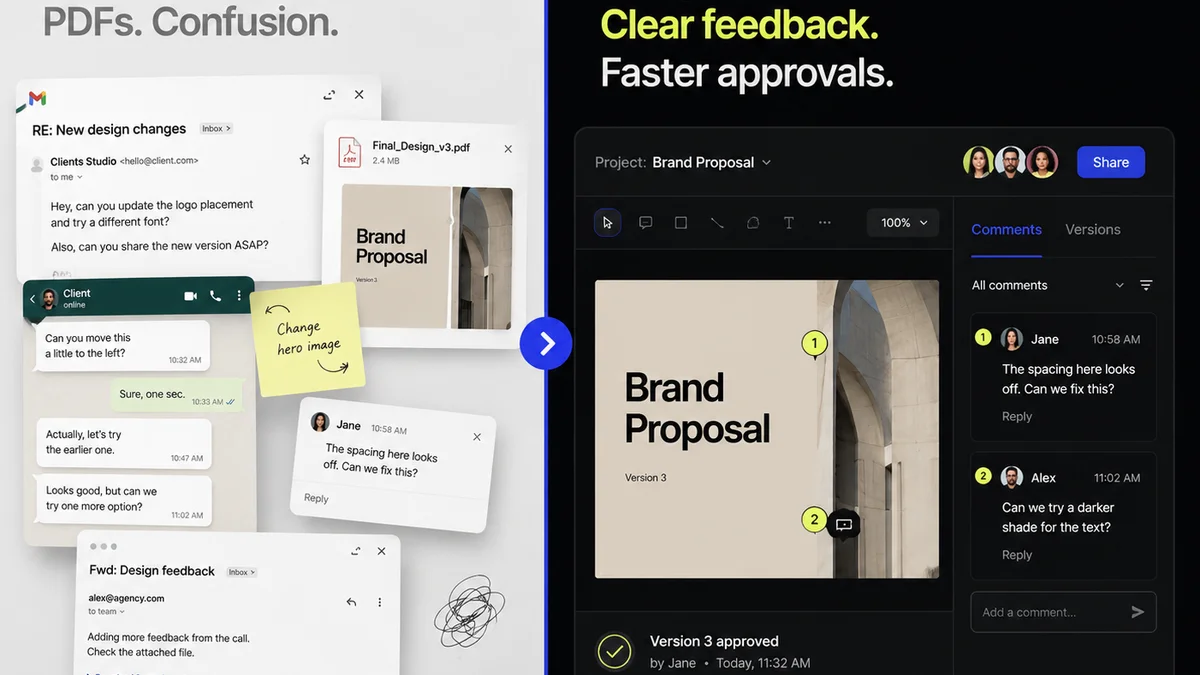
The Symptom: Feedback Chaos
You know the signs:
- Emails buried under other emails.
- Comments lost in shared docs or PDFs.
- Verbal feedback that evaporates.
- Conflicting instructions from different stakeholders.
- Endless revision rounds because the core issue was never addressed.
Frequently asked questions
What's the biggest mistake enterprises make with creative collaboration?
Focusing solely on technology adoption without establishing clear processes and ownership for feedback and revisions. More tools don't automatically mean better collaboration; clear workflows do.
How can large creative teams manage conflicting feedback from multiple stakeholders?
Implement a structured feedback process with designated feedback rounds, clear roles for who provides final approval, and a central platform to document all input. This makes conflicting feedback visible and manageable, not just a source of confusion.
What are the key elements of an effective creative brief for enterprise projects?
A strong brief includes clear objectives, target audience definition, key messaging, deliverable specifications, mandatory elements, and defined success metrics. It should also clearly outline the approval process and key stakeholders.
How does Revue help enterprise creative teams with collaboration?
Revue provides a centralized platform to manage client feedback, track revisions, and streamline approvals. This reduces miscommunication, ensures all feedback is documented, and provides clear visibility into the project's status, saving time and reducing errors.