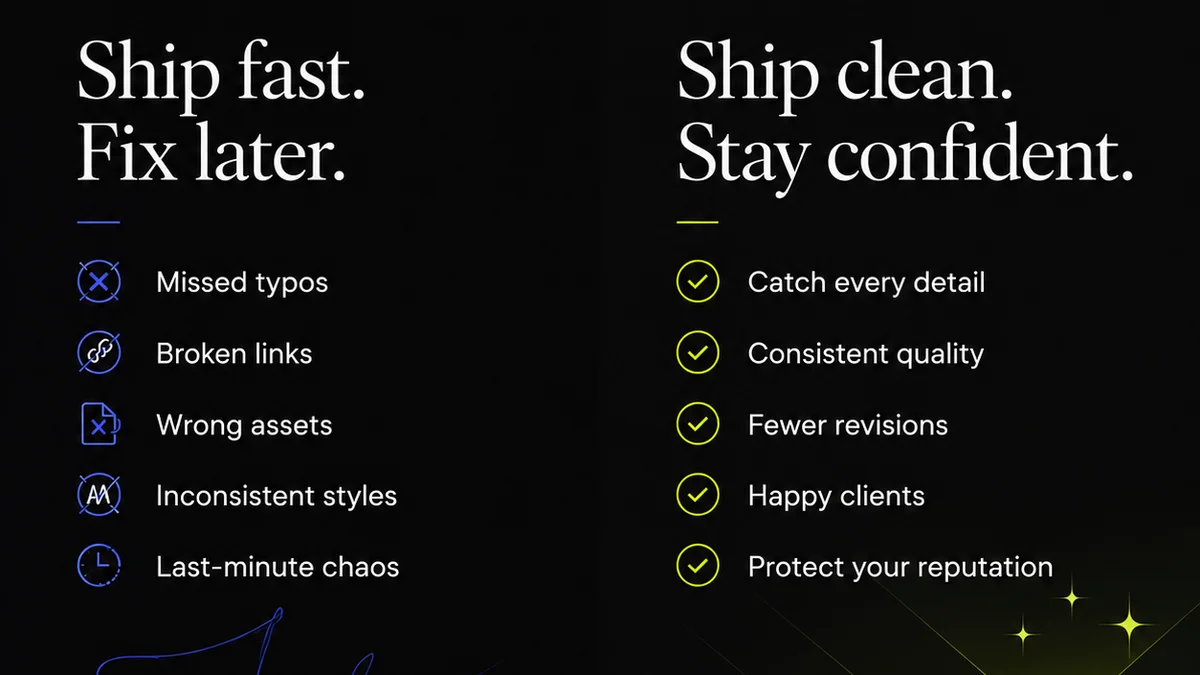
Everyone talks about streamlining creative operations. They’ll tell you to implement better project management tools, hold more efficient meetings, and set clear briefs. And none of that is wrong. But it’s incomplete.
The real challenge for enterprise creative teams isn’t just about adopting new software or processes. It’s about fundamentally rethinking how creative work flows through a massive, complex organization. It’s about bridging the gap between creative vision and business objectives at scale.
The hard truth? You can have the best tools in the world, but if your operational framework isn’t built for the realities of enterprise, you’ll still be drowning in bottlenecks and missed deadlines. Let’s cut through the noise.
1. The Illusion of Centralization
Many enterprise creative teams aim for centralization. They want a single hub for all creative requests, assets, and feedback. This sounds like a silver bullet.
But true centralization in an enterprise isn't just about a tool. It's about a unified understanding of what 'centralized' actually means across dozens of departments, hundreds of stakeholders, and multiple global locations.
The Silo Effect is Real
Even with a central team, individual business units or regional offices often develop their own informal creative workflows. They might bypass the central team entirely for speed, or because they feel the central team doesn't understand their specific needs.
- Marketing teams launching regional campaigns.
- Product teams needing quick asset updates.
- Sales teams requiring last-minute collateral.
- Legal departments with specific review protocols.
These aren't necessarily acts of rebellion; they're often pragmatic responses to perceived organizational friction.
Beyond the Tool
A centralized tool is only effective if it’s adopted and respected as the single source of truth. This requires more than just IT implementation. It demands:
- Clear communication of the centralized process.
- Training tailored to different user groups.
- Demonstrable value: showing how the central process saves time and reduces errors.
- Executive sponsorship to reinforce the importance of using the system.
Without these, your centralized system becomes just another place to store files, not a functional hub.
2. Feedback Loops: The Enterprise Black Hole
Client feedback is the lifeblood of creative work. For enterprise teams, this feedback comes not from one client, but from a multitude of internal stakeholders, each with their own priorities and perspectives.
The common assumption is that collecting feedback is the hard part. The deeper truth is that *managing* and *synthesizing* that feedback effectively at scale is the real operational Everest.
The Stakeholder Stampede
Imagine a major product launch. You might have:
- Product Marketing providing strategic direction.
- Brand Management ensuring consistency.
- Sales leadership focused on conversion messaging.
- Legal and Compliance reviewing for risk.
- Regional teams adapting global assets.
Each group has valid input. But when it all lands in one inbox or document, it can become a cacophony. Conflicting feedback is common. Who has the final say? How do you prioritize?
From Noise to Signal
Effective enterprise operations require a structured approach to feedback:
- Defined Roles: Who is the ultimate approver for each type of creative asset?
- Feedback Windows: When is feedback due? Late feedback has a cost.
- Consolidated Channels: All feedback should ideally come through one system, not a dozen email threads and Slack messages.
- Revision History: Understanding the evolution of feedback is crucial for context and accountability.
Without this structure, revisions become endless, subjective, and incredibly inefficient.
3. Revision Management: The Endless Cycle
Revisions are inevitable. They’re part of the creative process. But for enterprise teams, they can quickly spiral out of control, consuming resources and delaying critical go-to-market timelines.
The assumption is that managing revisions means tracking versions. The reality is that managing revisions effectively means managing the *process* and *scope* of changes.
The Scope Creep Monster
A seemingly small revision request can snowball. A stakeholder asks for a minor text change, which necessitates a layout adjustment, which then leads to questions about imagery, which then flags a need for legal review on a new tagline. Before you know it, a simple update has become a mini-project.
Controlling the Chaos
Enterprise creative operations need mechanisms to control revision creep:
- Clear Sign-offs: Every stage of the creative process should have a defined sign-off point.
- Revision Budgets: For larger projects, establish a set number of revision rounds included in the initial scope.
- Change Request Forms: Formalize requests for changes outside the original scope, allowing for assessment of impact and cost.
- Version Control: A clear, accessible history of all approved versions and the changes made.
This isn’t about stifling creativity; it’s about ensuring that changes are intentional, documented, and manageable within project constraints.
4. Quality Assurance: Beyond the Spell Check
Many assume quality assurance (QA) in creative operations is just about proofreading copy or checking for broken links. For enterprise teams, QA is a much broader, more strategic function.
The deeper truth is that QA is about ensuring creative output not only meets brand standards but also achieves its business objectives and adheres to all relevant regulations.
The Enterprise QA Matrix
Enterprise creative must navigate a complex web of requirements:
- Brand Guidelines: Ensuring absolute adherence to logos, colors, typography, and tone of voice.
- Legal & Compliance: Scrutinizing claims, disclaimers, and industry-specific regulations.
- Technical Specifications: Verifying correct file formats, resolutions, and platform requirements.
- Campaign Objectives: Does the creative effectively communicate the intended message and drive the desired action?
- Accessibility Standards: Ensuring content is usable by people with disabilities.
A simple visual check isn't enough. It requires a systematic, multi-faceted approach.
Building a Robust QA Process
Effective QA in enterprise settings involves:
- Checklists: Standardized lists for different asset types and channels.
- Dedicated QA Roles: Individuals or teams specifically responsible for quality control.
- Automated Tools: Where possible, leverage technology for checks (e.g., accessibility scanners, brand compliance software).
- Cross-Functional Review: Involving subject matter experts from Legal, Compliance, or Product teams.
High-quality creative output is a business imperative, not an optional extra.
5. Asset Management: The Digital Hoard
Enterprise creative teams generate vast amounts of assets – logos, images, videos, presentations, templates, and more. The assumption is that a shared drive or a basic cloud storage solution is sufficient.
The hard truth is that poor asset management cripples efficiency, increases risk, and stifles brand consistency. It creates a digital hoard, not a usable library.
The Discovery Problem
When teams can’t find the right asset quickly, they either:
- Recreate existing assets: This is a massive waste of time and money.
- Use outdated or incorrect assets: This leads to brand dilution and potential compliance issues.
- Spend excessive time searching: Time that could be spent on strategic creative work.
A disorganized asset library is a productivity killer.
From Hoard to Hub
A true Digital Asset Management (DAM) strategy for enterprise involves:
- Centralized Repository: A single source of truth for all approved creative assets.
- Robust Tagging and Metadata: Making assets easily searchable with relevant keywords.
- Version Control: Ensuring users always access the latest approved version.
- Permissions and Access Control: Managing who can view, download, or upload assets.
- Usage Rights Management: Tracking licenses and expiration dates for assets like stock photography.
A well-managed asset library is the bedrock of efficient creative operations.
Where Revue Fits In
Enterprise creative operations are complex. The core challenges revolve around managing feedback, revisions, approvals, and ensuring the quality and accessibility of creative assets across a large organization.
This is precisely where a platform like Revue can make a significant impact. By centralizing client feedback, you eliminate the chaos of scattered emails and messages, ensuring all stakeholders are commenting in one place, on the correct version.
Revue provides clear visibility into the revision and approval process. Stakeholders can see the status of their requests, and creative teams gain an auditable trail of decisions, reducing ambiguity and speeding up sign-offs.
Furthermore, by facilitating structured review cycles, Revue helps enforce quality checks and brand compliance before assets go live. It’s not just about faster approvals; it’s about smarter, more controlled creative production.
Final Thought
Enterprise creative operations aren't just about creative output; they are about the *business* of creativity. Are your operational frameworks designed to amplify creative impact, or are they inadvertently stifling it? The answer lies not in adopting more tools, but in refining the underlying processes that govern how creative work gets done.
Frequently asked questions
What's the biggest misconception about enterprise creative operations?
The biggest misconception is that simply adopting new project management software solves all problems. While tools are important, the real challenge lies in adapting operational frameworks to the complexities of large organizations, managing stakeholder feedback, and ensuring consistent brand application across diverse teams.
How can enterprise teams manage conflicting stakeholder feedback?
Establish clear roles and responsibilities for feedback and final approvals. Define specific feedback windows and use a centralized platform to consolidate all comments, making it easier to track, prioritize, and resolve conflicting input. Executive sponsorship is key to enforcing these processes.
What is 'scope creep' in creative operations, and how can it be prevented?
Scope creep occurs when the project's requirements expand beyond the original agreement, often through a series of small, unmanaged changes. Prevention involves clear initial project briefs, defined revision rounds, formal change request processes for out-of-scope work, and rigorous sign-offs at each project stage.
Why is asset management crucial for enterprise creative teams?
Effective asset management ensures that teams can quickly find, use, and reuse approved creative assets. Poor management leads to wasted time recreating existing assets, using outdated or incorrect files (damaging brand consistency), and increases overall production costs and risks.