Everyone talks about ROI. For enterprise creative teams, it’s the holy grail. The assumption is simple: if you can track it, you can improve it. And that’s not entirely wrong.
But it’s incomplete. Focusing solely on easily quantifiable metrics misses the forest for the trees. The real ROI of creative work isn't just about clicks and conversions. It's about impact, efficiency, and strategic alignment.
The hard truth? True creative ROI for enterprise teams lies in understanding and optimizing the *entire* creative lifecycle, from brief to deployment and beyond. It’s about reducing friction, increasing speed, and ensuring creative output directly fuels business objectives.
1. Redefining Creative ROI: It’s Not Just About the End Result
We’re conditioned to think of ROI as a simple equation: Gain from Investment / Cost of Investment. For creative, this often translates to campaign performance metrics. Did the ad drive sales? Did the website redesign boost conversions?
These are vital. But they’re only part of the story.
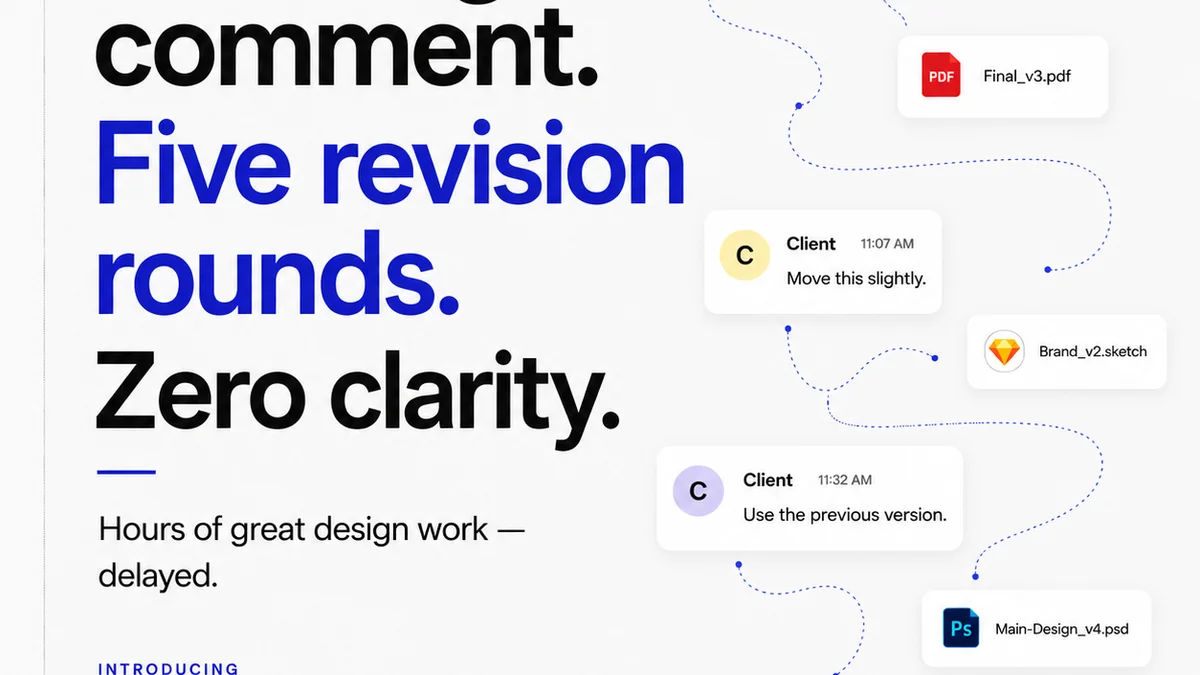
What about the cost of *getting there*? The hours spent in endless revision loops? The miscommunication that leads to costly re-shoots? The internal resources tied up waiting for approvals?
This is where the real drain on enterprise creative budgets occurs. Ignoring these operational costs means you’re leaving massive value on the table.
The Hidden Costs of Inefficiency
- Excessive revision rounds that bloat timelines and budgets.
- Lack of clear creative briefs leading to rework.
- Siloed teams and communication breakdowns.
- Manual, time-consuming approval processes.
- Underutilized creative talent stuck on administrative tasks.
- Missed market opportunities due to slow deployment.
These aren't just minor annoyances. They are direct detractors from your creative ROI. They inflate the 'Cost of Investment' part of the equation significantly.
2. Mapping the Creative Workflow: Identifying Bottlenecks
You can’t optimize what you don’t understand. The first step to improving creative ROI is a brutally honest assessment of your current workflow.
Where does time actually get spent? Where do projects get stuck? Who owns each stage? Documenting this is crucial.
Key Stages to Scrutinize
Break down your entire creative process into its core components:
- Briefing and Strategy
- Concepting and Ideation
- Design and Production
- Internal Reviews and Stakeholder Feedback
- Client/External Approvals
- Asset Management and Deployment
- Performance Analysis and Iteration
For each stage, ask the tough questions:
- How long does this stage typically take?
- What are the common points of failure or delay?
- What tools are used, and are they integrated?
- Who is involved, and what are their roles?
- How is feedback collected and actioned?
- Are there clear decision-makers at each gate?
This isn't about blame. It's about data. You need to see the friction points clearly to address them strategically.
3. Quantifying Operational Efficiency: The Unsung Hero of ROI
Once you’ve mapped your workflow, you can start quantifying the costs associated with inefficiency. This is where many enterprise teams fall short, focusing only on the 'output' metrics.
Consider the time spent by your most valuable creatives not creating, but managing feedback, chasing approvals, or deciphering vague comments. What is that hourly rate multiplied by hours wasted?
Consider the cost of a project delay. If a product launch is pushed back by two weeks due to creative bottlenecks, what’s the tangible revenue impact?
Metrics That Matter Beyond Campaign Performance
- Cycle Time: The total time from project initiation to final delivery.
- Revision Count: Average number of revision rounds per project.
- Approval Latency: Time taken for stakeholders to provide feedback/approvals.
- Resource Utilization: Percentage of time creatives spend on core tasks vs. administrative overhead.
- Rework Percentage: Amount of work that needs to be redone due to initial errors or misinterpretations.
Tracking these operational metrics provides a clear picture of where your creative investment is being lost. Improving these directly boosts your ROI, even before the campaign even launches.
4. Streamlining Feedback and Approvals: The Speed Multiplier
The feedback loop is often the most notorious bottleneck in enterprise creative workflows. Vague comments, multiple conflicting opinions, and endless email chains kill momentum and inflate costs.
A structured approach to feedback and approvals is non-negotiable for maximizing ROI.
Best Practices for Efficient Feedback
- Centralized Platform: All feedback, comments, and versions in one place. No more hunting through emails.
- Clear Roles: Define who provides feedback at each stage. Limit the number of decision-makers.
- Contextual Comments: Feedback should be directly tied to the creative asset. Annotations on the work itself are gold.
- Version Control: Easily track changes and revert if necessary. See the evolution of the work.
- Defined Turnaround Times: Set clear expectations for how quickly feedback will be provided.
- Decision Trails: Every approval and rejection should be logged, with reasons.
When feedback is clear, actionable, and efficiently managed, your team can iterate faster, make better decisions, and move projects to completion with significantly less friction.
5. Aligning Creative with Business Goals: Strategic Impact
The ultimate measure of creative ROI is its contribution to overarching business objectives. Is the creative work driving brand perception, market share, customer loyalty, or revenue growth?
This requires a tight link between creative strategy and business strategy. Creatives need to understand the 'why' behind the 'what'.
Connecting Creative to Business Outcomes
- Clear Briefs: Every project starts with a brief that explicitly states business objectives, target audience, and key performance indicators (KPIs).
- Performance Tracking: Link creative assets directly to the business metrics they are intended to influence. Use UTM parameters, dedicated landing pages, and A/B testing.
- Post-Campaign Analysis: Go beyond vanity metrics. Analyze how the creative performed against the initial business goals.
- Feedback Loops to Strategy: Use performance data to inform future creative briefs and strategies.
When creative is strategically aligned, its impact is amplified. It’s not just about producing beautiful assets; it’s about producing assets that *work* for the business. That’s a powerful driver of ROI.
Where Revue Fits In
Managing complex enterprise creative workflows demands tools that bring clarity and control. This is precisely where Revue excels.
Revue acts as the central nervous system for your creative process. It provides a single source of truth for all creative assets, feedback, and approvals.
- Centralized Feedback: Eliminate scattered email threads and Slack messages. All stakeholder comments are logged directly on the creative asset, in context.
- Revision Visibility: Track every iteration and decision. Understand the history of changes and who approved what, and when. This transparency reduces ambiguity and speeds up approvals.
- Quality Checks: Ensure brand consistency and adherence to brief requirements through clear review stages and annotation tools.
- Streamlined Approvals: Define clear approval workflows, assign reviewers, and get timely sign-offs, reducing costly delays.
By centralizing and streamlining these critical functions, Revue helps enterprise teams reduce operational friction, accelerate timelines, and ultimately, improve the measurable ROI of their creative output.
Final Thought
Are you measuring the true cost of your creative process, or just the cost of your output? The difference is where real efficiency and impactful ROI are found.
Frequently asked questions
What is the most overlooked aspect of creative ROI for enterprise teams?
The most overlooked aspect is the operational cost of the creative process itself – time spent on revisions, approvals, communication, and rework. Focusing solely on campaign performance metrics ignores these significant drains on resources and budget.
How can enterprise teams effectively measure the ROI of creative work?
Measure both output metrics (campaign performance, conversions) and operational efficiency metrics (cycle time, revision count, approval latency). Crucially, align creative output directly with specific business objectives and track its contribution to those goals.
What are the biggest bottlenecks in enterprise creative workflows?
Common bottlenecks include unclear briefs, scattered feedback across multiple channels, lengthy and undefined approval processes, a lack of clear decision-makers, and inefficient version control. These lead to delays and increased costs.
How does centralized feedback improve creative ROI?
Centralized feedback consolidates all comments and annotations onto the creative asset itself, providing context and eliminating the need to sift through emails or messages. This clarity speeds up revisions, reduces misinterpretations, and accelerates the approval process, directly cutting down on wasted time and resources.