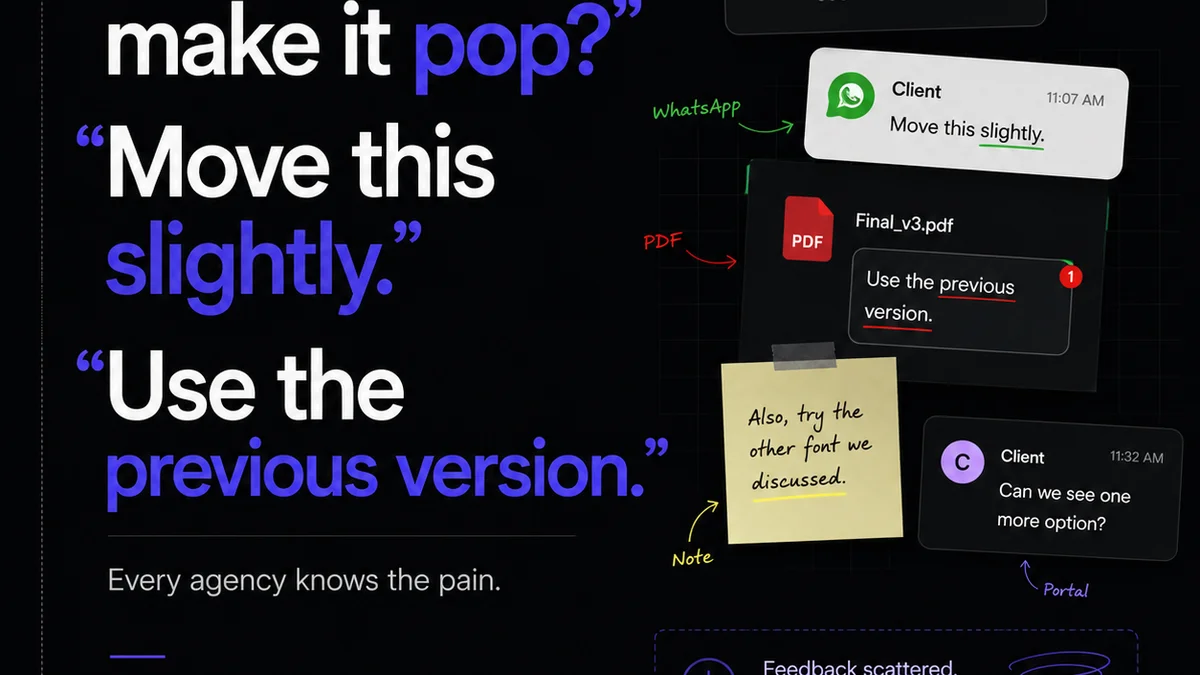
Everyone thinks client reviews are about managing expectations. That creatives need to be better listeners, or clients need to be more concise. That a clearer brief solves everything.
None of that is wrong. But it’s incomplete.
The real problem with client reviews in enterprise settings isn’t about communication styles. It’s about broken workflows and a lack of centralized control.
Large organizations have complex hierarchies, multiple stakeholders, and often, a slow-moving internal culture. This creates a perfect storm for review cycles that drag on, breed confusion, and ultimately, compromise creative quality.
Let’s cut through the noise. Here’s how enterprise creative teams can actually nail client reviews.
1. Centralize All Feedback, Always
Scattered feedback is the enemy of efficiency. When comments live in emails, Slack threads, PDF annotations, and even whispered hallway conversations, you’re setting yourself up for disaster.
This isn’t just messy; it’s a recipe for missed feedback and conflicting directives. Imagine a client’s marketing director approving a campaign direction, only for legal to flag it weeks later through a separate channel.
The Single Source of Truth
Your team needs a single, accessible place for all client feedback. No exceptions.
This means establishing a dedicated platform where every comment, every revision request, and every approval decision is logged and visible to relevant parties.
- Email chains get lost.
- Slack messages are ephemeral.
- Verbal agreements are forgotten.
- Spreadsheets become outdated.
A centralized system ensures that everyone is working from the same, up-to-date information. It eliminates the “he said, she said” and brings clarity to the review process.
2. Define Clear Roles and Responsibilities
In large enterprises, stakeholders multiply. You might have the primary client contact, a department head, a legal reviewer, a brand compliance officer, and several other subject matter experts.
Without clear guidelines, everyone feels empowered to chime in, often with conflicting priorities.
Who Has the Final Say?
This is critical. You need to know, definitively, who the ultimate decision-maker is for each project or phase.
It’s not enough for the client contact to say they’ll “run it by legal.” You need to know *when* legal will review, *what* their specific concerns are, and *who* is responsible for getting that sign-off.
- Primary client contact for general direction.
- Department head for strategic alignment.
- Legal/Compliance for risk assessment.
- Brand manager for consistency.
Establish this upfront. Document it. Communicate it to both the client team and your internal stakeholders.
This prevents scope creep disguised as feedback and ensures that revisions are consolidated, not duplicated.
3. Standardize the Review Process
A haphazard review process breeds inconsistency and delays. Enterprise teams need a predictable, repeatable system.
This involves setting clear expectations for the client and structuring your internal workflow accordingly.
Establish Review Cadence and Turnaround Times
When will feedback be collected? How long does the client have to provide it? How long does your team need to implement it?
Define specific windows for feedback. For example, “We will send the draft for review by EOD Friday. Please provide consolidated feedback by EOD Wednesday of the following week.”
Internal turnaround is just as important. Once feedback is received, your team needs a defined period to address it before the next round.
Use Standardized Feedback Forms or Templates
Even within a centralized platform, unstructured feedback can be problematic. Encourage clients (or train your internal liaison) to use a consistent format.
This might include fields for:
- Specific element being commented on (e.g., headline, image, button color).
- Type of feedback (e.g., clarification, minor edit, major change, approval).
- Reasoning or suggestion for change.
This level of detail helps your team understand the *why* behind a request, not just the *what*.
4. Integrate Quality Assurance Early and Often
Too often, QA is an afterthought. It’s the final check before launch, when significant changes are expensive and difficult to implement.
For enterprise clients, whose work often has broad implications, QA needs to be baked into the review process from the start.
Beyond Typo Checks
Quality assurance in this context means ensuring the creative work:
- Meets the original brief and objectives.
- Aligns with brand guidelines.
- Complies with all legal and regulatory requirements.
- Is technically sound (e.g., functional on intended platforms).
- Delivers the intended user experience.
Build checkpoints into your review schedule. Have a dedicated QA resource or process that reviews work *before* it goes to the client for final approval, and again after client revisions are implemented.
This isn’t about slowing down; it’s about preventing costly rework and ensuring the final output is effective and error-free.
5. Manage Stakeholder Expectations Proactively
Enterprise clients have competing priorities. Your creative team’s project might not be at the top of their list.
This can lead to delayed feedback, rushed reviews, and ultimately, a strained relationship.
The Power of the Handoff Meeting
Before kicking off a review cycle, schedule a brief meeting with the key client stakeholders. This is your opportunity to:
- Reiterate the project goals.
- Clarify the specific deliverables for this review round.
- Confirm the feedback deadline and process.
- Answer any immediate questions.
- Set the tone for a collaborative process.
This proactive step ensures everyone is aligned *before* the work is sent out. It reduces the likelihood of surprises and demonstrates your team’s professionalism.
Also, be prepared to educate clients on the impact of their feedback. If a requested change compromises the original strategy, present that data or reasoning clearly.
Where Revue Fits In
Managing these complex review cycles in an enterprise environment demands robust tooling. Spreadsheets and email simply can’t keep pace.
Platforms like Revue are built to address these exact pain points.
By centralizing all client feedback, comments, and approvals in one place, Revue eliminates the ambiguity of scattered communication. Stakeholders can see exactly what feedback has been given, by whom, and what revisions have been made.
This visibility is crucial for enterprise teams juggling multiple stakeholders and complex approval chains. It ensures accountability and provides a clear audit trail.
Furthermore, Revue streamlines the revision and approval process itself. Designers can directly address feedback, track changes, and get clear sign-offs, significantly reducing the chances of misinterpretation or missed steps.
This structured approach not only speeds up delivery but also elevates the quality of the final creative output, ensuring it meets strategic goals and brand standards.
Final Thought
Are enterprise creative teams truly struggling with client communication, or are they grappling with outdated operational processes that can no longer support complex, multi-stakeholder workflows?
The difference is significant. Focusing solely on communication tactics ignores the fundamental need for efficient, centralized systems that can handle the scale and complexity inherent in large organizations.
The future of successful enterprise creative reviews lies not in better talking, but in better systems.
Frequently asked questions
What is the biggest challenge for enterprise creative teams during client reviews?
The biggest challenge is often the complexity of multiple stakeholders, scattered feedback across various channels (email, chat, documents), and a lack of a single source of truth for decisions and approvals, leading to delays and confusion.
How can enterprise teams ensure all stakeholders provide feedback efficiently?
Establish a clear review cadence, define specific feedback deadlines, and use a centralized platform where all feedback can be submitted in a structured format. Proactive communication about the review process and expectations is key.
Why is a centralized feedback platform important for enterprise clients?
A centralized platform provides a single source of truth, ensuring all feedback is captured, visible to relevant parties, and tracked. This eliminates confusion from scattered communication, provides an audit trail, and speeds up the decision-making process.
How does Revue help enterprise creative teams manage revisions?
Revue allows teams to centralize feedback directly on creative assets, track revisions, and manage approval workflows. This visibility ensures that all changes are accounted for and that the team is working from the most current information, reducing errors and rework.
What is the role of Quality Assurance in enterprise client reviews?
QA in enterprise reviews goes beyond simple error checking. It ensures the creative work aligns with strategic goals, brand guidelines, and compliance requirements. Integrating QA early and often prevents costly rework and ensures the final output is effective and error-free.