Everyone talks about design quality. We all nod along, right? Of course, we want great-looking work. We want flawless execution. Clients expect it. Stakeholders demand it.
None of that is wrong. But it’s incomplete.
The real truth about quality assurance in enterprise creative teams isn't about catching every single errant pixel before it goes live. It's about building a robust process that minimizes risk, ensures brand consistency, and keeps the wheels of production turning without grinding to a halt. It’s operational hygiene, not artistic purity.
1. The Myth of the "Final" Review
The common assumption is that a final review is the last gate. A big, important sign-off where everything is checked one last time.
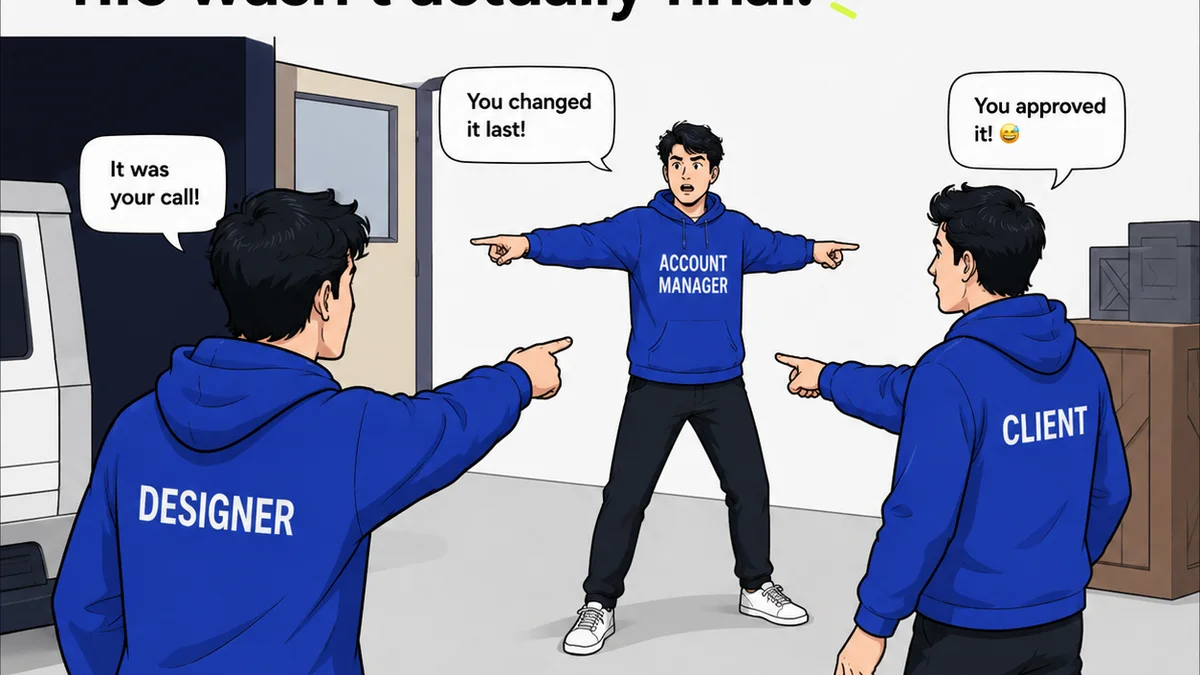
This is where good intentions go to die. The pressure of the deadline, the fatigue of endless revisions, and the sheer volume of work mean that a "final" review often becomes a rubber stamp. It's too late to catch fundamental issues, and minor tweaks become major roadblocks.
The Hard Truth: QA is Continuous, Not a Destination
Quality assurance isn't a single event. It's a continuous thread woven through the entire creative process. It starts with the brief and extends beyond launch.
For enterprise teams, this means embedding QA into every stage:
- Briefing: Is the strategy clear? Are the objectives measurable?
- Concepting: Do the initial ideas align with brand guidelines and business goals?
- Design Development: Are we adhering to established design systems?
- Content Integration: Is copy accurate, on-brand, and properly formatted?
- Technical Build: Is the code clean and responsive?
- Pre-launch Checks: Are all critical user flows functioning as expected?
- Post-launch Monitoring: Are there any unforeseen issues or performance dips?
Treating QA as a separate, final step is a recipe for disaster. It creates bottlenecks and increases the likelihood of costly errors slipping through.
2. Defining "Quality" Beyond Aesthetics
When we say "design quality," what do we actually mean?
Too often, it's just a vague feeling. "It doesn't look right." "It feels off." This subjectivity is the enemy of scalable, consistent QA, especially in large organizations with multiple teams and projects.
The Hard Truth: Quality is About Alignment and Function
For enterprise creative teams, quality has to be defined by concrete criteria. It's about ensuring the work:
- Aligns with Brand Guidelines: Is the logo used correctly? Are the colors and typography consistent? Does it *feel* like our brand?
- Meets Business Objectives: Does it drive conversions? Does it improve user engagement? Does it solve the problem it was designed to solve?
- Functions as Intended: Is it accessible? Is it responsive across devices? Does it load quickly? Is the user experience intuitive?
- Complies with Regulations: Are we meeting legal and accessibility standards (e.g., ADA, GDPR)?
This requires clear, documented standards. A well-maintained design system is your best friend here. It provides a single source of truth for visual elements, interaction patterns, and content standards.
Establishing Measurable Criteria
Move beyond subjective feedback. Develop checklists based on your defined quality pillars. For example:
- Are all interactive elements clearly distinguishable?
- Is sufficient color contrast maintained for all text?
- Is the primary call-to-action prominent and easy to find?
- Has the copy been proofread by a second party?
These aren't just for designers. They're for project managers, copywriters, developers, and anyone else involved in the production pipeline.
3. The Bottleneck of Centralized Approval
Enterprise environments often have layers of approval. This is intended to ensure consistency and mitigate risk.
But it frequently becomes a bottleneck. A single person or small committee is expected to review everything, leading to delays, burnout, and a superficial level of scrutiny.
The Hard Truth: Distribute Responsibility, Centralize Oversight
You can't have one person be the ultimate arbiter of quality for an entire enterprise. It’s not scalable, and it’s not fair.
Instead, empower individuals and smaller teams to own quality within their domain, while maintaining centralized oversight and clear escalation paths.
- Team-Level Ownership: Designers should be responsible for initial adherence to standards. Developers for functional implementation. Copywriters for linguistic accuracy.
- Peer Reviews: Implement structured peer review processes. Two designers reviewing each other's work can catch more than one tired senior designer reviewing a stack of files.
- Subject Matter Experts (SMEs): For specialized areas (e.g., legal, accessibility, localization), involve SMEs early and often. Don't wait for them to be the final gatekeepers.
- Automated Checks: Leverage tools that can automatically check for common issues like broken links, accessibility violations, or code inconsistencies.
The goal is to catch issues as close to their source as possible, when they are easiest and cheapest to fix.
4. The Cost of "Good Enough"
There's a temptation, especially under pressure, to let things slide. "It's good enough." "No one will notice."
This is a dangerous mindset for enterprise brands. The cumulative effect of small compromises can erode brand integrity and customer trust over time.
The Hard Truth: Small Compromises Compound
What seems like a minor deviation today can become the accepted standard tomorrow. This leads to:
- Brand Dilution: Inconsistent visuals and messaging weaken brand recognition and impact.
- Increased Technical Debt: Shortcuts in development lead to harder-to-maintain systems and more bugs down the line.
- Poor User Experience: A collection of minor usability issues creates friction and frustration for users.
- Reputational Damage: Significant errors, especially those related to compliance or security, can be catastrophic.
Enterprise QA isn't about perfection; it's about managing risk and maintaining a consistent, high-quality brand experience at scale. "Good enough" is rarely good enough when the brand's reputation is on the line.
Where Revue Fits In
Managing quality across large, complex enterprise creative projects requires clarity and control. This is where a centralized platform like Revue becomes invaluable.
Revue helps you:
- Centralize Feedback: Instead of scattered emails and Slack messages, all client and stakeholder feedback lives in one place, linked directly to the creative asset. This provides a clear audit trail and reduces miscommunication.
- Manage Revisions and Approvals: Track the entire revision history. See exactly who approved what, when, and what feedback was addressed. This transparency is crucial for accountability and understanding progress.
- Streamline Quality Checks: By having a single source of truth for feedback and revisions, you can build more effective QA workflows. Reviewers can easily see the latest version, compare it against previous iterations, and verify that all required changes have been made.
- Maintain Brand Consistency: With clear version control and feedback loops, it's easier to ensure that all creative outputs adhere to brand guidelines and project requirements, even across multiple teams and deliverables.
Revue isn't a magic bullet for quality. But it provides the operational backbone needed to implement and manage rigorous QA processes effectively in a busy enterprise environment.
Final Thought
Is your enterprise's design QA process a frantic last-minute scramble, or a strategic, integrated part of your production pipeline?
Think about the true cost of errors—not just in time and money, but in brand equity and customer trust. Are your current practices truly safeguarding your brand, or just creating the illusion of control?
Frequently asked questions
What is the primary goal of design QA in an enterprise setting?
The primary goal is to mitigate risk, ensure brand consistency, and guarantee functional quality across all creative outputs, rather than solely focusing on aesthetic perfection before launch.
How can enterprise teams avoid bottlenecks in their QA process?
Avoid bottlenecks by distributing responsibility for quality checks to individual teams and team members, implementing peer reviews, involving subject matter experts early, and leveraging automated checks where possible.
Why is a 'final review' often insufficient for enterprise projects?
A 'final review' is often insufficient because it occurs too late in the process, when issues are costly to fix. Fatigue, pressure, and volume can lead to superficial checks, making it a bottleneck rather than an effective quality gate.
How does a design system help with enterprise QA?
A design system provides a standardized set of components, guidelines, and patterns that serve as a single source of truth, making it easier to ensure visual and functional consistency, which is a key aspect of quality assurance.
Can tools like Revue automate quality checks?
While Revue doesn't directly automate technical code checks, it significantly streamlines the QA process by centralizing feedback, managing revisions, and providing clear version history. This transparency helps teams more effectively perform and track their quality assurance activities.