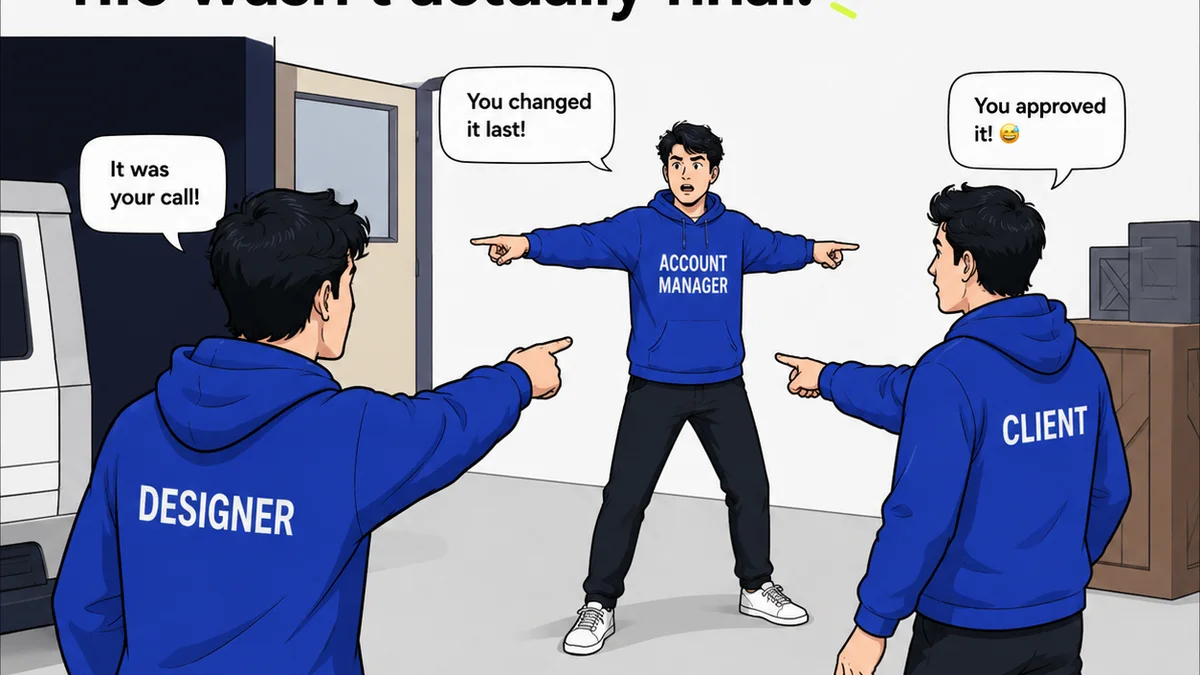
Everyone thinks design Quality Assurance (QA) is about catching typos and broken links. That’s part of it, sure. But for enterprise teams, treating QA as just a final sanity check is a costly mistake. It’s like inspecting a house only after the paint is dry.
The hard truth is that robust design QA is not a phase; it’s an integrated process. It’s woven into every step, from initial concept to final deployment. For large organizations with complex brand guidelines, multiple stakeholders, and high-stakes launches, this continuous approach is non-negotiable.
1. Defining Enterprise-Level Quality
What does
Frequently asked questions
What is the primary goal of a design QA checklist for enterprise teams?
The primary goal is to ensure that all design outputs meet established brand standards, functional requirements, and user experience expectations consistently across all platforms and projects. It's about preventing errors before they become costly problems.
How does design QA differ for enterprise teams compared to smaller businesses?
Enterprise design QA involves managing greater complexity: more stakeholders, stricter brand guidelines, larger user bases, and higher regulatory compliance needs. The QA process must be more systematic, documented, and often involves specialized tools and dedicated teams.
What are the key areas a comprehensive design QA checklist should cover?
A comprehensive checklist should cover: Brand adherence (logos, colors, typography), UI consistency, UX flow logic, accessibility standards (WCAG), performance optimization, cross-browser/device compatibility, content accuracy, and functional integrity.
How can design QA be integrated into the workflow rather than being a final step?
Integration means QA checks happen at multiple stages: during wireframing, prototyping, design mockups, and development. This involves peer reviews, automated checks, and continuous feedback loops, not just a final sign-off.