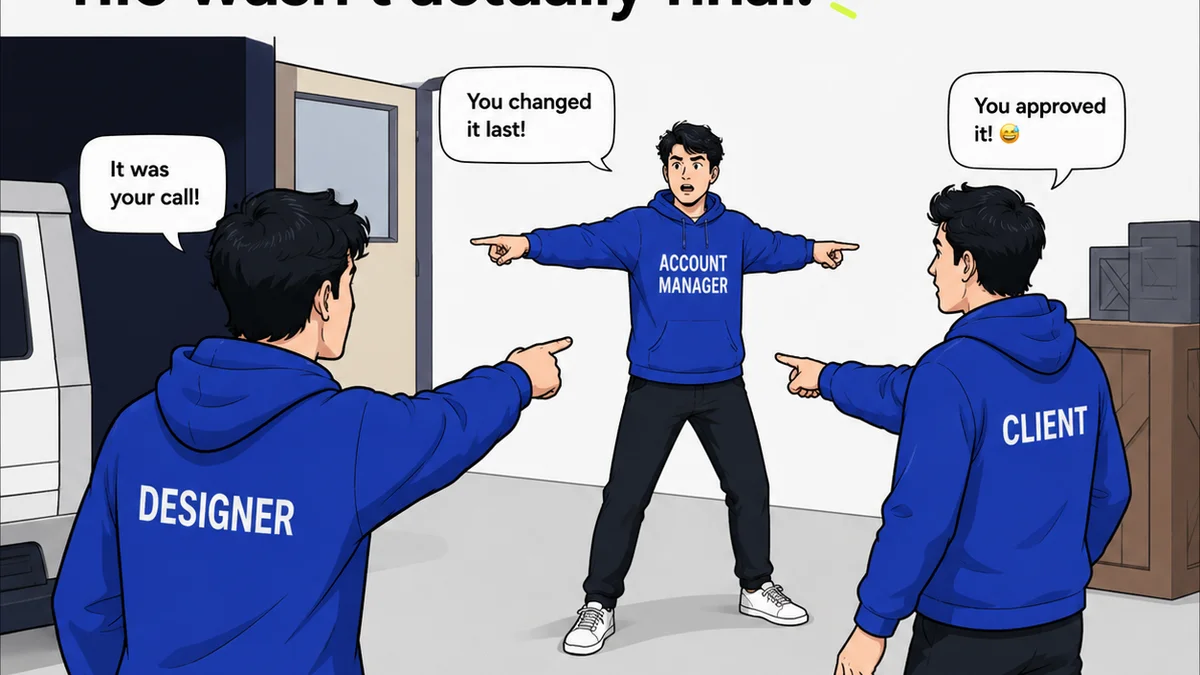
Everyone talks about design quality. They mention brand guidelines, pixel perfection, and maybe accessibility standards. It sounds simple enough. Just check the boxes, right?
None of that is wrong. But it’s incomplete.
For enterprise teams, design QA is less about a final inspection and more about a continuous, integrated process. It’s the operational backbone that ensures consistency, efficiency, and client satisfaction across a high volume of creative work. The real challenge isn't knowing *what* to check, but *how* to build a system that reliably does it, at scale.
1. The Illusion of the Final Check
Many teams treat QA as a gate at the end of the production line. A final review before delivery. This is a relic of simpler times, before the digital deluge and the relentless pace of modern creative work.
This approach creates bottlenecks. It delays projects. It burns out reviewers. And worst of all, it misses issues that could have been caught much earlier, at a fraction of the cost.
The Symptoms of a Stale QA Process
- Last-minute “gotcha” feedback that derails schedules.
- Inconsistent quality across different projects or teams.
- High rates of client revisions requested for issues that should have been caught internally.
- A general feeling of dread around the “final review” stage.
- Wasted time and resources fixing easily preventable errors.
This isn't just annoying; it's a direct drain on profitability and client trust. The hard truth is that a good design QA workflow isn't a phase; it's woven into the fabric of the entire creative process.
2. Building a Scalable QA Framework
Enterprise design QA needs structure. It needs to be repeatable, measurable, and adaptable. This means moving beyond ad-hoc reviews and establishing a codified framework. Think of it as engineering for your creative output.
This framework should cover everything from initial concept to final asset delivery. It’s about defining standards, assigning responsibilities, and implementing tools that support the process.
Key Pillars of an Enterprise QA Framework
- Defined Standards: What does “good” look like? This includes brand consistency, technical specifications (e.g., file formats, color profiles), accessibility compliance (WCAG), and usability heuristics.
- Clear Roles & Responsibilities: Who is responsible for what at each stage? This avoids the “someone else will catch it” mentality.
- Integrated Checkpoints: QA isn't just at the end. It happens at key milestones: brief sign-off, wireframe review, design concept approval, pre-production asset checks, and post-launch monitoring.
- Leveraged Technology: Tools that automate checks, centralize feedback, and track revisions are essential for scale. Manual processes simply don’t cut it for enterprise-level output.
- Continuous Improvement: Regularly review the QA process itself. What’s working? What’s not? Use data and team feedback to refine standards and procedures.
This isn't about stifling creativity. It's about providing guardrails so creativity can flourish without leading to chaos.
3. Integrating QA into the Workflow, Not Just the End
The biggest operational shift for enterprise teams is embedding QA throughout the lifecycle. This means shifting from a gatekeeper mindset to a continuous quality assurance approach.
Every stage of the design process has its own potential pitfalls. Catching them early is the goal.
Stage-by-Stage QA Integration
- Briefing & Strategy: QA starts here. Does the brief clearly define objectives, target audience, and success metrics? Are there any ambiguities that could lead to misinterpretation later? A quick review by a senior strategist or account lead can prevent scope creep and misalignment.
- Concept & Ideation: Are the initial concepts aligned with the brief? Do they explore a sufficient range of solutions? Peer reviews or a quick check-in with a creative director can ensure concepts are on the right track before significant investment.
- Design Development (Wireframes & Mockups): This is where detailed review becomes critical. Does the design meet functional requirements? Is the user experience intuitive? Are there any obvious usability issues? Accessibility checks can begin here.
- Content & Copy Review: Is the copy accurate, on-brand, and free of errors? Does it align with the visual design? This often requires collaboration between design and copy teams.
- Asset Production & Handoff: Are final assets correctly formatted, named, and organized? Are specifications for development met? This is a critical checkpoint before delivery to engineering or clients.
- Pre-Launch Testing: Before anything goes live, a final sweep is necessary. This includes cross-browser/device testing, functionality checks, and a last look for visual anomalies.
- Post-Launch Monitoring: Even after launch, QA continues. Monitor user feedback, analytics, and bug reports to identify any issues that slipped through.
Each of these checkpoints requires a clear understanding of what needs to be reviewed and by whom. This structured approach turns QA from a bottleneck into a facilitator.
4. The Role of Tools in Enterprise Design QA
Manual QA processes simply break under the weight of enterprise-level projects. You need tools that automate, organize, and streamline the process.
This isn't about replacing human judgment, but augmenting it.
Essential Tool Categories for Design QA
- Centralized Feedback Platforms: Tools that allow stakeholders to leave feedback directly on designs, prototypes, or live assets. This consolidates communication and prevents feedback from getting lost in emails or chat threads. Think of tools that provide a single source of truth for all creative assets and their associated feedback.
- Version Control & Revision Tracking: Essential for understanding the evolution of a design and for reverting to previous states if necessary. This provides an audit trail and clarity on what changes were made when.
- Automated Testing Tools: For certain aspects of QA, automation is key. This can include accessibility checkers, code linters, or even tools that flag visual inconsistencies against a baseline.
- Project Management Integration: QA tasks need to be visible within the broader project management workflow. This ensures they are prioritized and tracked alongside other project deliverables.
- Digital Asset Management (DAM): A robust DAM system ensures that final, approved assets are easily accessible and correctly versioned, preventing the use of outdated or incorrect files.
When these tools work together, they create an ecosystem where quality is built-in, not bolted on.
5. Where Revue Fits In
Managing feedback, revisions, and approvals for complex enterprise projects can feel like juggling chainsaws. This is where a platform like Revue becomes indispensable.
Revue helps centralize all client feedback and internal reviews in one place. No more digging through endless email chains or Slack messages to find that one crucial comment.
You can track every revision, see who approved what, and when. This provides an irrefutable audit trail, essential for enterprise accountability.
It streamlines the quality check process by ensuring all feedback is captured, addressed, and resolved before final sign-off. This turns a chaotic approval process into a clear, manageable workflow, directly supporting your enterprise design QA efforts.
6. Cultivating a Quality-First Culture
Ultimately, the most effective design QA workflow is driven by people and culture, not just processes and tools.
This means fostering an environment where quality is everyone's responsibility, from the junior designer to the C-suite.
Fostering a Quality Mindset
- Training & Onboarding: Ensure all team members understand the QA standards, processes, and their role within them.
- Psychological Safety: Create an environment where team members feel safe to point out potential issues without fear of reprisal. Constructive criticism should be the norm.
- Recognition: Acknowledge and reward individuals and teams who demonstrate a strong commitment to quality.
- Lead by Example: Senior leadership must champion quality and actively participate in the QA process.
- Post-Mortems: Regularly conduct project post-mortems that specifically include a review of the QA process. What lessons were learned? How can we improve next time?
A strong quality culture transforms QA from a chore into a shared commitment to excellence.
Final Thought
Is your enterprise design QA workflow a rigid checklist or a dynamic system? The difference dictates not just the quality of your output, but the efficiency and scalability of your entire creative operation. How are you engineering quality into every stage of your design process?
Frequently asked questions
What is the primary goal of an enterprise design QA workflow?
The primary goal is to ensure consistent, high-quality creative output at scale by integrating quality checks throughout the entire design process, not just at the end. This minimizes errors, reduces rework, and enhances client satisfaction.
How does an enterprise QA workflow differ from a smaller team's process?
Enterprise workflows emphasize scalability, standardization, and integration. They require more formalized processes, robust technology, clear role definitions, and a culture of quality that permeates the entire organization, unlike the often more ad-hoc methods of smaller teams.
What are the key components of a scalable design QA framework?
Key components include defined quality standards, clear roles and responsibilities, integrated checkpoints at various project stages, leveraged technology for automation and feedback centralization, and a commitment to continuous improvement based on data and team feedback.
Can technology automate the entire design QA process?
No, technology can significantly enhance and automate certain aspects of design QA, such as automated checks for accessibility or code standards, and centralizing feedback. However, human judgment, creativity, and strategic review remain critical for comprehensive quality assurance.