Everyone thinks enterprise packaging design is about crafting stunning visuals. That the real magic happens in the mood boards and the final render. That if the box looks good on the shelf, the job is done.
None of that is wrong. But it’s incomplete.
The hard truth is that for enterprise creative teams, the *real* work—the part that makes or breaks a project—happens long before the final artwork is approved. It’s about process. It’s about integration. It’s about managing complexity at scale.
1. The Illusion of Creative Control
The common assumption: Big companies have huge design teams, so they must have ultimate creative freedom. They can push boundaries, experiment, and innovate without constraint.
The reality: Enterprise design is a minefield of stakeholders, regulations, and brand guidelines. Every decision, no matter how small, can trigger a cascade of reviews. This isn't a creative utopia; it's a complex ecosystem where design must serve a multitude of masters.
Navigating the Labyrinth
What does this mean for your team?
- Brand Consistency is Paramount: Every element must align with global brand standards. Deviations are not tolerated.
- Legal and Regulatory Hurdles: Packaging often carries stringent legal disclaimers, nutritional information, or safety warnings that must be precise and compliant.
- Global Rollouts: Designs need to be adaptable for different markets, languages, and cultural sensitivities, adding layers of complexity.
- Procurement and Production Realities: Material costs, printing limitations, and supply chain logistics heavily influence what’s even possible.
This isn't about stifling creativity. It’s about channeling it within a framework that ensures successful, scalable execution.
2. The Myth of the Standalone Project
Many teams operate as if each packaging project is an island. Brief, design, approve, print, done. Rinse and repeat.
But in the enterprise, packaging isn't a one-off. It’s part of a larger, interconnected brand strategy. A new product launch might impact existing lines, require updates to master brand assets, or necessitate changes to digital collateral.
The Ripple Effect
Think about the downstream impacts:
- Master Brand Assets: Does the new packaging require an updated logo or color palette that needs to flow through all other brand touchpoints?
- Marketing Campaigns: Will the packaging design be featured in upcoming advertising, social media, or website updates?
- Product Information Management (PIM): How does the packaging information sync with your product databases?
- E-commerce Listings: Are the digital assets ready to match the physical product?
Treating packaging as an isolated task leads to inconsistencies and missed opportunities. It’s a failure to see the forest for the trees.
3. The Hidden Cost of Inefficient Revisions
The biggest drain on enterprise creative resources isn't the initial design; it's the endless cycle of feedback and revisions. This is where projects balloon in scope and budget.
Why does this happen? Often, it's a lack of a centralized system for feedback and approvals. Comments come from everywhere, in every format, leading to confusion, lost information, and duplicated effort.
The Feedback Free-for-All
Common symptoms of this chaos:
- Emails with feedback buried in long threads.
- Spreadsheets with conflicting notes.
- Verbal feedback that’s never documented.
- Multiple versions of the same file circulating.
- Approvers who don't have the full context.
This isn't just inefficient; it’s demoralizing for designers and costly for the business. It’s a bottleneck that chokes productivity.
4. Quality Control: The Unsung Hero
The final check. The last look before it goes to print. This stage is often treated as a formality, an afterthought.
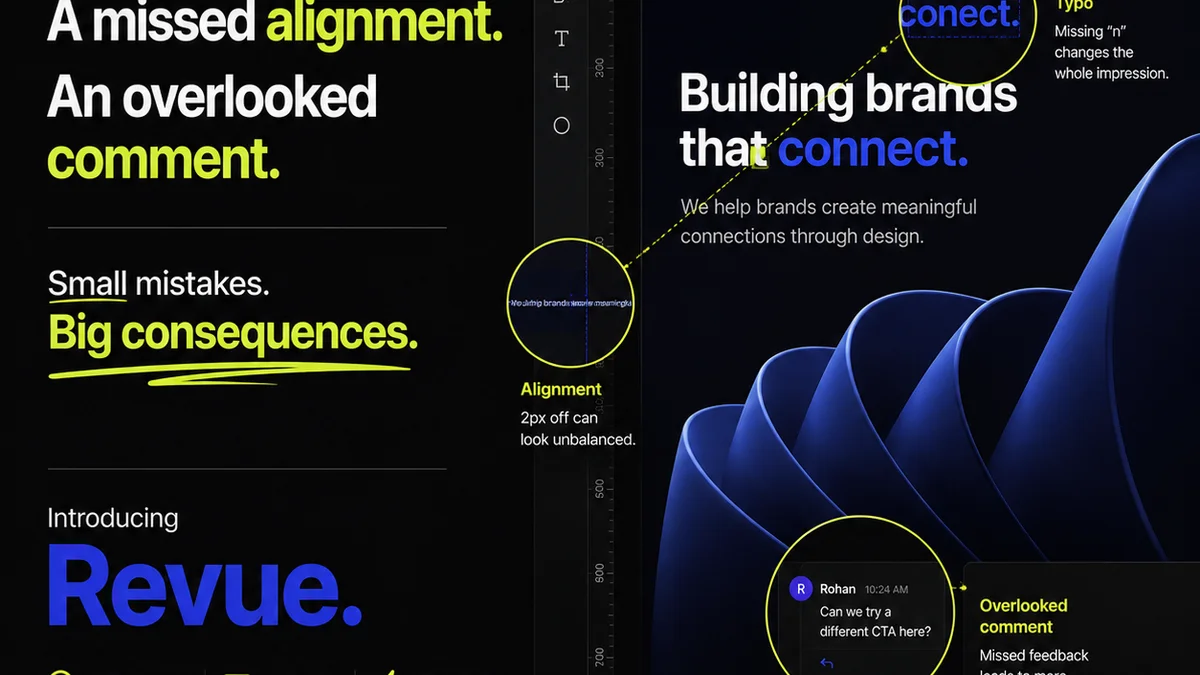
For enterprise packaging, it’s critical. A single typo, a misaligned barcode, or an outdated disclaimer can lead to expensive recalls, damaged brand reputation, or production delays.
The Devil in the Details
What needs rigorous checking?
- Legal & Regulatory Compliance: All text, icons, and warnings must be accurate and current.
- Brand Guideline Adherence: Color accuracy, logo usage, typography, and layout must be perfect.
- Technical Specifications: Barcodes, QR codes, serial numbers, and other variable data must be correct.
- Print Readiness: Die lines, bleed, resolution, and color profiles must meet printer requirements.
A robust QC process isn't just about catching errors; it's about ensuring the integrity and professionalism of the brand on a physical product.
Where Revue Fits In
Managing complex packaging projects at an enterprise level demands a workflow that’s as sophisticated as the challenges. This is where a centralized platform becomes indispensable.
Revue helps enterprise creative teams by:
- Centralizing Feedback: Consolidating all stakeholder comments directly on the design assets. No more hunting through emails or disparate documents.
- Streamlining Revisions: Providing clear version control and annotation tools so designers understand exactly what needs to change, and why.
- Managing Approvals: Creating clear, auditable approval trails, ensuring that the right people sign off at the right stages, with full context.
- Enhancing Quality Control: Acting as a single source of truth for review, making it easier to conduct thorough final checks against brand standards and technical requirements.
By bringing structure to the chaos of feedback and approvals, Revue empowers enterprise teams to execute complex packaging projects efficiently and effectively, reducing errors and accelerating time-to-market.
Final Thought
Is your enterprise packaging design process truly optimized for scale and complexity, or are you still operating under the illusion that great design is just about the final look?
Frequently asked questions
What are the biggest challenges in enterprise packaging design?
Key challenges include maintaining brand consistency across numerous markets, navigating complex legal and regulatory requirements, managing feedback from diverse stakeholders, and ensuring seamless integration with global supply chains and production processes.
How can creative teams ensure brand consistency in enterprise packaging?
Ensure strict adherence to global brand guidelines, utilize a centralized asset management system, conduct thorough reviews against brand standards, and empower brand guardians within the review process to maintain visual and messaging integrity.
Why is efficient revision management critical for enterprise packaging?
Inefficient revisions lead to project delays, increased costs, team frustration, and potential errors. A structured feedback and approval process minimizes back-and-forth, clarifies requirements, and ensures accurate implementation of changes.
What role does quality control play in enterprise packaging?
Quality control is crucial for catching errors in compliance text, legal disclaimers, barcodes, color accuracy, and print specifications before production. It prevents costly mistakes, protects brand reputation, and ensures market-ready products.