Everyone wants their creative teams to move faster. Especially in large organizations. The pressure is on to deliver more, quicker, without sacrificing quality. So what’s the magic bullet? More headcount? Fancy new software? A secret sprint methodology?
None of that is wrong. But it’s incomplete.
The real secret behind fast-moving enterprise creative teams isn't about *doing* things faster. It's about *knowing* what needs to be done, by whom, and why, with absolute clarity. It’s about removing the drag of ambiguity and miscommunication.
1. The Myth of the Creative Genius Working in Isolation
We love the trope of the lone genius, fueled by caffeine and inspiration, churning out brilliant work. It’s a romantic notion, but it’s a terrible model for enterprise-level creative production. Large projects involve dozens, sometimes hundreds, of moving parts and people.
The assumption is that if you just give a team the right tools and enough time, brilliance will follow. But brilliance rarely survives contact with complex organizational structures, multiple stakeholders, and competing priorities.
The Operational Reality: Collaboration is Key, But Chaos is the Default
In reality, creative work in large companies is a team sport. It requires input, feedback, and approvals from marketing, legal, product, sales, and a host of other departments. Without a clear system, this collaboration becomes a bottleneck.
- Endless email chains with conflicting feedback.
- Version control nightmares where no one knows which file is the latest.
- Status meetings that eat up valuable creative time.
- Delayed approvals because the right person missed the notification.
This isn't a failure of creativity. It's a failure of process.
2. The Hidden Cost of Unclear Briefs and Scope Creep
You've heard it a million times: 'The brief wasn't clear.' Or, 'The client kept changing their mind.' These aren't just excuses. They are symptoms of a deeper operational problem.
When the initial brief is vague, or the scope isn't locked down, the team is essentially asked to hit a moving target. Every iteration, every 'small change,' adds time and cost. And it erodes trust.
The Deceptive Siren Song of 'Flexibility'
Many organizations pride themselves on being agile and flexible. They worry that rigid processes will stifle creativity. So they opt for a 'go with the flow' approach.
But unmanaged flexibility is just chaos in disguise. It leads to constant rework, missed deadlines, and frustrated teams. The perceived 'agility' becomes a massive drain on resources.
Locking Down the 'What' and 'Why'
Fast teams don't just jump into execution. They invest time upfront in understanding the core objective. They ensure the brief is precise, measurable, and agreed upon by all key stakeholders.
This doesn't mean stifling creativity. It means channeling it. It means giving the team a clear destination so they can focus their energy on the best route to get there, rather than wandering aimlessly.
3. The Bottleneck of Fragmented Feedback and Approvals
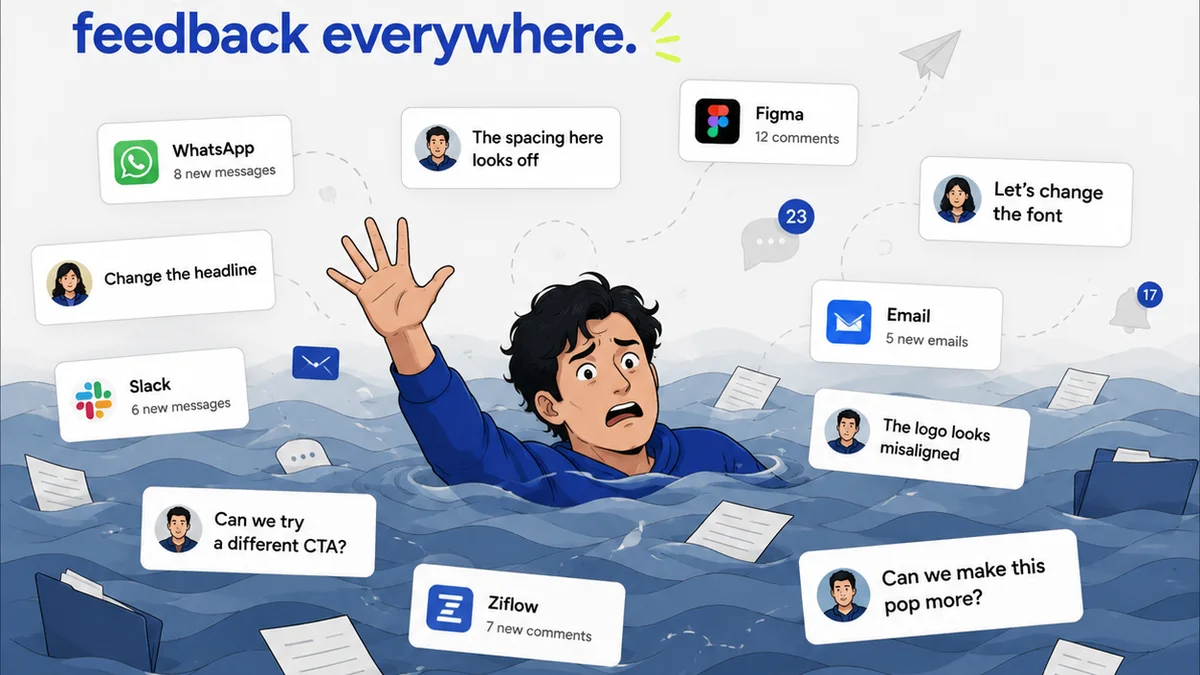
This is where most enterprise creative teams grind to a halt. Feedback comes in through email, Slack, text messages, and even hallway conversations. Approvals are tracked in spreadsheets or forgotten entirely.
Each piece of feedback, each sign-off, represents a handoff. If those handoffs are inefficient, the entire workflow suffers.
The Illusion of 'Everyone is Involved'
In large organizations, the desire to involve everyone can lead to an unwieldy number of reviewers. While stakeholder buy-in is crucial, a bloated review process is a killer.
The real problem isn't just the number of people. It's the lack of a centralized, visible system to manage their input. Without it, crucial comments get lost, and decisions get delayed.
The Power of Centralized Clarity
When feedback and approvals are consolidated in one place, a few magical things happen:
- Reviewers see the context of their feedback alongside others.
- There's a clear audit trail of decisions and sign-offs.
- The creative team can easily track progress and identify blockers.
- Misunderstandings are drastically reduced.
This isn't about adding bureaucracy. It's about adding transparency and accountability.
4. The Hidden Drag of Unmanaged Revisions
Revisions are a natural part of the creative process. But when they aren't managed effectively, they become a black hole of wasted time and effort.
Teams spend countless hours tracking down previous versions, re-explaining feedback, and re-doing work that was already signed off.
The 'Minor Tweak' Trap
A 'minor tweak' can quickly spiral. A designer makes a change, sends it out for review, gets more feedback, makes more changes, and so on. Each cycle adds time and introduces the risk of new errors.
Without a system to track the history of revisions and clearly delineate what has been approved, teams can find themselves going in circles.
The Importance of Version Control and Audit Trails
Knowing exactly which version is the 'master,' and having a clear record of all changes and approvals, is non-negotiable for speed and efficiency.
- A clear timeline of revisions.
- Easy access to previous versions.
- Automated notifications for completed revisions.
- Defined stages for review and approval.
This operational discipline allows teams to move forward confidently, knowing they aren't tripping over past decisions.
5. The Neglected Discipline: Quality Assurance
Many teams focus so much on speed and getting the work *out* the door that they neglect the final, critical step: quality assurance.
This isn't just about proofreading. It's about ensuring the final output meets all technical specifications, brand guidelines, and strategic objectives.
The Cost of Rushing the Finish Line
A brilliant campaign that's riddled with typos, uses the wrong logo, or doesn't render correctly on a specific platform is a failure. The reputational damage and the cost of fixing errors post-launch can far outweigh any time saved by rushing.
The assumption is that the 'creative' part is done once the design is approved. But operational excellence demands that the final check happens rigorously.
Building QA into the Workflow
Effective QA isn't an afterthought. It's a planned stage in the production process.
- Checklists for common technical and brand compliance issues.
- Dedicated QA roles or responsibilities.
- Automated checks where possible.
- A final sign-off gate before deployment.
This discipline ensures that speed doesn't come at the expense of excellence.
Where Revue Fits In
All these operational challenges – unclear briefs, fragmented feedback, unmanaged revisions, and neglected QA – are symptoms of a disconnected workflow. Creative teams need a central hub to manage the entire lifecycle of their work.
Revue provides that hub. It’s designed to bring clarity and control to the creative process.
- Centralized Feedback: All client and stakeholder comments live in one place, attached to the specific asset. No more digging through emails.
- Revision & Approval Visibility: Track every version, every revision, and every approval. Everyone knows exactly where things stand, reducing bottlenecks.
- Quality Checks: Build in your QA process directly. Ensure brand consistency and technical accuracy before anything goes live.
By providing this operational backbone, Revue empowers creative teams to move faster, not by cutting corners, but by cutting through the noise and confusion.
Final Thought
Speed in creative production isn't a mystical talent. It's the direct result of operational clarity and discipline. When teams know exactly what they're building, why they're building it, and have a clear path for feedback and approvals, they can unleash their creative potential without getting bogged down.
Are your teams fast because they're brilliant, or brilliant because they're fast and organized?
Frequently asked questions
What is the biggest misconception about fast creative teams?
The biggest misconception is that speed comes from more people or fancier tools. While helpful, the real driver of speed is operational clarity: knowing exactly what needs to be done, by whom, and why, with minimal ambiguity.
How does unclear scope affect creative team speed?
Unclear scope forces teams to hit a moving target, leading to constant rework, missed deadlines, and wasted resources. It erodes trust and significantly slows down production cycles.
Why is centralized feedback crucial for enterprise creative teams?
Fragmented feedback across emails, Slack, and calls creates confusion, leads to lost comments, and delays approvals. Centralizing feedback in one place provides context, an audit trail, and reduces misunderstandings.
Can 'flexibility' actually slow down a creative team?
Yes, unmanaged flexibility can be chaos in disguise. While adaptability is important, a lack of clear processes for scope, feedback, and approvals leads to inefficiency, rework, and ultimately, slower delivery.
How does Revue help enterprise creative teams improve speed?
Revue provides a central hub for feedback, revisions, and approvals. This operational clarity reduces bottlenecks, minimizes rework, and ensures everyone is aligned, allowing teams to deliver creative work more efficiently.