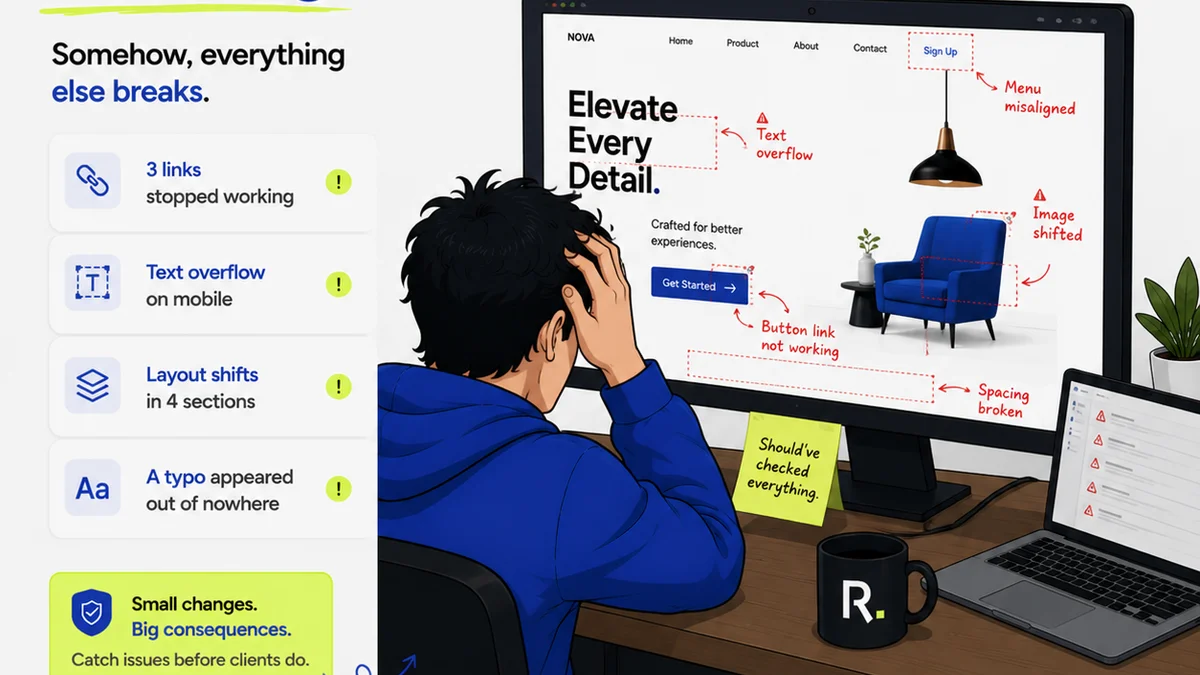
Everyone says you need to track client feedback. It’s practically gospel in the creative agency world. You nod along, thinking about your meticulously organized spreadsheets or that shared document where everything *should* be.
None of that is wrong. But it’s incomplete.
The hard truth is that simply *having* a system for tracking feedback isn't enough. The real challenge—and the real value—lies in how you implement it, how you operationalize it, and how it actually impacts your team's ability to deliver great work, on time and on budget. It’s not just about recording notes; it’s about creating a single source of truth that drives action and prevents costly mistakes.
1. The Myth of the 'Single Source of Truth'
Many agencies believe that a shared document or a project management tool acts as their single source of truth for feedback. This sounds good on paper.
In reality, feedback gets scattered. It lives in emails, Slack messages, video call notes, and even verbal conversations. Then, someone has the unenviable job of consolidating it all.
The Problem with Siloed Feedback
When feedback isn't centralized, you run into predictable problems:
- Missed Revisions: Critical notes get overlooked because they’re buried in an inbox.
- Scope Creep: Unrecorded feedback can lead to extra work that wasn't initially agreed upon.
- Client Frustration: Clients have to repeat themselves, or they see changes they don't recognize.
- Team Misalignment: Designers work off outdated versions or incorrect instructions.
- Endless Chasing: Project managers spend more time chasing down feedback than driving the project forward.
This isn't just inefficient; it erodes trust and impacts profitability. Your
Frequently asked questions
Why is effective feedback tracking crucial for creative agencies?
Effective feedback tracking is crucial because it prevents missed revisions, avoids scope creep, reduces client frustration, ensures team alignment, and saves valuable project management time. It transforms feedback from a chaotic liability into a clear roadmap for project completion.
What are the common pitfalls of feedback tracking?
Common pitfalls include feedback being scattered across multiple channels (email, chat, calls), lack of a centralized system, poor documentation of decisions, and failure to clearly distinguish between actionable feedback and general commentary.
How can a centralized platform improve feedback tracking?
A centralized platform, like Revue, consolidates all feedback in one place, linked directly to the creative assets. This provides a clear audit trail, improves version control, streamlines communication, and makes it easier to identify, track, and act upon revisions.
What's the difference between tracking feedback and managing revisions?
Tracking feedback is about capturing and organizing the input received. Managing revisions is the subsequent process of acting on that feedback, implementing changes, and getting them approved. Both are essential and interconnected parts of the creative workflow.