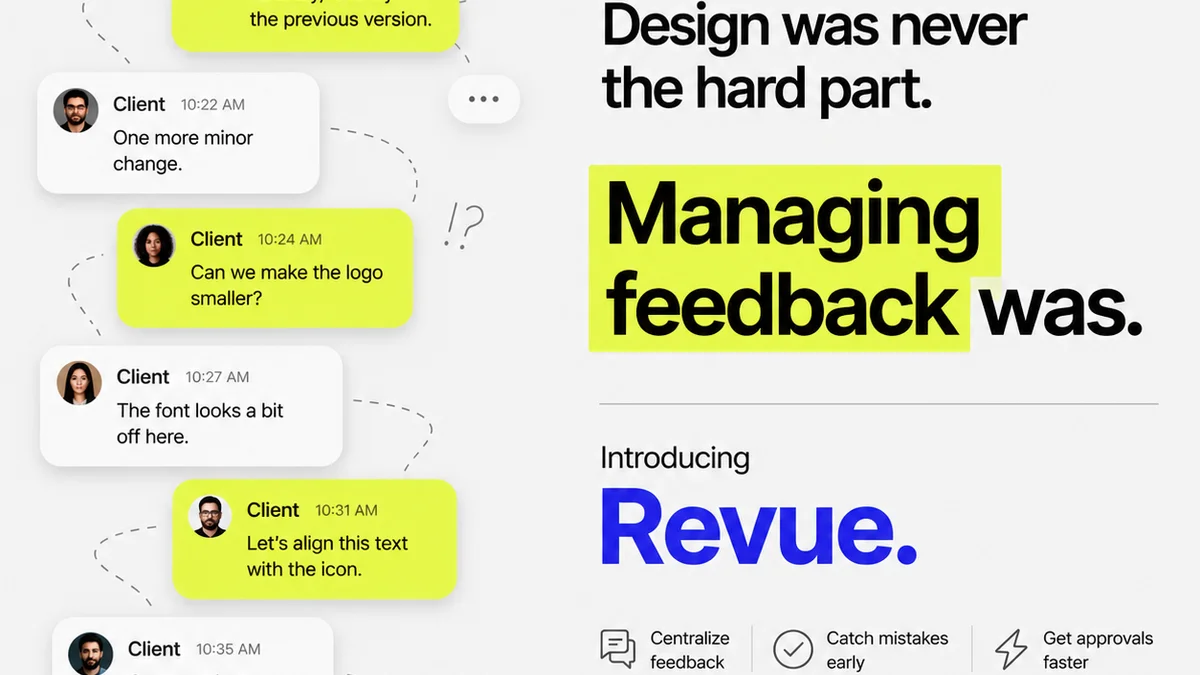
Everyone thinks fewer revision cycles mean a more demanding client. Or maybe a more talented designer. That’s the easy story.
But it’s incomplete. It lets you off the hook.
The hard truth? The number of revisions isn’t about client demands or designer skill. It’s about your process. Or more accurately, your lack of one.
Your team isn't stuck in endless loops because the client is difficult. They're stuck because you haven't built a system to get clear feedback, manage scope, and ensure everyone's on the same page before the work gets too far down the road.
1. The Myth of the 'Final' Brief
We all start with a brief. It’s supposed to be the blueprint. The North Star.
But how often does that brief actually hold up? How often does it get revisited, reinterpreted, or flat-out ignored as the project progresses?
Most briefs are a snapshot in time. Not a living document.
The Brief Isn't Static
A brief is a starting point, not a contract etched in stone. Client needs evolve. Market conditions shift. New insights emerge during the creative process itself.
The problem isn't the brief's initial quality. It's the failure to treat it as a dynamic tool.
- Assumption: A good brief means a smooth project.
- Reality: A good brief is the start of a conversation, not the end of it.
- Reality: The brief needs a mechanism for updates and sign-offs as the project evolves.
Without this, the brief becomes a forgotten document, and the project drifts.
2. Feedback: The Wild West of Creative Work
Client feedback. It’s the lifeblood of creative projects. It’s also the primary source of chaos.
Ask any creative director, and they'll tell you stories. Vague comments. Conflicting opinions from different stakeholders. Feedback arriving late, or in a format that’s impossible to action.
This isn't just annoying. It’s a direct contributor to extra revision cycles.
The Cost of Ambiguity
When feedback is unclear, designers and account managers have to guess. They make assumptions. And those assumptions, more often than not, lead to work that misses the mark.
Each round of guessing and re-doing adds time, cost, and frustration.
- Symptom:
Frequently asked questions
What's the biggest mistake agencies make with revision cycles?
Assuming the problem is the client. The real issue is often a lack of a structured feedback and revision process. This leads to ambiguity, scope creep, and unnecessary back-and-forth.
How can I get clearer feedback from clients?
Be proactive. Define clear feedback stages in your SOW. Use tools that allow for contextual, specific feedback. Ask clarifying questions immediately and get sign-off on that clarification.
Can technology really reduce revision cycles?
Yes. Tools designed for creative review and approval centralize feedback, provide version control, and create clear audit trails. This reduces miscommunication and speeds up the approval process.
What's the role of the account manager in managing revisions?
The account manager is crucial. They act as the gatekeeper and translator for feedback, ensuring it's clear, actionable, and within scope. They manage client expectations and communicate with the creative team.