Everyone talks about asset management as if it’s just digital storage. A place to dump your final JPEGs, your brand guidelines, your ad creatives. And sure, that’s part of it.
None of that is wrong. But it’s dangerously incomplete.
The real future of asset management isn't about *where* your files live. It’s about how they move, how they’re approved, and how they drive your business forward.
The Hard Truth: Assets Aren't Static
For too long, agencies and creative teams have treated creative assets like the finished product itself. Once it’s signed off, you file it away and forget it. Maybe you’ll need it again someday. Maybe not.
This mindset is costing you.
Your creative assets are not inert data. They are living, breathing components of your client’s brand. They have a lifecycle. They need to be managed, tracked, and leveraged, not just archived.
The operational truth? Effective asset management is about maximizing the value and velocity of your creative output.
It’s the difference between a digital dumpster fire and a well-oiled creative engine.
1. From Archive to Active Hub
The Myth of 'Final' Approval
We’ve all been there. A client approves a batch of social media graphics. You save them to a shared drive. Done. But ‘done’ is a lie.
What if the client wants a minor tweak to one image in the series next week? What if a different campaign needs a variation of that approved graphic?
Without a system that tracks versions and approvals, you’re forced to:
- Dig through endless folders.
- Guess which version was *actually* approved.
- Re-do work that was already signed off.
- Start a frantic email chain to find the original source files.
This isn't efficient. It’s chaos.
The Active Hub Model
The future treats assets as part of an active, dynamic ecosystem. Every asset, from initial concept to final delivery, is tagged, versioned, and linked to its approval status and project context.
This means:
- Instant recall: Find any version, any asset, in seconds.
- Clear lineage: Understand exactly what was approved and why.
- Reusability: Quickly identify and adapt approved elements for new needs.
- Reduced risk: Eliminate the chance of using outdated or unapproved materials.
Your asset management system becomes less of a dusty archive and more of a central nervous system for your creative work.
2. The Approval Bottleneck: Solving the 'Sign-Off Shuffle'
Why Current Methods Fail
Email chains. Scrawled notes on PDFs. Vague Slack messages. These are the tools of the approval dark ages.
They create ambiguity, introduce errors, and make tracking impossible.
- Who gave the final sign-off?
- Was that feedback for version 3 or version 4?
- Did anyone actually *see* the latest revision?
This isn't just frustrating; it’s a direct drain on your profitability. Time spent deciphering feedback is time not spent creating.
Streamlining the Sign-Off
The future demands a clear, auditable approval workflow integrated directly with your assets.
Imagine:
- Uploading a draft and getting an immediate link to share.
- Clients or stakeholders leaving precise, contextual feedback directly on the asset.
- A clear record of every revision, every comment, and every approval.
- Automated notifications when feedback is needed or approvals are given.
This isn't about adding more steps; it's about making the necessary steps transparent, efficient, and error-proof.
3. Quality Control: The Unsung Hero of Asset Management
The Cost of 'Good Enough'
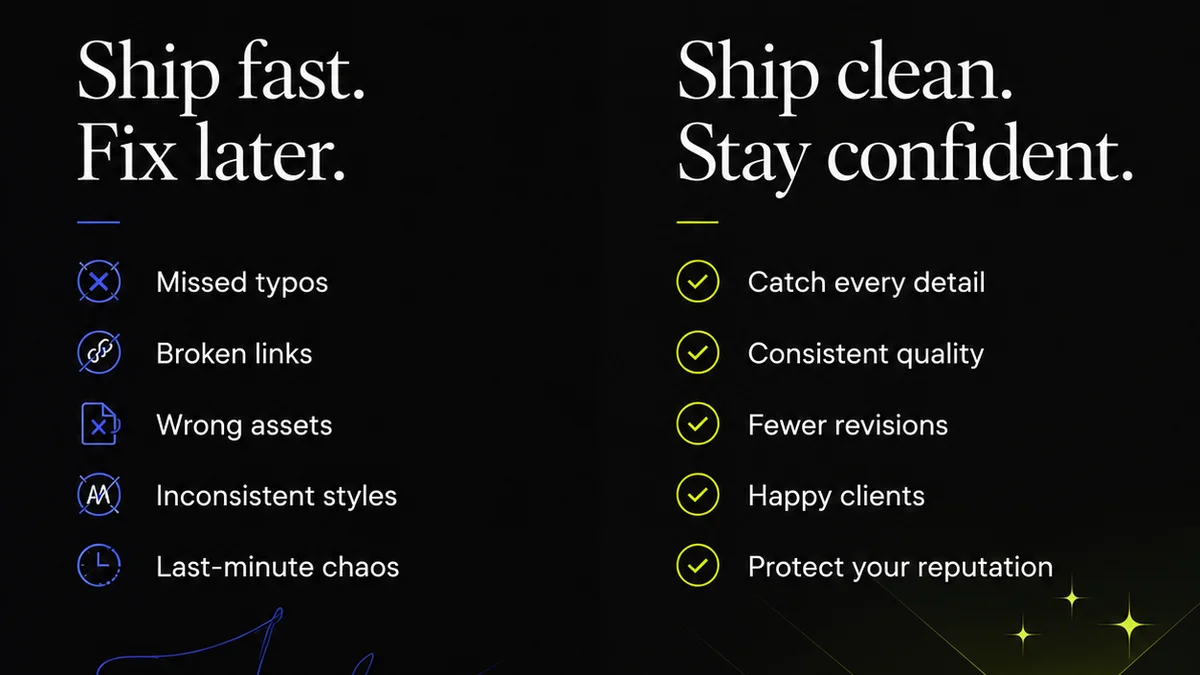
It's easy to let quality slip when deadlines loom. A slightly off-brand color. A typo in the footer. A low-res image used in a crucial placement.
These aren't just minor errors. They erode client trust and damage brand integrity.
Often, these issues stem from poor asset management:
- Using an old logo file.
- Pulling a graphic from the wrong campaign folder.
- Missing a critical detail buried in an email thread.
The downstream cost of fixing these mistakes – or dealing with the fallout – is far higher than preventing them upfront.
Embedding Quality Checks
The future of asset management is proactive quality control.
This means building checks and balances into the workflow:
- Automated checks: Systems that flag incorrect file types, dimensions, or color profiles.
- Brand compliance: Ensuring logos, colors, and fonts adhere to guidelines before an asset is shared.
- Contextual review: Allowing teams to see how an asset fits into the broader campaign or project.
- Standardized templates: Using approved templates that minimize the risk of errors.
Quality control shouldn't be an afterthought; it should be a fundamental part of how assets are managed and moved through your pipeline.
4. Integration: Assets as the Connective Tissue
The Siloed System Problem
Many teams operate with disconnected tools. A project management system here, a design tool there, a separate file storage solution, and a communication app for feedback.
Assets get passed around like a hot potato, losing context and increasing the chance of error at each handoff.
This friction is a killer.
Building a Connected Workflow
The real power of future-focused asset management lies in its integration.
Your assets should be the connective tissue linking your entire creative process:
- Design Tools: Seamlessly save and access brand assets directly within Adobe Creative Suite, Figma, etc.
- Project Management: Link specific asset versions to tasks and milestones.
- Client Communication: Integrate feedback and approvals directly into the project flow.
- Digital Asset Management (DAM): Use a robust DAM as the central source of truth, feeding approved assets to all other systems.
When assets flow freely and contextually between systems, your entire operation becomes more agile.
Where Revue Fits In
This is where the rubber meets the road for agencies and in-house teams. Managing the lifecycle of creative assets isn't just about storage; it's about managing the *process* around those assets.
Revue is built to address the operational realities of creative workflows.
It provides a centralized space for client feedback, cutting through the noise of endless email threads and scattered Slack messages. You can see exactly what needs to change, on which version, and by whom.
This directly feeds into streamlined revision and approval processes. With clear version control and auditable sign-offs, you eliminate the guesswork and the risk of using outdated materials. Every stakeholder knows where they stand.
And critically, Revue helps enforce quality checks by ensuring that feedback is addressed, revisions are tracked, and final approvals are unambiguous before assets move downstream. This prevents costly errors and ensures brand consistency.
By centralizing these crucial steps, Revue transforms asset management from a passive archiving task into an active driver of efficiency and quality.
Final Thought
The future of asset management isn't a bigger hard drive or a fancier folder structure. It’s a fundamental shift in how we view and handle creative output.
It’s about treating assets as dynamic, valuable components of a larger, interconnected workflow.
Are your assets merely stored, or are they actively working for you?
Frequently asked questions
What's the difference between a digital asset management (DAM) system and simple cloud storage?
Cloud storage (like Dropbox or Google Drive) is primarily for file storage and sharing. A DAM system goes further by organizing, tagging, searching, versioning, and managing the lifecycle of assets, often with built-in approval workflows and brand compliance features.
How can better asset management save my agency money?
By reducing time spent searching for files, minimizing errors from using outdated assets, preventing costly rework due to unclear feedback, and enabling faster repurposing of existing creative, which directly impacts project profitability and client satisfaction.
Is implementing a new asset management system complicated?
Implementation complexity varies. Simple cloud storage is easy. A full DAM system requires planning for organization, tagging, user roles, and integration. However, modern tools like Revue focus on streamlining specific workflow bottlenecks, making integration more manageable.
How do I ensure my clients are on board with a new asset management process?
Focus on the benefits to them: clearer communication, faster revisions, and more transparent approval processes. Demonstrate how it reduces confusion and speeds up project delivery. Start with a tool that addresses their biggest pain points, like centralized feedback.