Everyone talks about brand guidelines. Logos, colors, fonts. The usual suspects.
And none of that is wrong. But it’s incomplete.
The real future of brand governance in enterprise organizations isn't about policing pixels. It's about operationalizing brand consistency across an entire business, at scale, without creating bottlenecks.
The hard truth? Effective brand governance is less about rules and more about systems. It’s about building workflows that make the right thing the easy thing.
1. Beyond the Style Guide: The Operational Bottleneck
Think about your current brand guidelines. They’re likely a beautifully designed PDF. Maybe a microsite.
They live in a vacuum.
When a marketing team needs a new banner ad, or a product team needs UI elements, or a sales team needs a presentation deck, where do they go?
They go to design. Or worse, they go rogue.
The Myth of Self-Service
The assumption is that comprehensive guidelines empower everyone to be on-brand. That’s the dream. The reality is different.
Most employees aren’t designers. They don’t speak the language of hex codes and kerning.
They need more than a rulebook. They need a process.
- A process for requesting assets.
- A process for getting feedback.
- A process for approvals.
- A process for understanding *why* a guideline exists.
Without these, guidelines become suggestions. And suggestions get ignored when deadlines loom.
2. The Cost of Inconsistency: More Than Just Aesthetics
What happens when brand governance fails? You see it everywhere.
Inconsistent messaging across different channels.
Confusing customer journeys.
Diluted brand recognition.
Wasted design and marketing resources.
The Financial Drain
This isn't just about looking sloppy. It has a direct impact on the bottom line.
Consider the sheer volume of creative work produced by a large enterprise. Every team, every region, every campaign.
If that work isn't aligned, you’re not just wasting time. You’re spending money on conflicting efforts.
You’re losing potential customers because they don’t trust a brand that can’t seem to make up its mind.
That’s a tangible cost. A cost that effective governance can prevent.
3. Systemizing Brand Consistency: From Rules to Workflows
The future of brand governance is system-based. It’s about building the infrastructure that supports brand integrity.
This means moving beyond static documents to dynamic, integrated processes.
Key Components of a Systemic Approach
- Centralized Asset Management: A single source of truth for approved logos, templates, and brand elements.
- Streamlined Feedback Loops: Clear channels for requesting and providing feedback on creative work.
- Automated Workflows: Tools that guide users through the creation and approval process.
- Version Control: Ensuring everyone is working with the latest approved assets and guidelines.
- Performance Tracking: Understanding where bottlenecks occur and how to optimize the process.
This isn't about adding more layers of bureaucracy. It’s about making the existing process smarter and more efficient.
It’s about embedding brand compliance into the daily operations of your teams.
4. Technology as an Enabler, Not a Dictator
The right technology is crucial for scaling brand governance.
But technology alone isn't the answer.
It needs to support your operational reality.
What to Look For
Enterprise-grade tools should offer:
- Scalability: Ability to handle a large volume of users, projects, and assets.
- Integration: Seamless connection with existing creative and project management tools.
- User Experience: Intuitive interfaces that minimize training and adoption friction.
- Customization: Flexibility to adapt to your specific brand and workflow needs.
- Reporting & Analytics: Insights into usage, compliance, and process efficiency.
The goal is to make brand governance feel less like a chore and more like a natural part of creating great work.
5. Where Revue Fits In
This is where a platform like Revue becomes indispensable for enterprise organizations.
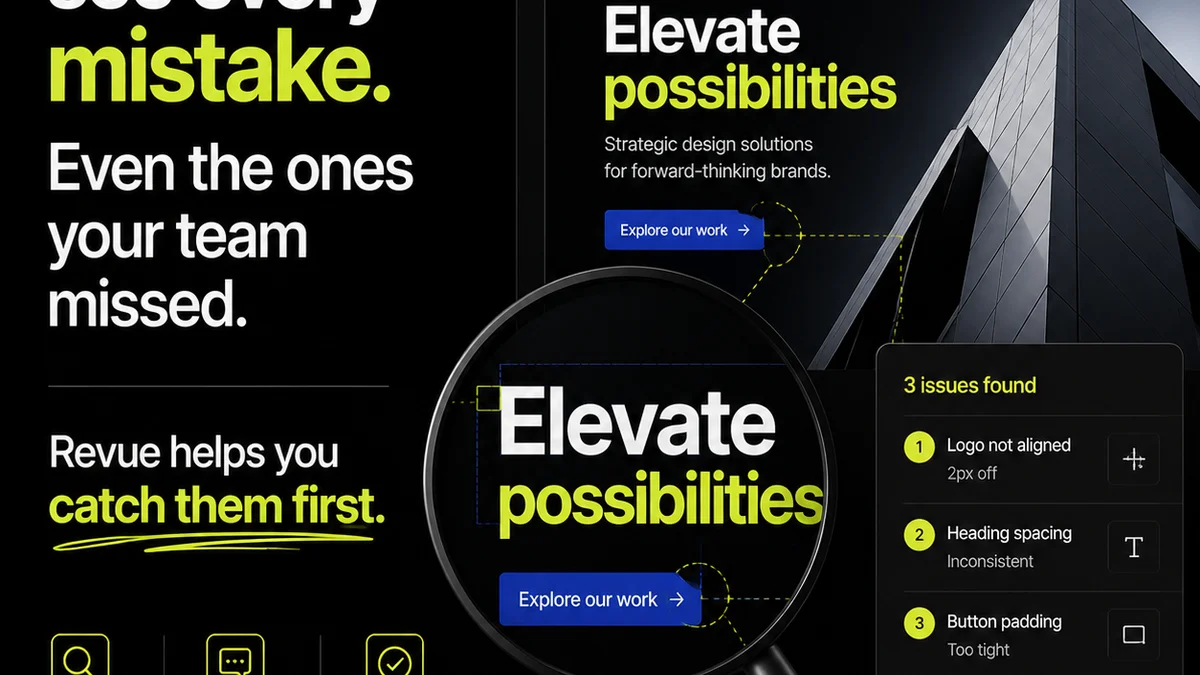
It’s not just about showcasing your brand. It’s about managing the entire lifecycle of creative feedback and approvals.
Revue provides a centralized hub for:
- Collecting Client Feedback: Consolidate all comments, markups, and stakeholder input in one place. No more chasing down emails or disparate documents.
- Managing Revisions: Track every change, compare versions, and ensure all feedback is addressed. This creates a clear audit trail.
- Streamlining Approvals: Define clear approval workflows with designated approvers. Get sign-offs efficiently and keep projects moving.
- Ensuring Quality Checks: Maintain brand consistency and adherence to guidelines by integrating checks directly into the review process.
By centralizing these critical steps, Revue helps operationalize brand governance, making it easier for teams to produce on-brand work consistently and efficiently.
6. The Human Element: Culture and Training
Even the best systems can fail without the right culture and training.
Brand governance needs to be understood and valued by everyone.
Fostering a Brand-Conscious Culture
- Leadership Buy-In: Executive sponsorship is essential to signal the importance of brand consistency.
- Clear Communication: Regularly communicate the *why* behind brand guidelines and governance processes.
- Ongoing Training: Provide accessible training on using governance tools and adhering to processes.
- Feedback Mechanisms: Encourage employees to provide feedback on the governance process itself, not just the creative work.
When people understand and believe in the importance of brand governance, they become active participants, not reluctant enforcers.
Final Thought
The future of brand governance in enterprise organizations is not about building higher walls around your brand. It's about building better bridges for your teams to create and deliver on-brand work, effortlessly.
Is your organization building walls or bridges?
Frequently asked questions
What is the main challenge with traditional brand guidelines?
Traditional brand guidelines are often static PDFs or microsites that live separately from the creative workflow. They lack the operational processes needed for employees to easily apply them to their daily tasks, leading to inconsistency and bottlenecks.
How does technology improve brand governance?
Technology, like centralized platforms, enables scalability, integration, and automation. It helps manage assets, streamline feedback, automate workflows, and track performance, making brand consistency achievable across large organizations.
What are the key components of a systemic approach to brand governance?
A systemic approach includes centralized asset management, streamlined feedback loops, automated workflows, version control, and performance tracking. The goal is to embed brand compliance into daily operations.
How can an organization foster a brand-conscious culture?
Fostering such a culture requires leadership buy-in, clear communication about the importance of brand, ongoing training, and feedback mechanisms for the governance process itself. This encourages active participation from all employees.