Everyone talks about creative collaboration. They point to remote teams, shared documents, and video calls as the new normal. That’s all true, of course.
But it’s incomplete. It focuses on the tools, not the process. It’s about *where* you work, not *how* you work together effectively.
The real future of creative collaboration for agencies and in-house teams isn't about more apps. It's about deeper integration, smarter workflows, and a relentless focus on clarity. It’s about removing friction, not adding more platforms to juggle.
1. The Myth of the Seamless Digital Handshake
We’re often sold a bill of goods: that switching to a new platform or tool will magically fix all our collaboration woes. That a slick UI and a few integrations will eliminate misunderstandings and speed up approvals.
This is a dangerous oversimplification. The tools are only as good as the processes they support. A beautifully designed project management tool won't help if the feedback loop is broken, or if stakeholders don't know who's responsible for what.
The hard truth is that effective collaboration hinges on structured communication and clear accountability, regardless of the technology.
Information Silos Are the Real Enemy
Think about it: How much time do your teams spend hunting for the latest version of a design? Or trying to decipher conflicting feedback from a dozen different emails and Slack messages?
This isn't a collaboration problem; it's an information management problem. When project assets and feedback are scattered across disparate systems, collaboration breaks down. It breeds confusion, delays, and ultimately, lower-quality creative output.
This chaotic state is the antithesis of good creative workflow.
The Cost of Context Switching
Every time a designer has to jump between email, Slack, a cloud storage folder, and a separate proofing tool, their focus is broken. This constant context switching is a massive drain on productivity.
It’s not just about saving a few clicks. It’s about preserving the mental space needed for creative thinking and problem-solving. The more mental energy spent managing the workflow, the less is left for the actual creative work.
Feedback Fragmentation
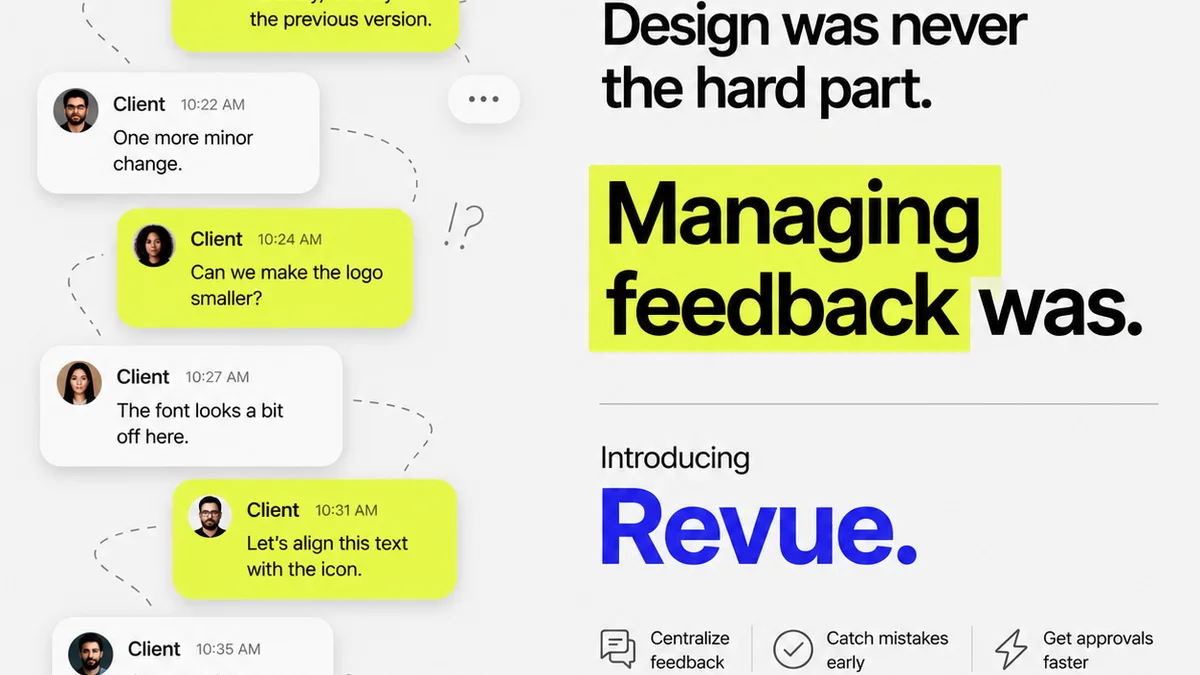
One client loves a CTA. Another wants it removed. A third just says, “make it pop more.”
This isn't collaboration; it's a game of telephone with expensive consequences. When feedback isn't centralized and contextualized, it’s easy for critical notes to get lost or misinterpreted. This leads to endless revision cycles and mounting frustration for everyone involved.
2. Beyond Real-Time: Asynchronous Clarity
The focus on
Frequently asked questions
What's the biggest misconception about creative collaboration tools?
The biggest misconception is that simply adopting new software will automatically improve collaboration. In reality, tools are only effective when integrated into well-defined processes that prioritize clear communication, structured feedback, and accountability.
How does asynchronous work improve creative collaboration?
Asynchronous work allows team members to contribute and review at their own pace, reducing the need for constant real-time meetings. This preserves focus, allows for more thoughtful responses, and accommodates different time zones and work schedules, leading to clearer decision-making and less interruption.
What are the key components of effective creative feedback?
Effective creative feedback is specific, actionable, constructive, and contextual. It should be delivered through a centralized system that allows for version control and clear tracking, ensuring all stakeholders see the same information and the history of decisions.
How can agencies manage client feedback more efficiently?
Agencies can manage client feedback more efficiently by implementing a centralized platform for all comments and approvals. This eliminates scattered emails and messages, provides a clear audit trail, and ensures everyone is working from the latest version, reducing misinterpretations and revision cycles.