Everyone’s talking about creative operations. The future of the agency. The key to scaling. The secret weapon against burnout.
And none of that is wrong. But it’s incomplete.
The real future of creative operations isn’t about adopting the latest shiny software or hiring a dedicated ops manager. It’s about fundamentally shifting how you think about your creative process, from intake to invoice.
The Hard Truth: Ops Isn't a Department, It's a Mindset
Most agencies treat operations as a cost center. Something to be minimized. A necessary evil. They see it as the folks who chase down approvals, wrestle with spreadsheets, and generally get in the way of 'real' creative work.
This is where the common assumption breaks down.
The truth is, operations isn't a department. It's a discipline. It's the underlying architecture that supports every single creative output. It's the difference between a chaotic scramble and a predictable, profitable workflow.
And its future is about elevating that discipline from a background task to a strategic imperative. It’s about building systems that empower your creatives, delight your clients, and actually make you money.
1. From Chaos to Control: The Evolution of Workflow
The Myth of the 'Creative Flow'
We love to romanticize the lone genius, the sudden spark of inspiration. Agencies often build their entire culture around this idea. But relying on 'flow' is a recipe for disaster.
It’s unpredictable. It’s unmanageable. And it’s incredibly inefficient.
Think about it:
- How often does a project get delayed because one person is 'in the zone' and can't be interrupted?
- How much time is wasted tracking down feedback from multiple stakeholders who all have different opinions?
- How many revisions are made based on unclear or conflicting comments?
This isn't creative genius at work. It's operational failure masquerading as artistic temperament.
The Systemic Approach
The future of creative operations is built on systems. Not rigid, stifle-creativity systems, but flexible frameworks that provide clarity and structure. It’s about understanding that great creative work happens *within* a well-defined process, not in spite of it.
This means:
- Clear Intake: Every project starts with a comprehensive brief, not a hurried email.
- Defined Stages: Each phase of the creative process has clear deliverables and approval gates.
- Proactive Communication: Stakeholders know what’s expected of them and when.
- Version Control: Everyone is working from the latest, approved version. No more 'Oops, I commented on the wrong file.'
This isn't about bureaucracy. It's about reducing friction. It's about ensuring that your team's energy is focused on creating, not on navigating internal confusion.
2. The Client Experience: Beyond 'Happy Clients'
The 'Client is Always Right' Trap
Agencies are built on client satisfaction. But the traditional model often puts the client in a position of constant, unfiltered feedback. This can lead to scope creep, endless revisions, and ultimately, a strained relationship.
The assumption is that more client input equals a better outcome. Often, it just means more noise.
Operationalizing Client Collaboration
The future of operations means strategically managing client involvement. It’s about creating a clear, structured path for feedback and approvals that benefits both sides.
This involves:
- Centralized Feedback: One place for all client comments, marked up directly on the creative. No more email chains and confusing spreadsheets.
- Clear Approval Workflows: Defining who needs to approve what, and when. Setting clear deadlines for feedback.
- Managing Expectations: Educating clients on the revision process and the impact of subjective feedback versus objective requirements.
- Data-Driven Insights: Understanding how long feedback cycles actually take, and where bottlenecks occur.
When clients have a clear, easy-to-use system for providing feedback, they feel more in control. And when you have a clear system for managing that feedback, you can deliver better work, on time and on budget. That’s a win-win. That’s profitable.
3. Profitability: The Unsung Hero of Ops
The 'Creative First, Profit Later' Fallacy
Many agencies operate under the assumption that if the creative is brilliant, the profit will follow. This is a dangerous myth.
Brilliant creative work delivered late, over budget, or with a client who feels ignored? That’s not a success. That’s a liability.
The Operational Engine of Profit
Creative operations, when done right, is the direct driver of agency profitability. It’s not an afterthought; it’s the engine.
How? By:
- Accurate Scoping: Robust intake processes lead to more realistic project estimates.
- Efficient Resource Allocation: Understanding team capacity and project needs prevents overbooking and burnout.
- Minimizing Rework: Clear feedback and approval processes drastically reduce costly revisions.
- Streamlined Billing: Clear project tracking and approval sign-offs make invoicing straightforward and timely.
- Forecasting: Operational data provides insights into project timelines and potential profitability, allowing for better business planning.
When you optimize your operations, you’re not just making things run smoother; you’re directly impacting your bottom line. You’re building a sustainable, profitable business.
4. Empowering Your Creatives: Ops as an Enabler
The Misconception: Ops vs. Creatives
There’s often a perceived tension between the 'creative' side and the 'operations' side of an agency. Creatives feel micromanaged, while ops feels like they’re constantly cleaning up messes.
This is a false dichotomy.
Ops as the Creative's Best Friend
The future of creative operations is about empowering your talent. It’s about removing the administrative burdens that distract from their core craft.
Well-executed operations means:
- Less Admin, More Creating: Automating repetitive tasks frees up creatives to focus on ideation and execution.
- Clear Direction: Well-defined briefs and feedback cycles mean creatives understand exactly what’s needed.
- Reduced Stress: Knowing that project management, approvals, and client comms are handled reduces anxiety and boosts morale.
- Fair Workload Distribution: Operational visibility helps ensure work is distributed equitably, preventing burnout.
When operations are seamless, your creatives can do their best work. Period.
Where Revue Fits In
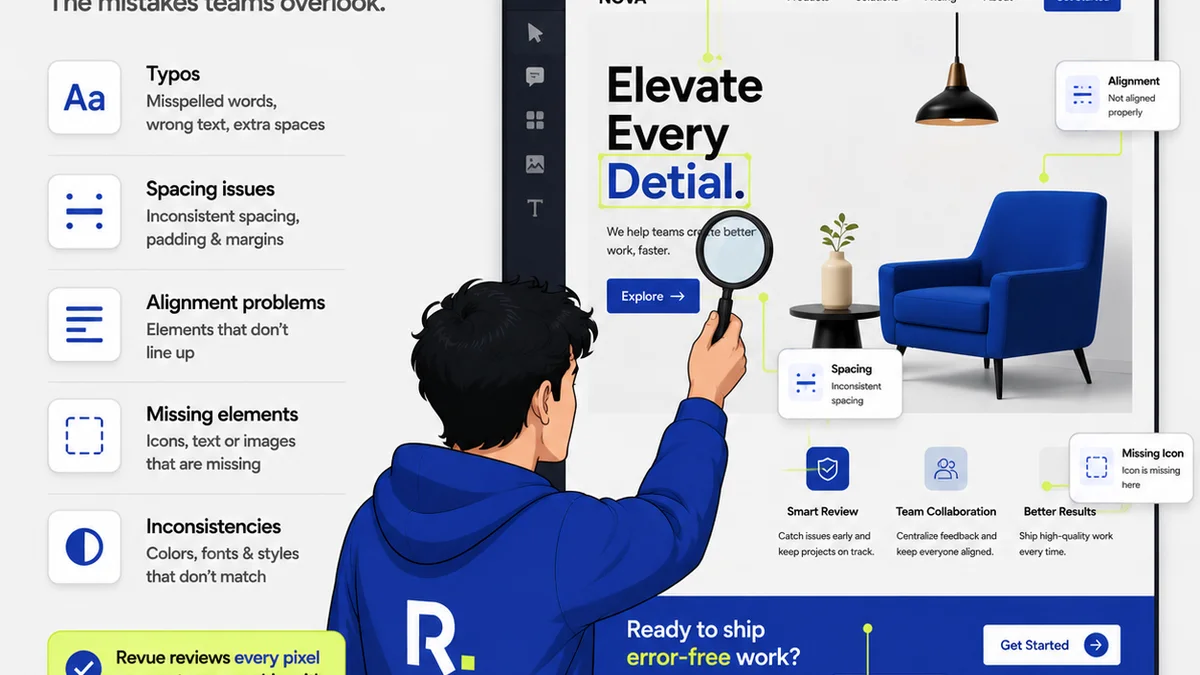
The shift towards a more robust, strategic approach to creative operations requires the right tools. Tools that centralize, clarify, and streamline.
Revue is built for this future. It tackles the core operational challenges head-on:
- Centralized Client Feedback: Consolidate all client comments, annotations, and approvals in one place, directly on the creative asset. Say goodbye to scattered feedback across emails, Slack, and PDFs.
- Revision and Approval Visibility: Track every version, every comment, and every approval status with crystal clarity. No more guesswork about who signed off on what, or why a project is stalled.
- Quality Control: Ensure that every deliverable meets the agreed-upon standards before it ever reaches the client. Build confidence and reduce last-minute firefighting.
By providing a single source of truth for creative review and approval, Revue empowers agencies to build the efficient, client-friendly, and profitable operations that define the future.
Final Thought
The future of creative operations isn't a destination; it's a continuous evolution. It’s about recognizing that the systems you put in place are as critical as the creative ideas themselves.
Are you building an agency that thrives on unpredictable sparks, or one that consistently delivers brilliance through intelligent design?
Frequently asked questions
What is the main misconception about creative operations?
The main misconception is that creative operations is just a department or a set of tools. The deeper truth is that it's a strategic discipline and a mindset focused on building efficient, repeatable systems that support creative output and business goals.
How does creative operations impact agency profitability?
Effective creative operations directly impacts profitability by enabling accurate scoping, efficient resource allocation, minimizing costly rework through clear feedback and approvals, and streamlining billing processes. It turns creative delivery into a predictable revenue stream.
How can creative operations improve the client experience?
By centralizing feedback, establishing clear approval workflows, and managing expectations proactively, creative operations ensures clients have a structured and transparent experience. This reduces confusion, minimizes scope creep, and leads to higher satisfaction.
Does focusing on operations stifle creativity?
No, quite the opposite. Well-designed operations remove administrative burdens and communication friction, allowing creatives to focus more on their craft. Clear briefs and feedback cycles provide direction, reducing stress and enabling better creative work.