Everyone talks about creative leadership. They talk vision, inspiration, and nurturing talent. None of that is wrong. But it’s incomplete.
For most of us, the daily grind isn’t about grand pronouncements. It’s about keeping the trains running on time. It’s about making sure the right work gets to the right place, at the right time, without falling apart. That’s creative operations.
And the leadership required for that? It’s different. It’s less about the spotlight, more about the engine room. The future of leadership in creative operations isn't about doing less of the hard stuff; it's about doing the *right* hard stuff, smarter.
1. The Myth of the Solo Genius vs. The Reality of the Orchestrator
The romantic notion of the visionary creative director is powerful. We see it in movies, we read about it in case studies. One brilliant mind, one breakthrough idea.
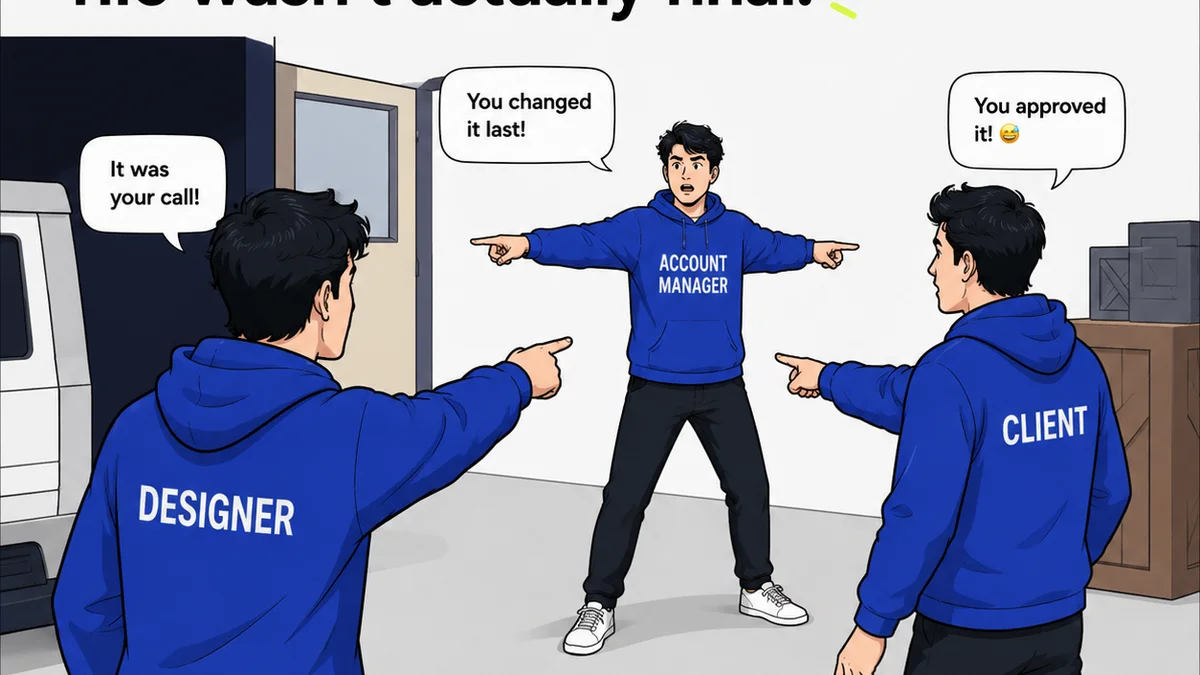
But behind every successful campaign, there’s a complex ballet of tasks, timelines, and talent. There are account managers wrangling clients, designers finessing assets, developers coding, QA testers finding bugs. It’s a symphony, not a solo.
The future leader in creative ops isn't the one with all the answers. They're the one who knows how to ask the right questions, and more importantly, how to build a system where the right people can find those answers collaboratively.
From Command and Control to Connect and Enable
Traditional leadership models often rely on top-down directives. 'Do this. By then. Because I said so.' This works in some environments, but it’s a bottleneck in creative work.
Creative operations thrive on agility and distributed intelligence. The best leaders in this space empower their teams, remove obstacles, and ensure clear communication channels. They are less generals, more air traffic controllers.
- Identifying and mitigating bottlenecks before they form.
- Ensuring cross-functional teams understand dependencies.
- Facilitating clear communication, not dictating it.
- Championing process improvements that empower individuals.
2. The Strategic Imperative of Process
Many creatives and agency leaders see 'process' as a dirty word. It’s the enemy of spontaneity, the killer of creativity. If you’ve ever been bogged down by endless approval rounds and confusing feedback, you might agree.
But that’s not process. That’s *bad* process. Or no process at all.
Effective process isn't about rigidity; it's about creating a predictable, reliable framework that *frees up* creative energy. It’s about making sure the mundane tasks are handled so the brilliant ones can shine.
From Chaos to Clarity
Think about the last time a project went sideways. Was it a lack of talent? Rarely. It was usually a breakdown in communication, a missed deadline due to unclear scope, or feedback that was contradictory or lost in translation.
Good operational leadership instills clarity. It defines workflows, standardizes deliverables, and establishes clear lines of accountability. This isn't bureaucracy; it's the scaffolding that supports ambitious creative work.
- Defining clear project kickoff and briefing procedures.
- Implementing structured feedback and revision loops.
- Establishing robust QA and final approval gates.
- Documenting best practices for common project types.
This clarity reduces friction. It builds trust. And it ensures that when inspiration strikes, the team is ready to execute, not scramble.
3. The Data-Driven Creative: Beyond Gut Feel
Creative work has always been perceived as an art form, driven by intuition and gut feeling. And that’s true to an extent.
But in today’s competitive landscape, relying solely on intuition is a gamble. Leaders who understand the future are leveraging data to inform decisions, optimize workflows, and even inspire creative direction.
This doesn’t mean turning creatives into spreadsheets. It means using operational data to understand what's working, what's not, and where resources are best allocated.
Measuring What Matters
What gets measured gets managed. But what do you measure in creative operations?
- Project delivery times against estimates.
- Number of revision cycles per project.
- Client feedback turnaround times.
- Resource allocation and utilization rates.
- Error rates identified in QA.
By tracking these metrics, leaders can identify trends, diagnose inefficiencies, and make informed adjustments. It’s about using insights to elevate, not dictate, the creative process.
This data can also highlight successful strategies and team performance, allowing for better recognition and resource planning. It moves operations from a reactive cost center to a proactive strategic partner.
4. Building Resilient Teams in a Volatile Market
The agency world is in constant flux. Client demands shift, technologies evolve, and economic pressures mount. Creative operations teams need to be more than just efficient; they need to be resilient.
Future-forward leadership in this space focuses on building teams that can adapt, learn, and thrive amidst uncertainty.
The Human Element in a Digital World
Technology and process are crucial, but they are only as good as the people executing them. Leaders must prioritize the well-being and development of their teams.
- Fostering a culture of continuous learning and skill development.
- Promoting work-life balance to prevent burnout.
- Encouraging psychological safety, where experimentation and honest feedback are welcomed.
- Providing clear career paths and growth opportunities within operations.
Resilient teams are adaptable teams. They can pivot when client needs change, adopt new tools seamlessly, and maintain high performance even under pressure. This resilience starts with leadership that values its people as much as its output.
Where Revue Fits In
Centralizing feedback, managing revisions, and ensuring quality checks are the bedrock of efficient creative operations. Without a clear system, these critical functions become points of friction, leading to delays, misunderstandings, and compromised creative output.
Revue is built to address these core operational challenges. It provides a single source of truth for client feedback, making it easy to track comments, manage versions, and gain clear approval at every stage. This eliminates the chaos of scattered emails and endless document versions.
By streamlining these workflows, Revue empowers creative operations leaders to:
- Gain real-time visibility into project status and feedback cycles.
- Reduce the time spent chasing down approvals or clarifying ambiguous comments.
- Ensure that every revision is tracked and accounted for, minimizing errors.
- Free up their teams to focus on creative problem-solving rather than administrative overhead.
This isn't about replacing human judgment; it's about augmenting it with a robust, transparent system. It’s about building operational excellence that supports, rather than hinders, creative ambition.
Final Thought
The future of leadership in creative operations is about a fundamental shift. It’s moving away from the idea of operations as a necessary evil and towards understanding it as a strategic discipline. It requires a blend of technical acumen, process design, data literacy, and exceptional people skills.
Are you leading your creative operations, or are your operations leading you?
Frequently asked questions
What is the difference between creative leadership and creative operations leadership?
Creative leadership often focuses on the vision, inspiration, and conceptual direction of creative work. Creative operations leadership, on the other hand, is concerned with the practical execution, efficiency, and management of the processes, people, and tools that bring creative ideas to life.
Why is process important in creative operations?
Effective process in creative operations isn't about stifling creativity; it's about creating a predictable and reliable framework. It reduces friction, clarifies communication, minimizes errors, and frees up creative teams to focus on high-value work by handling mundane tasks efficiently.
How can data be used in creative operations?
Data can inform decision-making by tracking metrics like project delivery times, revision cycles, feedback turnaround, and error rates. This helps leaders identify inefficiencies, optimize workflows, allocate resources effectively, and understand team performance, moving operations from reactive to proactive.
What are the key skills for a future creative operations leader?
Key skills include process design and optimization, project management, data analysis, strong communication, team building, problem-solving, and the ability to foster a resilient and adaptive team culture. They need to be orchestrators and enablers, not just taskmasters.