Everyone’s talking about the future of enterprise collaboration. They’re talking about AI assistants, metaverse meeting rooms, and seamless integrations that make your entire tech stack sing in harmony. It sounds like a sci-fi movie, right?
None of that is wrong. But it’s incomplete. It’s the shiny surface, the dream of effortless operation.
The hard truth is that the future of enterprise collaboration isn't about the tech itself. It's about mastering the human element within the technology. It’s about taming the chaos, not just automating it.
1. The Illusion of Seamless Integration
We’re drowning in tools. Slack, Teams, Asana, Jira, Monday, Trello, Figma, Adobe CC, Google Workspace, Microsoft 365… the list is endless. Each promises to streamline workflows, connect teams, and boost productivity.
And they do. To an extent.
But the real problem isn’t that these tools don’t talk to each other. The problem is that we haven’t defined *how* they should talk to each other, and more importantly, *why*.
The Data Silo Problem, Reimagined
The traditional data silo was about separate databases. Today, the silo is about fractured communication, lost context, and duplicated effort. Information lives in a Slack thread, decisions are buried in an email chain, and final assets are scattered across cloud drives.
This isn't a technical problem. It's a process problem.
- Are project briefs stored in your PM tool, or a separate document?
- Where is client feedback *officially* logged?
- How do you track revision rounds without digging through inboxes?
- Who is the single source of truth for a final deliverable?
Without clear answers, the most advanced integration is just a faster way to move chaos from one place to another.
2. The Myth of the Fully Remote Ideal
The pandemic forced a massive experiment in remote work. Many embraced it, touting its flexibility and cost savings. The narrative became that remote-first is the future, and the office is a relic.
But ask most creative directors or agency owners what they *really* want, and you’ll hear a different story.
They miss the spontaneous whiteboard sessions. They miss overhearing a quick problem-solving huddle. They miss the energy of people working side-by-side.
Hybrid is the Reality, Not a Compromise
The truth is, for many creative disciplines, a purely remote setup presents unique challenges. Collaboration often thrives on serendipity, visual brainstorming, and the subtle cues of in-person interaction.
The future isn't fully remote or fully in-office. It’s a carefully managed hybrid model. This requires intentional design.
- How do you ensure remote team members have equal visibility and voice in hybrid meetings?
- What processes are in place to capture spontaneous ideas generated in the office for those working remotely?
- How do you foster team cohesion when people are rarely in the same physical space?
- Are you investing in the right technology to bridge the physical divide, or just assuming it will happen?
True collaboration in a hybrid world means making the physical distance irrelevant by design.
3. The Human Factor: Ownership and Accountability
We often assume that giving people more tools or more autonomy equals better collaboration. It’s a nice thought.
But what happens when the lines of responsibility blur? When a task falls through the cracks because everyone assumed someone else was handling it?
This is where true collaboration breaks down. Not because of a lack of software, but a lack of clarity.
The Clarity Gap
Enterprise collaboration, at its core, is about clear ownership and unambiguous accountability. Who is responsible for what? Who needs to approve it? What are the deadlines?
When these questions aren’t answered with crystal clarity, the result is:
- Missed deadlines
- Scope creep
- Client dissatisfaction
- Team burnout
- Wasted resources
Technology can help track these things, but it can’t *create* them. That requires deliberate process design and a culture that values clear roles.
4. The Overlooked Power of Feedback Loops
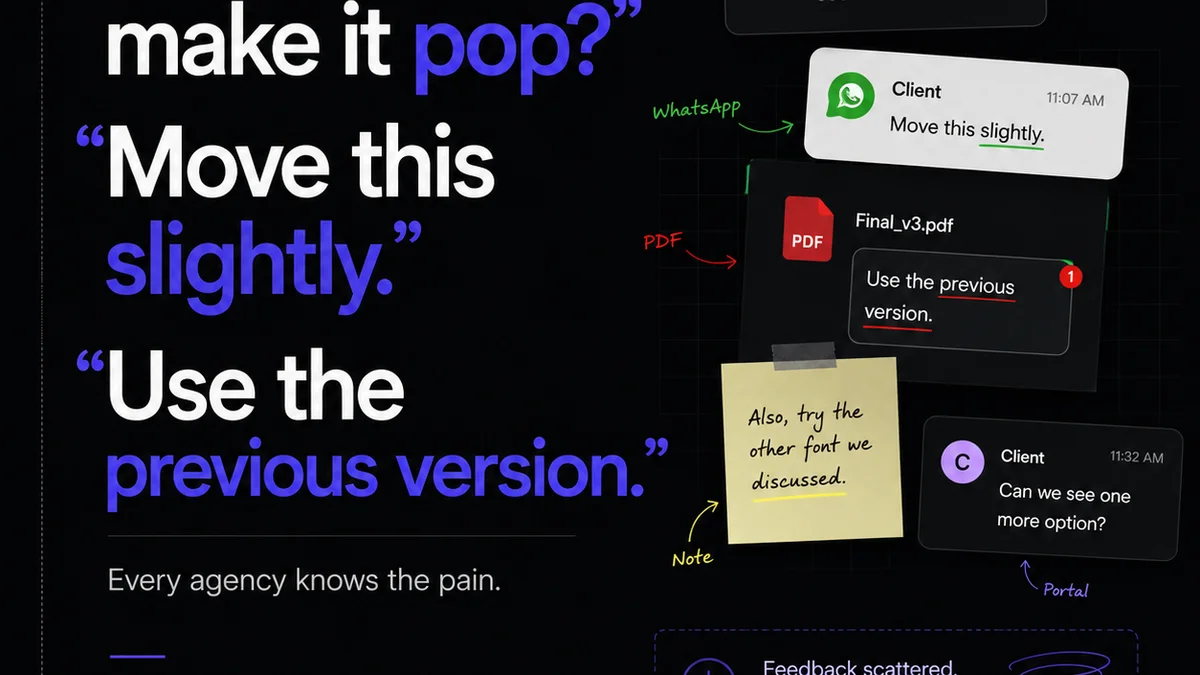
The creative process is iterative. It’s a series of feedback loops. Yet, for many organizations, managing this loop is a chaotic, manual, and often frustrating experience.
Emails get lost. Comments are made on screenshots that are already outdated. Key stakeholders aren't looped in, or worse, everyone is looped in on every minor tweak.
This isn't just inefficient; it kills momentum and erodes quality.
Structured Feedback is Strategic
The future of collaboration requires structured, centralized feedback mechanisms. This means moving beyond ad-hoc comments and into a system that:
- Captures feedback directly on the asset being reviewed.
- Clearly assigns feedback to the right person or team.
- Tracks the status of each piece of feedback (e.g., addressed, pending, rejected).
- Provides a clear audit trail of all comments and decisions.
This structured approach ensures that feedback is constructive, actionable, and doesn’t become a bottleneck.
Where Revue Fits In
You’re likely already using a suite of tools. We’re not here to add another one to the pile that just duplicates functionality.
Revue is built for the messy middle of creative collaboration. It’s where feedback, revisions, and approvals happen in a way that’s organized, transparent, and auditable.
Imagine:
- Centralizing all client feedback on visual assets, eliminating email chains and scattered comments.
- Providing clear visibility into revision status for every stakeholder, reducing endless back-and-forth.
- Running essential quality checks with clear checklists and sign-offs, ensuring nothing slips through the cracks.
Revue doesn’t replace your project management tool or your communication platform. It enhances them by providing the crucial layer of focused, actionable oversight for your creative work. It’s about making the human elements of collaboration – feedback and approval – work smarter, not just faster.
Final Thought
The future of enterprise collaboration isn't about the next big technological leap. It's about the deliberate, often unglamorous, work of refining processes, clarifying roles, and fostering genuine human connection within the tools we already have.
Are you building systems that support your people, or just buying them more software?
Frequently asked questions
What is the biggest misconception about the future of enterprise collaboration?
The biggest misconception is that the future is solely about advanced technology like AI or the metaverse. While these play a role, the real challenge and opportunity lie in mastering the human elements: clear processes, effective communication in hybrid environments, and robust accountability.
How does hybrid work impact enterprise collaboration?
Hybrid work requires intentional design to be successful. It means actively bridging the gap between remote and in-office team members, ensuring equal visibility and participation, and creating processes that capture spontaneous ideas and facilitate seamless communication regardless of location.
Why is clear ownership crucial for collaboration?
Clear ownership and accountability prevent tasks from falling through the cracks, reduce confusion, and ensure projects stay on track. Without it, even the best technology can lead to missed deadlines, scope creep, and team burnout.
How can organizations improve their feedback loops?
Organizations can improve feedback loops by implementing structured, centralized systems. This means capturing feedback directly on assets, clearly assigning it, tracking its status, and maintaining an audit trail, moving away from scattered and ad-hoc communication.