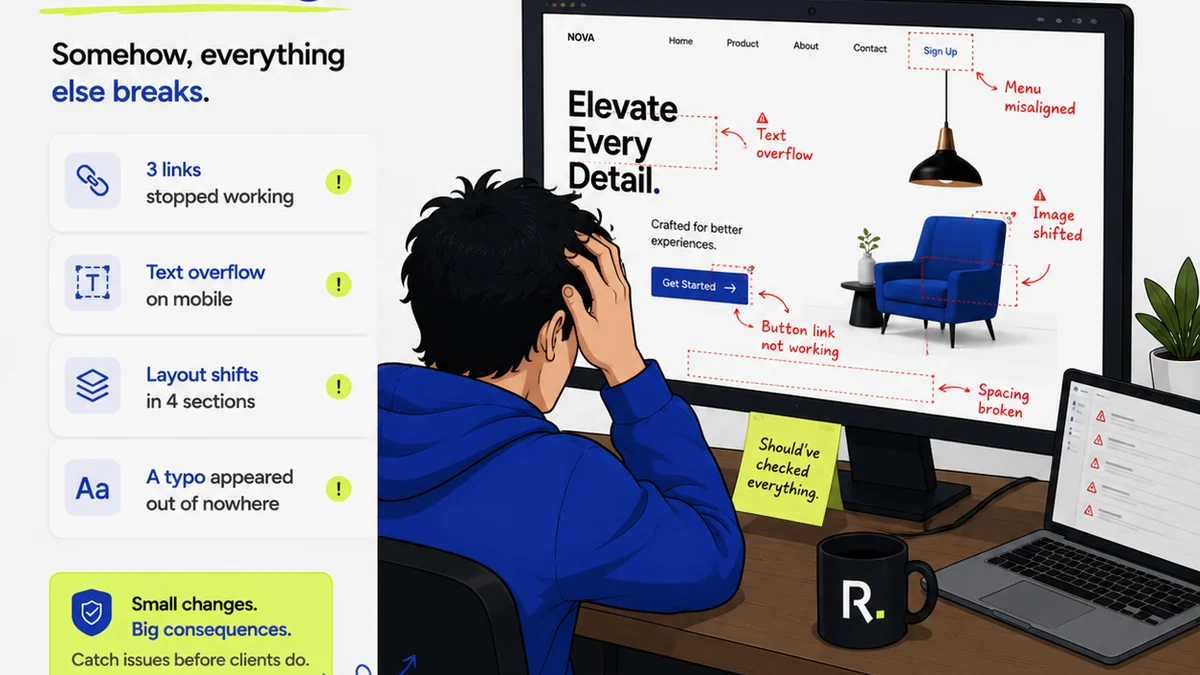
Everyone’s talking about the future of creative collaboration. They’ll tell you it’s AI. It’s VR. It’s seamless integrations. It’s about breaking down silos.
None of that is wrong. But it’s incomplete.
The hard truth? The future of enterprise creative collaboration isn't a technology problem. It's a workflow problem. And it’s a culture problem.
You can have the most advanced tech stack on the planet, but if your processes are broken, your teams will still be drowning in messy feedback, endless revisions, and missed deadlines. The real revolution is in how work actually gets done.
1. The Illusion of 'Seamless' Integration
We’re sold a vision of tools that talk to each other perfectly. Your design app, your project management tool, your communication platform – all singing in harmony.
The reality? It’s usually a patchwork. Workarounds. Data silos that just move from one system to another. Information gets lost in translation.
This isn't about shaming software vendors. It's about understanding what 'integration' actually means for your team's day-to-day reality.
The 'Connected' Chaos
- Designers exporting to Figma, then pasting links into Slack.
- Project managers manually updating task statuses based on email threads.
- Clients sending feedback via email, then again in a PDF, then again in a DM.
- QA teams hunting down the latest approved version across multiple shared drives.
This isn't collaboration. It's a frantic game of digital whack-a-mole.
True collaboration doesn't come from more integrations. It comes from a single source of truth for creative assets and feedback.
2. Feedback: The Unseen Bottleneck
If you ask creatives what their biggest pain point is, feedback will almost always be at or near the top of the list.
It’s not just the volume of feedback. It’s the quality. The clarity. The context.
We assume more feedback channels mean better input. Wrong.
The Feedback Feedback Loop (The Bad Kind)
- Ambiguous comments: “Make it pop more.” “I don’t like the vibe.”
- Conflicting directions from different stakeholders.
- Feedback buried in long email chains or chat logs.
- No clear way to track revisions made based on feedback.
- Clients approving something, only to change their minds days later.
This friction slows everything down. It erodes trust. It leads to rework that costs time and money.
The future isn't about *more* feedback. It's about *smarter*, more actionable, and more centralized feedback.
3. Revision Management: The Perpetual Motion Machine
The revision cycle is the engine of creative work. But for many enterprises, it's an engine running on fumes, sputtering and stalling.
The assumption is that a clear brief and a few rounds of revisions are enough. But what happens when those revisions aren't tracked? When the scope creeps subtly?
When you can't easily see *what* changed, *why* it changed, and *who* approved it, you’re setting yourself up for disaster.
The Revision Rabbit Hole
- Endless
Frequently asked questions
What are the biggest challenges in enterprise creative collaboration?
The biggest challenges often lie in managing feedback effectively, tracking revisions accurately, ensuring version control, and maintaining clear communication across dispersed teams and stakeholders. Technology alone doesn't solve these workflow and cultural issues.
How can AI impact creative collaboration in enterprises?
AI can assist with tasks like content generation, image upscaling, and data analysis for insights. However, its role in collaboration is supplementary to robust workflow processes, not a replacement for them. The focus remains on how AI tools integrate into existing, efficient workflows.
What is a 'single source of truth' for creative assets?
A single source of truth is a centralized system or platform where all approved creative assets, project documentation, and feedback reside. This eliminates confusion, ensures everyone is working from the latest versions, and streamlines the review and approval process.
How does centralized feedback improve collaboration?
Centralized feedback consolidates all comments and approvals into one accessible location. This prevents conflicting messages, provides clear context for changes, reduces the risk of feedback being missed, and creates an auditable trail of decisions, leading to faster approvals and less rework.