Everyone’s talking about the future of creative collaboration. It’s all about AI, VR, and seamless global teams. None of that is wrong. But it’s incomplete.
The real future of creative collaboration isn’t a shiny new technology. It’s about mastering the fundamentals of efficient, clear, and accountable communication.
1. The Myth of the Always-On, Always-Connected Team
We’re told that the future means teams can work together from anywhere, at any time. That boundless connectivity is the ultimate goal.
The hard truth? Constant connectivity often breeds constant distraction and burnout. True collaboration requires focused time, not just constant access.
The Cost of 'Always On'
When everyone is expected to be available 24/7, critical thinking suffers. Deadlines get met, but quality can erode.
- Increased errors due to rushed work.
- Reduced strategic thinking.
- Team fatigue and decreased morale.
- Blurred lines between work and personal life.
The future demands intentional connection, not just perpetual availability.
2. Bridging the Gap: Asynchronous vs. Synchronous Work
The future of creative collaboration will heavily rely on mastering both synchronous (real-time) and asynchronous (not real-time) workflows.
Many teams default to synchronous communication out of habit or a misunderstanding of its true cost. Endless meetings, instant message ping-pong – these activities eat up valuable creative time.
Optimizing Real-Time Collaboration
Synchronous collaboration is essential for brainstorming, critical decision-making, and building rapport. But it needs guardrails.
Future-forward teams will use real-time sessions strategically:
- For kick-offs and urgent problem-solving.
- For high-level strategic alignment.
- For team-building and culture moments.
Tools that facilitate quick, focused video calls and collaborative whiteboarding are key here.
Leveraging Asynchronous Efficiency
Asynchronous work is where deep creative thinking happens. It allows individuals to focus without interruption.
This means:
- Clear, detailed briefs and project documentation.
- Recorded walkthroughs and feedback sessions.
- Structured feedback loops that allow for thoughtful responses.
The goal is to minimize unnecessary real-time meetings by making asynchronous communication robust and clear.
3. The Centrality of Clear Briefs and Documentation
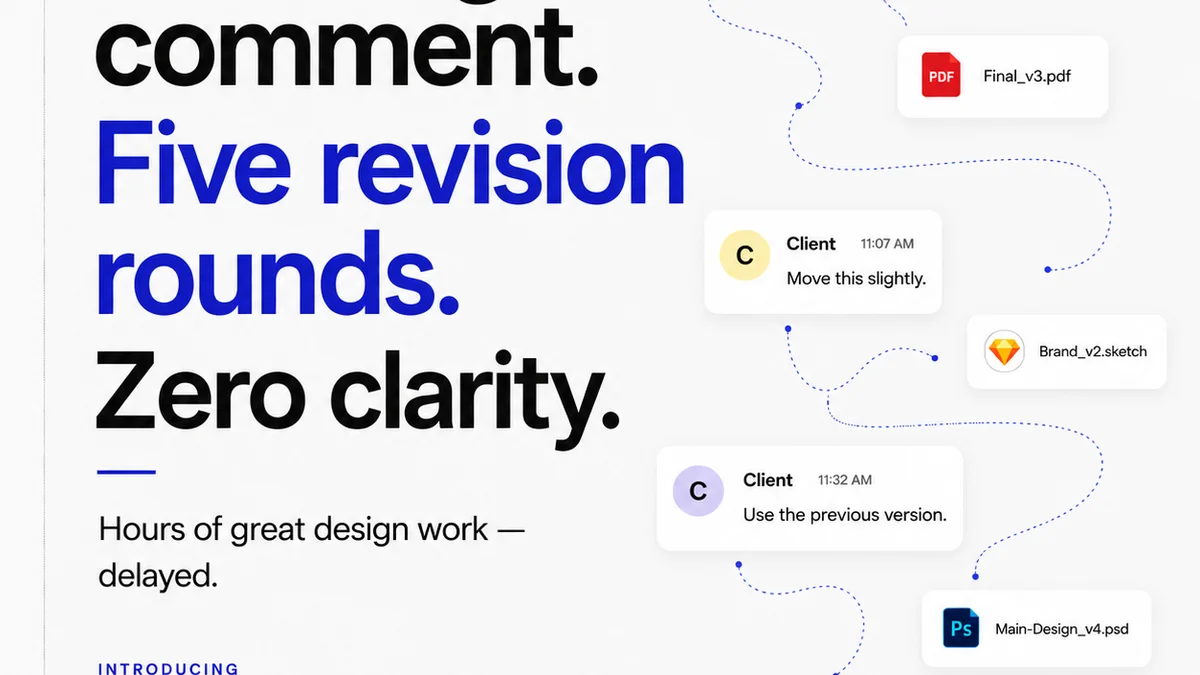
The single biggest bottleneck in creative collaboration isn’t a lack of talent. It’s a lack of clarity.
Ambiguous briefs lead to wasted cycles, misaligned expectations, and ultimately, work that misses the mark. The future demands rigor here.
From Vague to Vivid
A great brief is the foundation of successful collaboration. It must be:
- Specific about goals and objectives.
- Clear on target audience and key messaging.
- Detailed about deliverables and technical specifications.
- Concise and easy to understand.
Investing time upfront in a crystal-clear brief saves exponentially more time down the line.
Living Documents
Project documentation shouldn’t be a static, one-off artifact. It needs to evolve with the project.
Think of your project briefs, style guides, and research as living documents. They should be easily accessible and updateable by the relevant team members.
This reduces the need for constant
Frequently asked questions
What is the biggest challenge in future creative collaboration?
The biggest challenge isn't technology, but mastering clear communication and efficient workflows. Teams often struggle with ambiguity in briefs and feedback, leading to wasted time and misaligned work. The future demands operational excellence in how teams communicate and manage projects, not just adopting new tools.
How can agencies balance synchronous and asynchronous collaboration?
The key is intentionality. Use synchronous (real-time) collaboration for high-level strategy, brainstorming, and urgent problem-solving. Leverage asynchronous methods for detailed work, feedback, and focused thinking. This requires robust documentation, clear briefs, and structured feedback processes to minimize unnecessary meetings and maximize deep work time.
What role does AI play in the future of creative collaboration?
AI is emerging as a powerful assistant, automating repetitive tasks, suggesting improvements, and analyzing data. However, it's unlikely to replace human creativity and strategic oversight. The future will see AI augmenting human collaboration by handling routine aspects, freeing up creatives for more complex, strategic, and innovative work.
How can I improve feedback loops in my creative team?
Implement structured feedback processes. This includes providing clear context with feedback, using annotation tools for specific comments, and setting clear deadlines for review. Centralizing feedback, like Revue does, ensures all comments are visible, tracked, and actionable, reducing confusion and redundant conversations.