The common wisdom? Design systems are the silver bullet. They’ll bring order to chaos, ensure brand consistency across every touchpoint, and make designers and developers work in perfect harmony. It’s a beautiful picture. A clean, organized, utopian vision of creative production.
None of that is wrong. But it’s incomplete.
The real future of design systems isn’t about achieving perfect, static harmony. It’s about managing the messy, dynamic reality of creative work at scale. It’s about embracing evolution, not just standardization. It’s about making systems that are living, breathing tools, not just rigid rulebooks.
1. Beyond the Style Guide: Systems as Workflows
Most people still think of design systems as a polished library of components and guidelines. A beautiful Figma file or a comprehensive website. Essential, yes. But that’s just the documentation layer.
The real power, and the real future, lies in how these systems integrate into the actual workflow. How do they facilitate collaboration? How do they speed up iteration? How do they reduce friction between design, development, and product management?
Think of it this way:
- A component library is a dictionary.
- A design system is a language.
- A truly future-forward design system is a conversation.
This means systems need to be more than just static assets. They need to be dynamic, interconnected tools that support the entire product lifecycle. They need to live where the work happens.
The Integration Imperative
This requires deeper integrations. Not just linking to a documentation site, but embedding system components and logic directly into the tools designers and developers use daily. This is where AI and automation start to play a significant role, suggesting components, enforcing constraints, and even generating boilerplate code based on design decisions.
2. The Evolving Definition of “Consistency”
We’re taught that consistency is about sameness. Every button looks the same, every interaction feels identical. This is certainly part of it. But in a complex product ecosystem, or across multiple brands and sub-brands, absolute sameness becomes a straitjacket.
The future of consistency is about cohesion. It’s about ensuring that while elements might vary to suit context, they still feel like they belong to the same family. This allows for more nuanced brand expression and adaptive user experiences.
Consider these scenarios:
- A primary button versus a secondary button.
- A marketing website versus a complex enterprise application.
- Different regional variations of a product.
These aren't failures of consistency; they're intelligent applications of a design system’s principles. The system needs to provide the framework for these variations, not just dictate a single form.
Contextual Design and Adaptive Systems
Future systems will be smarter about context. They’ll understand the user’s device, their location, their role within an application, and adapt accordingly. This is less about designers manually creating every permutation and more about building systems that can intelligently respond to these variables.
3. Decentralization and Distributed Ownership
The idea of a single, monolithic design system team dictating everything is already showing its age. As organizations grow and products diversify, a centralized, top-down approach becomes a bottleneck.
The future is more distributed. Design system principles will be owned by a core team, but the implementation, extension, and even contribution to the system will be distributed across product teams, feature squads, and even individual contributors.
This means:
- Clear governance models that empower teams.
- Tools that make it easy for anyone to contribute back.
- Mechanisms for discovering and reusing existing patterns across the organization.
- A cultural shift towards shared responsibility for the system’s health.
This isn’t about anarchy; it’s about democratizing the system. It’s about making it a collective asset, not a corporate mandate.
The Rise of “Mini-Systems” and Team-Level Adaptations
We’ll see more “mini-systems” or team-specific extensions of the core. These allow specialized teams to innovate and adapt while still adhering to the overarching brand and architectural principles. The core system becomes the foundation, not the ceiling.
4. The Human Element: Collaboration and Communication
Even the most advanced technology won’t replace the need for human collaboration and clear communication. In fact, as systems become more complex and distributed, the need for these soft skills only increases.
A design system’s success hinges on:
- Onboarding new team members effectively.
- Providing clear, accessible documentation and training.
- Fostering a feedback loop between system users and maintainers.
- Resolving conflicts and making decisions transparently.
The future design system requires a dedicated effort in communication and community building. It’s about creating a shared understanding and buy-in across diverse teams with competing priorities.
Bridging the Design-Dev Divide (Still)
While integrations help, the fundamental need for designers and developers to speak the same language remains. Future systems will likely emphasize shared tooling, collaborative design-to-code platforms, and a continuous feedback loop to ensure alignment.
5. Where Revue Fits In
Managing a living, breathing design system in a dynamic agency or in-house team environment presents unique challenges. Centralizing feedback on design system components, tracking revisions to guidelines, and ensuring quality checks are performed consistently across all implementations are critical.
Revue acts as that central hub. It allows you to:
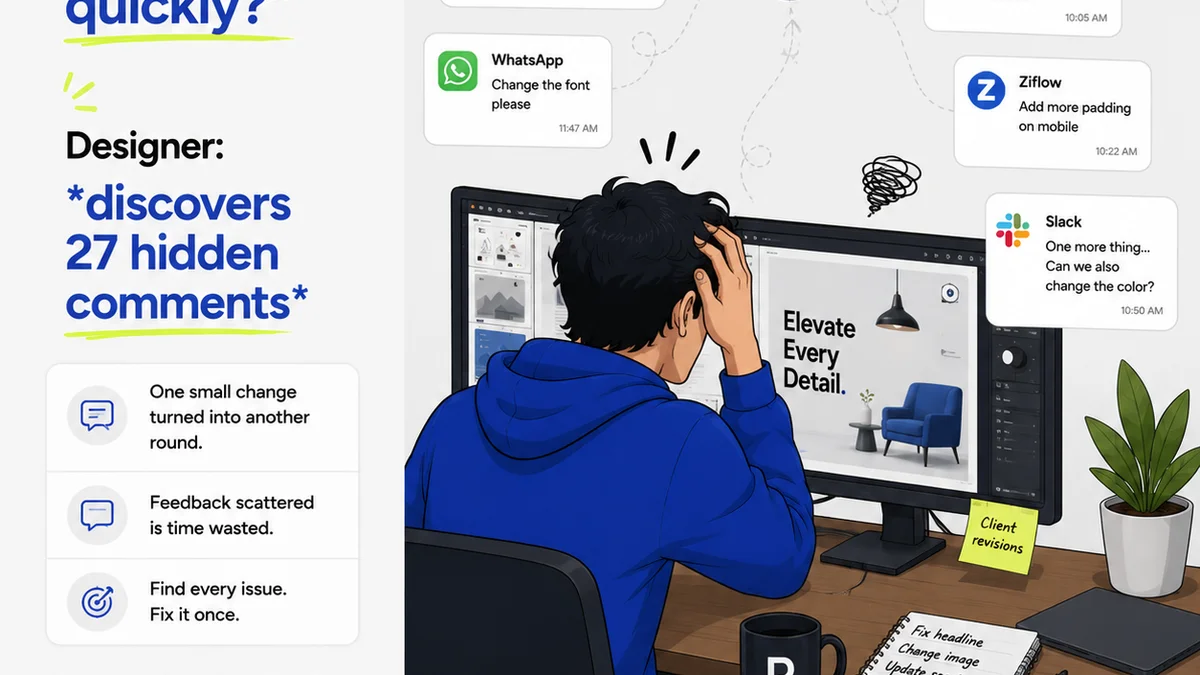
- Centralize Feedback: Gather all comments, suggestions, and bug reports related to your design system components and documentation in one place. No more hunting through scattered emails or Slack threads.
- Manage Revisions and Approvals: Track changes to your system’s guidelines and components. Ensure that updates are reviewed and approved by the right stakeholders before they’re implemented across projects.
- Run Quality Checks: Verify that new designs or features are adhering to the design system. Identify inconsistencies early in the process, reducing costly rework down the line.
When your design system is a dynamic tool, not just a static document, you need a dynamic platform to manage its evolution. Revue provides that platform, ensuring your system stays relevant, adopted, and effective.
Final Thought
The future of design systems isn't about achieving a mythical state of perfect, static order. It's about building adaptable, collaborative, and living frameworks that empower teams to create better work, faster. It’s about embracing the inevitable messiness of creativity and providing the tools to navigate it effectively. Are you building a system, or just a style guide?
Frequently asked questions
What's the difference between a style guide and a design system?
A style guide typically focuses on visual elements like colors, typography, and logos. A design system is much broader, encompassing not just visual styles but also reusable components, code, patterns, principles, and processes that guide the creation and maintenance of digital products.
How do design systems help with team collaboration?
Design systems provide a shared language and a single source of truth for design and development. This reduces misinterpretations, speeds up handoffs, and ensures everyone is working from the same set of established patterns and components, fostering a more cohesive team effort.
Is it still necessary to have a dedicated design system team?
While a core team is often crucial for establishing and maintaining the foundational elements, the future leans towards distributed ownership. This means empowering product teams to contribute, adapt, and extend the system within defined governance, making it a collective effort rather than solely the responsibility of a central team.
How can a design system adapt to different product needs?
Instead of enforcing rigid sameness, future-forward design systems focus on 'cohesion.' They provide a framework that allows for contextual variations in components and patterns. This means the system defines the rules for adaptation, ensuring that while elements might change based on context, they still feel part of the same overall brand or product experience.