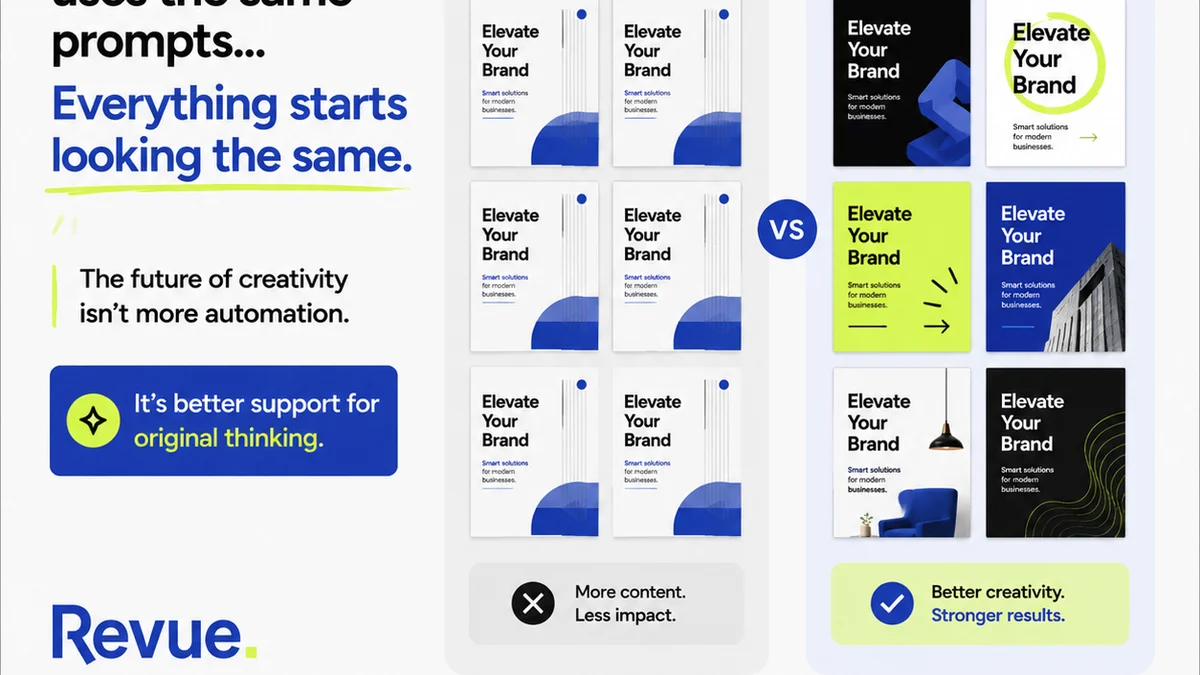
The Future of Marketing: Creativity Meets Strategy
You’ve got a killer strategy. The data is clear. The target audience is defined. So why does the creative execution often feel… disconnected? Or worse, why does it miss the mark entirely? This isn't a new problem, but in today's hyper-competitive landscape, the cost of this disconnect is higher than ever. The future of marketing demands a unified approach where creativity and strategy aren't just adjacent; they're interwoven.
Many teams treat strategy and creative as separate silos, with strategy dictating the 'what' and 'why,' and creative handling the 'how.' This often leads to creative work that’s technically sound but lacks soul, or brilliant creative that lacks strategic direction. The result? Campaigns that underperform, wasted budgets, and frustrated teams.
1. Why Strategy and Creative Collide (and How to Fix It)
The root cause is often a lack of shared understanding and a breakdown in communication. Strategy teams focus on market research, analytics, and objectives, while creative teams focus on storytelling, aesthetics, and emotional resonance. When these two worlds rarely intersect during the crucial ideation phases, the output suffers.
The Problem with Siloed Thinking
- Misinterpretation: Strategic briefs can be dry and analytical, making it hard for creatives to grasp the underlying emotional truth or opportunity.
- Lack of Inspiration: Creatives may not see the strategic data as a source of inspiration, leading to generic or uninspired concepts.
- Missed Nuances: Strategic insights about audience behavior or market trends might be lost in translation, leading to creative that doesn't truly connect.
- Approval Bottlenecks: Concepts are developed only to be rejected later because they don't align with strategic goals, wasting valuable time and resources.
The solution isn't to force creatives to become data analysts or strategists to become artists. It's about building bridges. It’s about fostering an environment where strategic insights directly fuel creative thinking, and creative concepts are grounded in strategic possibility.
2. The Unified Workflow: From Insight to Impact
The future of marketing hinges on a workflow that integrates strategic discovery with creative exploration from the outset. This means moving beyond the traditional
Frequently asked questions
What is the biggest challenge in integrating marketing strategy and creativity?
The biggest challenge is often the perception of these as separate disciplines, leading to siloed thinking, poor communication, and a lack of shared understanding. This can result in creative work that lacks strategic grounding or strategic plans that fail to inspire impactful creative execution.
How can creative teams better understand strategic insights?
Creative teams can benefit from workshops where strategic data is presented not just as numbers, but as compelling stories about customer behavior and market opportunities. Encouraging direct interaction between strategists and creatives early in the process, and using visual aids to explain complex data, can also foster better understanding.
What role does technology play in unifying strategy and creativity?
Technology plays a crucial role by providing platforms for seamless collaboration, centralized feedback, and version control. Tools like Revue can help bridge the gap by allowing stakeholders to provide feedback directly on creative assets within a strategic context, ensuring alignment and streamlining revisions.
How does a unified approach benefit clients?
A unified approach ensures that marketing campaigns are not only creative and engaging but also directly address business objectives and deliver measurable results. Clients benefit from more effective campaigns, reduced wasted spend on misaligned efforts, and a more efficient, transparent creative process.
Is it possible for small agencies to implement this unified workflow?
Absolutely. The core principles of integration and collaboration can be adapted regardless of team size. Focusing on clear communication channels, involving key team members from strategy and creative early on, and utilizing project management tools can make a significant difference, even for smaller operations.