Everyone talks about future-proofing creative workflows. They point to AI tools, new collaboration platforms, or the latest agile methodologies. None of that is wrong. But it’s incomplete.
The real future-proofing isn't about adopting the newest tech. It's about building a workflow strategy so resilient, it can absorb change without breaking. It’s about operational intelligence.
This means moving beyond reactive fixes to proactive design. It’s understanding the core principles that make any workflow robust, adaptable, and scalable. Let's break down the hard truth: your workflow's future depends on its foundational strength, not just its features.
1. The Illusion of 'Agile'
Many teams claim to be agile. They adopt daily stand-ups, sprint reviews, and Kanban boards. They think this automatically future-proofs their process.
But true agility isn't a set of ceremonies. It’s the ability to sense and respond to change rapidly. A rigidly implemented agile framework can be just as brittle as a waterfall one.
The Real Problem: Misaligned Goals
The biggest killer of agile workflows is a lack of clarity on what 'done' means. When project goals are fuzzy, or client expectations are unmanaged, even the most agile process devolves into endless revisions and scope creep.
Future-proofing means embedding clarity at every stage. This involves:
- Defining crystal-clear project objectives upfront.
- Establishing rigorous scope-management protocols.
- Ensuring every team member understands their role and the project's ultimate goal.
- Building feedback loops that prioritize actionable insights over subjective opinions.
Without this clarity, you’re just rearranging deck chairs on the Titanic, no matter how fast you’re rowing.
2. Tech Stacking vs. Tech Integration
The rush to adopt new tools is relentless. Every week there's a new AI assistant, a slicker project management app, or a more immersive VR design space. Agencies and in-house teams often fall into the trap of 'tech stacking'—buying into every shiny new object.
This creates a disjointed, inefficient mess. Tools end up competing, not complementing. Information gets siloed. Your team spends more time toggling between apps than doing creative work.
The Hard Truth: Workflow is the Operating System
Technology should serve your workflow, not dictate it. A future-proof workflow strategy prioritizes seamless integration. This means:
Define Your Core Processes First. Before you buy any tool, map out your ideal workflow. What are the essential steps from brief to final delivery?
Prioritize Interoperability. Choose tools that talk to each other. Look for robust APIs and native integrations. Can your design tool export directly to your review platform? Can your PM tool sync with your communication channels?
Standardize Where Possible. Don't let every project have its own unique tech stack. Identify a core set of tools that serve most of your needs. This reduces onboarding time and training costs.
Focus on Data Flow. Where does information live? How does it move? A future-proof workflow ensures data flows smoothly and is accessible to the right people at the right time. This is critical for leveraging AI effectively later.
Think of your workflow as the operating system. The tools are just the applications. A stable OS can run many applications; a buggy OS will crash, no matter how good the apps are.
3. The Myth of 'Client-Proofing'
Many creatives believe the best way to future-proof is to 'client-proof' their work. This means building in so many checks and balances that clients can’t derail the process. It’s a noble, but flawed, goal.
Clients are inherently part of the creative process. Their input, while sometimes challenging, is essential. Trying to 'proof' them out is a recipe for strained relationships and missed opportunities.
The Real Goal: Client Collaboration, Not Control
Future-proofing means building systems that facilitate effective client collaboration. It’s about managing expectations and making the feedback process productive, not painful.
This requires:
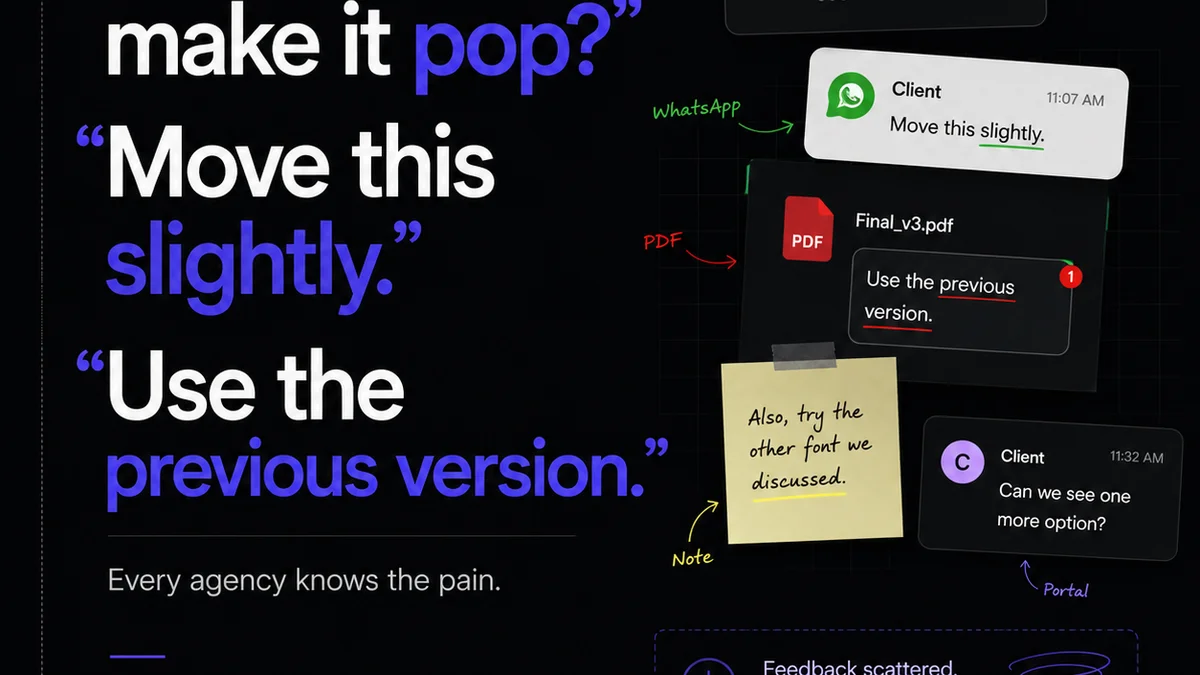
- Transparent Communication Channels. Where do clients provide feedback? How is it logged? How do they see the status of their project?
- Structured Feedback Mechanisms. Instead of vague comments, guide clients towards specific, actionable feedback. Use annotation tools, predefined feedback forms, or structured review meetings.
- Clear Revision Limits and Processes. Define the number of revision rounds included. Establish what constitutes a 'revision' versus a 'new request'.
- Educating the Client. Help clients understand your process and why it’s designed the way it is. Explain the value of constructive feedback.
A future-proof workflow embraces client input, channeling it effectively. It turns potential friction into fuel for better creative outcomes.
4. The Neglected Foundation: Internal Communication & Documentation
The most common failure point in creative workflows isn't a lack of talent or technology. It's poor internal communication and a lack of robust documentation.
Emails get lost. Slack messages disappear into the ether. Key decisions made in hallway conversations are forgotten. This leads to duplicated effort, missed deadlines, and team burnout.
The Hard Truth: Knowledge is Your Most Valuable Asset
Future-proofing requires treating internal knowledge as a core asset. This means:
Centralized Information Hub. Have a single source of truth for project briefs, assets, feedback, and decisions. This isn't just about file storage; it's about context.
Standardized Documentation Practices. Define how meeting notes are taken, how decisions are recorded, and how project history is maintained. Make it easy to find what you need, when you need it.
Clear Handoff Protocols. When a project moves from creative to production, or from one team member to another, what information *must* be transferred? Document these protocols.
Onboarding Efficiency. A robust documentation system makes onboarding new team members faster and more effective. They can get up to speed without constant interruptions to senior staff.
This internal rigor is the bedrock of any adaptable workflow. Without it, you're building on sand.
5. Where Revue Fits In
Building a future-proof creative workflow strategy means creating systems that are clear, collaborative, and resilient. It means moving away from scattered documents, endless email chains, and ambiguous feedback.
Revue is designed to be that central nervous system for your creative operations.
We help you centralize client feedback, bringing all comments, annotations, and approvals into one accessible place. No more digging through emails or Slack threads. Every piece of feedback is logged and tied to the specific asset.
Our platform provides clear visibility into revision cycles. You can track the status of approvals, manage different versions of creative assets, and ensure everyone is working from the latest iteration. This structure minimizes confusion and speeds up the decision-making process.
Furthermore, Revue facilitates quality checks by providing a clear, documented trail of feedback and approvals. This ensures that creative work meets client expectations and internal standards before final delivery.
By integrating these elements, Revue empowers your team to manage feedback, streamline revisions, and maintain high-quality output, forming a critical component of a future-proof creative workflow.
Final Thought
The most successful creative teams aren't the ones who chase every new tool. They are the ones who build robust, adaptable systems.
They understand that technology is an enabler, not a solution. They prioritize clarity, communication, and integration.
So, ask yourself: Is your current workflow designed to adapt, or is it designed to break when the next big thing arrives?
Frequently asked questions
What is the most important factor in future-proofing a creative workflow?
The most important factor is building a workflow strategy that prioritizes adaptability and resilience. This means focusing on clear communication, seamless integration of tools, structured feedback processes, and robust internal documentation, rather than just adopting the latest technologies.
How can I make client feedback more productive?
You can make client feedback more productive by establishing transparent communication channels, using structured feedback mechanisms that guide clients toward actionable input, clearly defining revision limits, and educating clients about your process and the value of constructive criticism.
Why is internal communication critical for workflow future-proofing?
Poor internal communication leads to lost information, duplicated effort, and team burnout. A future-proof workflow relies on a centralized information hub, standardized documentation practices, and clear handoff protocols to ensure knowledge is preserved and accessible, making the team more efficient and adaptable.
How does technology fit into a future-proof workflow strategy?
Technology should serve your workflow, not dictate it. Future-proofing involves prioritizing tools that integrate well, defining your core processes first, standardizing your tech stack where possible, and ensuring data flows smoothly between systems, rather than simply adopting every new tool available.