Everyone says design collaboration is key. They talk about open communication, shared tools, and understanding client needs. None of that is wrong. But it’s incomplete.
The hard truth is that most design collaboration strategies are built for today’s problems, not tomorrow’s. They’re reactive. They get you through the current project. But they don’t build resilience.
Future-proofing your design collaboration isn't about predicting the future. It's about building a system that can adapt to *any* future. It’s about moving from chaos to control.
1. Embrace Asynchronous Communication
Real-time meetings and constant Slack pings feel productive. They’re not. They fragment focus and create bottlenecks. Your team jumps from task to task, never truly diving deep.
Asynchronous communication is the antidote. It allows team members to contribute on their own schedule, providing thoughtful input without interruption.
The Benefits are Clear
- Reduced context switching.
- Deeper, more considered feedback.
- Better documentation of decisions.
- Flexibility for global teams or different time zones.
This isn't about avoiding communication. It's about structuring it for efficiency and quality.
Making the Shift
- Define clear channels for different types of communication.
- Set expectations for response times.
- Utilize tools that support threaded discussions and clear annotations.
When feedback is logged, searchable, and contextual, you build a record. This record is gold for future projects and for understanding evolving client preferences.
2. Standardize Your Feedback Loop
Client feedback is the lifeblood of design. But how it's collected, processed, and actioned determines success or failure. A chaotic feedback loop leads to scope creep, endless revisions, and team burnout.
Your strategy needs to anticipate the *messiness* of feedback. It needs a structure that can handle it.
The Cost of Ad Hoc Feedback
- Misinterpreted comments.
- Lost feedback in email chains.
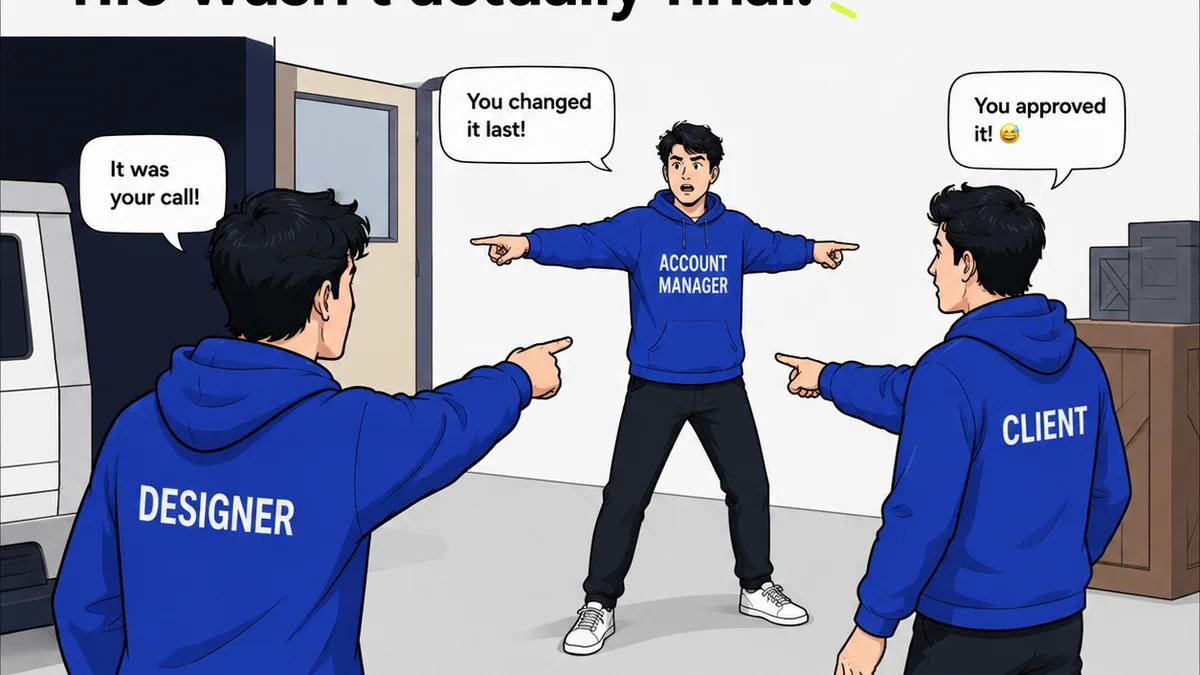
- Disagreements over what was *actually* said.
- Wasted time chasing clarification.
This isn't just about making clients happy. It's about protecting your team's time and your project's profitability.
Building a Robust Process
- Centralize all feedback: One source of truth for every comment, revision request, and approval.
- Attribute feedback: Know who said what, and when.
- Contextualize feedback: Link comments directly to specific design elements.
- Formalize approvals: Clear sign-offs at key milestones.
This structured approach transforms feedback from a source of anxiety into a manageable, trackable part of the workflow.
3. Integrate Version Control Deeply
How many times have you seen a file named `final_final_v3.ai`? It’s a symptom of a larger problem: a lack of clear version control. This leads to confusion, duplicated work, and the terrifying possibility of working on the wrong asset.
Future-proofing means your system inherently understands and manages versions. It's not an afterthought; it's built-in.
The Dangers of Poor Versioning
- Accidentally overwriting critical work.
- Difficulty tracking the evolution of a design.
- Clients referencing outdated versions.
- Wasted hours searching for the correct file.
This impacts everything from design integrity to client trust.
Effective Versioning Strategies
- Automated versioning: Tools that automatically save new versions with each significant change.
- Clear naming conventions: Even with automation, a consistent system helps.
- Revision history: The ability to easily view and revert to previous versions.
- Staged releases: Clearly marking internal, client review, and final versions.
Robust version control ensures that everyone is working from the same page, literally. It builds confidence and reduces errors.
4. Define Clear Roles and Responsibilities
Ambiguity in roles breeds inefficiency. When it's unclear who is responsible for what, tasks fall through the cracks. Decisions get delayed. Your entire collaboration process suffers.
A future-proof strategy clarifies these lines. Everyone knows their part in the feedback and approval process.
The Cost of Unclear Roles
- Decision paralysis.
- Duplicated effort.
- Blame shifting when things go wrong.
- Missed deadlines due to waiting for input.
This isn't about rigid bureaucracy. It's about clarity that enables speed and accountability.
Clarifying the Landscape
- Client-side roles: Identify the key decision-maker, the subject matter expert, and the general reviewer.
- Agency-side roles: Define who manages feedback, who implements revisions, and who signs off internally.
- Communication protocols: Specify who communicates what to whom, and when.
When everyone understands their role in the collaboration, the process flows smoothly. This clarity is essential for scaling.
5. Build for Scalability and Adaptability
Your current process works for your current clients. What happens when you land a bigger client with more stakeholders? Or when your agency grows? A rigid system breaks.
Future-proofing is about designing a collaboration framework that can expand and contract as needed.
The Limits of Static Processes
- Inability to handle increased volume.
- Difficulty integrating new team members.
- Resistance to adopting new tools or methodologies.
- Client dissatisfaction due to process breakdown.
A truly resilient strategy is flexible by design.
Designing for Growth
- Modular system: Break down your process into components that can be swapped or scaled.
- Tool agnostic where possible: While tools are important, the underlying process should be adaptable.
- Regular process review: Schedule time to evaluate what's working and what's not.
- Onboarding documentation: Make it easy for new hires to understand the collaboration workflow.
Think of your collaboration strategy not as a fixed set of rules, but as an operating system that can be updated and upgraded.
Where Revue Fits In
Many of these principles – centralized feedback, clear versioning, defined approvals – are difficult to manage with scattered tools like email, spreadsheets, and generic file-sharing platforms. This is where a dedicated platform like Revue becomes invaluable.
Revue is built from the ground up to address the core challenges of creative collaboration. It provides a single source of truth for client feedback, ensuring that every comment, annotation, and revision request is captured in context. This eliminates the ambiguity of email chains and the risk of missed feedback.
With features designed for clear revision tracking and formal approval workflows, Revue helps agencies maintain project momentum and client trust. It transforms the often-painful feedback cycle into a streamlined, visible process. By centralizing these critical functions, Revue empowers creative teams to focus on what they do best: delivering exceptional creative work, efficiently and predictably.
Final Thought
The most successful agencies don't just manage feedback; they engineer it. They build systems that anticipate challenges, clarify communication, and ensure quality, project after project.
Is your current design collaboration strategy built to last, or just to get you through the next deadline?
Frequently asked questions
What is the main benefit of asynchronous communication for design teams?
Asynchronous communication reduces context switching, allowing designers to focus deeply on their work without constant interruptions. This leads to more thoughtful output and better overall productivity.
How can standardizing the feedback loop prevent scope creep?
By centralizing all feedback, attributing it to specific stakeholders, and contextualizing it against design elements, you create a clear record. This makes it easier to identify out-of-scope requests and manage client expectations effectively.
Why is version control crucial for future-proofing design collaboration?
Robust version control prevents confusion, ensures everyone is working on the latest assets, and provides a clear history of design evolution. This reduces errors, saves time, and builds client confidence by eliminating the risk of using outdated files.
How does defining clear roles impact collaboration efficiency?
Clear roles eliminate ambiguity, ensuring tasks are assigned and responsibilities are understood. This prevents decision paralysis, reduces duplicated effort, and makes it clear who needs to provide input or approval at each stage, leading to smoother project progression.