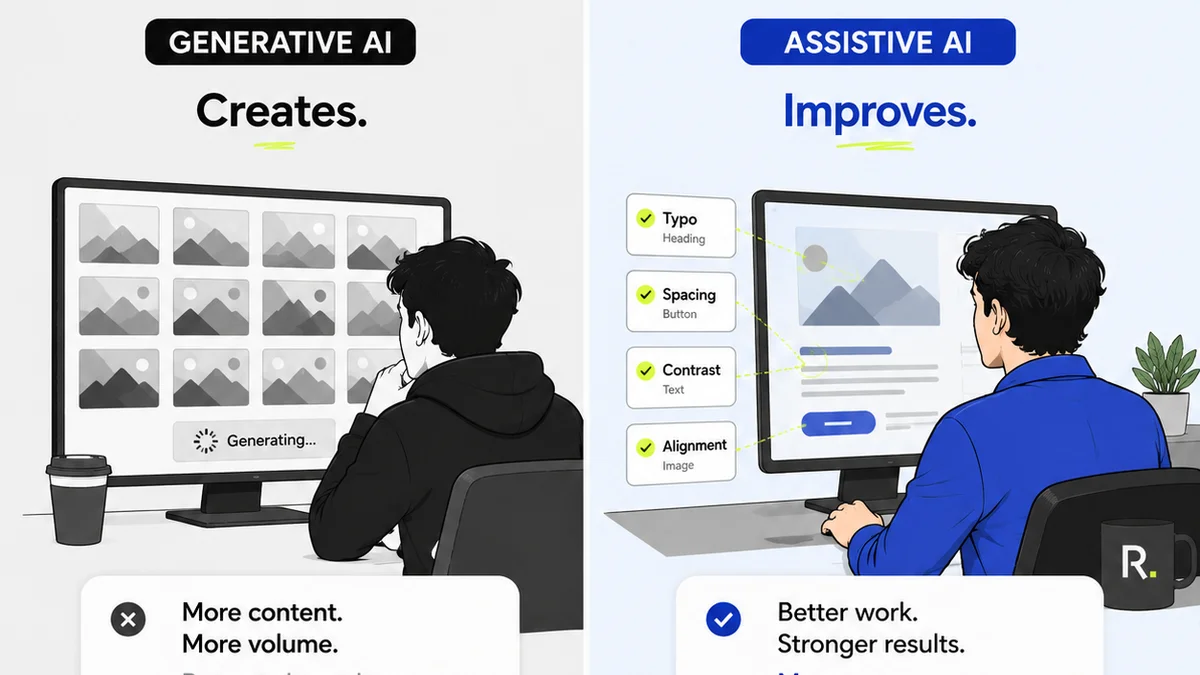
Everyone talks about quality. They talk about checklists, style guides, and final sign-offs. They obsess over the pixels and the punctuation.
None of that is wrong. But it’s incomplete. It’s reactive.
The real hard truth? Your quality management strategy isn't just about catching mistakes. It's about building a system that anticipates them, learns from them, and scales with your agency or creative team.
1. The Myth of the Static Quality Bar
We tend to think of quality as a fixed point. A deliverable either meets the bar or it doesn't. End of story.
This is a dangerous assumption.
The market shifts. Client needs evolve. Technology introduces new possibilities and new pitfalls. What was 'high quality' last year might be baseline today.
Your quality management can't afford to be static. It must be dynamic. It must be adaptive.
1.1. Technology's Double-Edged Sword
New tools promise efficiency, but they also introduce new variables. Think AI-generated content, new design platforms, or complex AR/VR experiences. Each requires new quality considerations.
Are you testing for AI bias? Are your QA processes compatible with the latest design software versions? Do you have a framework for evaluating emergent media?
1.2. The Evolving Client Landscape
Clients aren't just asking for pretty pictures anymore. They want integrated campaigns, data-driven insights, and measurable ROI. Their definition of 'quality' is broader and more business-oriented.
Your quality checks need to reflect this. They must extend beyond aesthetics to encompass strategic alignment and business impact.
1.3. The Talent Treadmill
Creative talent is mobile. Teams are increasingly remote or hybrid. Onboarding new members and ensuring consistent quality across diverse skill sets and locations is a constant challenge.
A static quality approach breaks down quickly when team composition is fluid.
2. Building a Resilient Quality Framework
Future-proofing your quality management means moving beyond a simple QA checklist. It requires a strategic, multi-layered approach.
Think of it as building an immune system for your creative output.
2.1. Proactive Risk Assessment
Before a project even starts, identify potential quality risks. What are the client's known sensitivities? What are the technical constraints? What's the historical data on similar projects?
This isn't about predicting the future; it's about understanding the present context and its inherent risks.
2.2. Integrating Quality into Every Stage
Quality isn't a final gate. It's a continuous thread woven through the entire creative process.
- Discovery: Do briefs accurately capture client needs? Are objectives clear and measurable?
- Concepting: Are initial ideas aligned with strategy and potential quality constraints?
- Design/Development: Are we adhering to brand guidelines, accessibility standards, and technical specs?
- Review: Is feedback clear, constructive, and actionable?
- Final Delivery: Does the output meet all documented requirements and client expectations?
Each stage needs built-in quality checks, not just a final pass.
2.3. Cultivating a Quality Culture
The best quality systems are self-policing. This happens when quality is everyone's responsibility, not just the QA team's (if you even have one).
Train your team. Emphasize the 'why' behind quality standards. Foster an environment where raising quality concerns is encouraged, not punished.
Make quality a shared value.
3. The Role of Feedback and Iteration
Feedback is the lifeblood of quality improvement. But chaotic feedback loops kill projects and morale.
Future-proof quality management requires structured, efficient feedback mechanisms.
3.1. The Peril of Ambiguous Feedback
Vague comments like 'make it pop' or 'I don't like it' are project killers. They waste time and introduce subjectivity that's impossible to track.
Quality requires clarity. Feedback must be specific, actionable, and tied to project objectives.
3.2. Streamlining Revision Cycles
Too many revision rounds signal a breakdown in the initial quality assessment or feedback process. Each round adds time, cost, and potential for new errors.
Your goal is to get it right, or close to it, faster.
This means better briefs, clearer communication, and more effective review processes.
3.3. Learning from Every Iteration
Each revision cycle is a data point. What feedback is consistently given? Where are the recurring misunderstandings? What creative directions consistently miss the mark?
Use this data to refine your initial briefing process, improve your internal reviews, and even update your client communication strategies.
4. Embracing Accessibility and Inclusivity
Accessibility (a11y) and inclusivity are no longer optional extras. They are fundamental aspects of quality in the digital age.
Ignoring them is a direct path to obsolescence and potential legal issues.
4.1. Beyond Compliance: True User Experience
WCAG guidelines provide a robust framework. But true quality means designing for *everyone*.
Consider users with different abilities, backgrounds, and technical proficiencies. Think about color contrast, keyboard navigation, screen reader compatibility, and inclusive language.
A truly high-quality product is usable by the widest possible audience.
This is not just a technical requirement; it's a strategic imperative.
4.2. Building Accessibility In, Not Bolting It On
Retrofitting accessibility is expensive and often compromises the design. It needs to be a core consideration from the outset.
Train your designers and developers. Integrate accessibility checks into your design and QA processes. Use tools to audit your work regularly.
4.3. The Business Case for Inclusivity
Inclusive design expands your market reach. It demonstrates social responsibility, enhancing brand reputation. It often leads to more innovative and robust solutions for all users.
Don't view inclusivity as a burden; see it as a competitive advantage.
5. Where Revue Fits In
Managing creative quality in today's environment is complex. It involves juggling multiple stakeholders, endless feedback streams, and evolving project requirements.
This is where a centralized platform becomes essential for future-proofing your quality management.
Revue provides a single source of truth for client feedback and project approvals.
- Centralized Feedback: Eliminate scattered emails and chats. All client comments, annotations, and revisions live in one place, linked directly to the creative asset. This ensures feedback is contextual and never lost.
- Clear Revision History: Track every version, every change, and every approval. This visibility is crucial for understanding how a project evolved and for identifying patterns in feedback or revisions that might indicate underlying quality issues.
- Streamlined Approvals: Define clear approval workflows. Ensure the right stakeholders sign off at the right time, reducing bottlenecks and preventing scope creep. This structured process is fundamental to maintaining quality standards.
- Integrated Quality Checks: While not a replacement for rigorous internal QA, Revue's structured feedback and approval process helps catch misalignments early, preventing them from becoming major quality defects downstream.
By bringing clarity and control to the feedback and approval process, Revue helps teams reduce errors, improve efficiency, and ultimately deliver higher-quality creative work, consistently.
6. Final Thought
The future of creative quality management isn't about building higher walls around your existing processes. It's about designing more permeable, adaptive systems.
Are you building a fortress to defend against yesterday's errors, or an ecosystem that thrives on change and continuous improvement?
Frequently asked questions
What's the biggest mistake agencies make with quality management?
Assuming quality is a static endpoint rather than a dynamic, ongoing process. They focus too much on catching final errors and not enough on building systems that prevent them and adapt to evolving client needs and technologies.
How can I make quality everyone's responsibility?
Foster a quality culture through training, clear communication of standards and their importance, and by encouraging open discussion about quality concerns. Make it safe and expected for team members to raise issues.
Why is accessibility crucial for modern quality management?
Accessibility ensures your creative work is usable by the widest possible audience, expanding market reach and enhancing brand reputation. It's a fundamental aspect of user experience and a legal requirement in many contexts, moving beyond optional compliance to core quality.
How does centralized feedback improve quality?
Centralized feedback eliminates confusion and lost comments. It ensures all feedback is contextual, actionable, and tied to specific assets, leading to clearer revisions, fewer misunderstandings, and a more efficient path to a high-quality final product.