You’ve heard it everywhere. Generative AI is going to revolutionize creative work. It’s going to write copy, design logos, and probably even brainstorm your next big campaign. It’s the shiny new toy, the disruptive force, the future.
None of that is wrong. But it’s incomplete.
The real operational truth for agencies isn’t about AI replacing humans. It’s about AI augmenting human capability. And the distinction between *generative* and *assistive* AI is crucial for understanding where the real value lies – and where you should be focusing your energy and investment.
1. The Hype Machine: Generative AI
Generative AI, as the name suggests, creates something new. Think ChatGPT writing an email, Midjourney conjuring an image, or an AI composing a piece of music. It’s about output, about novel creation based on prompts.
For agencies, the allure is obvious:
- Automating first drafts of copy.
- Generating mood boards or initial visual concepts.
- Exploring countless variations of a design element.
- Even scripting basic video storyboards.
The promise is speed. The promise is scale. The promise is a significant reduction in the time spent on initial, often repetitive, creative tasks.
But here’s the contrarian take: relying solely on generative AI for core creative output is a trap.
Why? Because true creativity isn’t just about generating *something*. It’s about generating the *right* thing, for the *right* client, with the *right* strategic intent. Generative AI, in its current form, is a brilliant mimic, a powerful pattern-matcher. It doesn’t understand your client’s brand DNA, their market position, or the nuanced emotional response you’re aiming for. It doesn’t have context beyond the prompt.
The Generative Blind Spot
Generative AI can produce stunning visuals, but can it understand *why* a client needs a specific aesthetic? Can it grasp the subtle difference between aspirational and relatable?
It can write compelling prose, but does it understand the subtle art of brand voice that’s been painstakingly developed over years?
This is where the operational gap appears. The output is often generic, requiring significant human refinement. It’s a starting point, not an endpoint. And the more you treat it as an endpoint, the more you risk producing soulless, undifferentiated work.
2. The Workhorse: Assistive AI
Assistive AI, on the other hand, doesn't primarily create new content from scratch. Instead, it enhances, streamlines, and optimizes existing workflows and human tasks. It’s about making the human creator *better*, faster, and more efficient.
Think of it as the ultimate superpower for your existing team, not a replacement.
Examples abound, even if they don’t always wear the flashy “AI” label:
- Grammar checkers and advanced spellcheckers (like Grammarly).
- Tools that suggest code completions for developers.
- Software that automates tedious data entry or categorization.
- AI-powered project management tools that predict bottlenecks.
- Smart search functions that surface relevant past projects or assets.
This is AI working *alongside* your team, amplifying their skills and freeing up their time for higher-value strategic and creative thinking.
The Assistive Advantage
Assistive AI tackles the operational friction points that plague creative agencies:
- Efficiency Gains: Automating repetitive tasks so creatives can focus on strategy and ideation.
- Quality Improvement: Catching errors, ensuring consistency, and flagging potential issues before they reach the client.
- Deeper Insights: Analyzing data to inform creative decisions and identify opportunities.
- Streamlined Collaboration: Facilitating smoother handoffs and reducing miscommunication.
The key difference? Assistive AI augments human judgment. It doesn’t replace it. It provides data, suggestions, and automation for tasks that *support* the creative process, rather than attempting to *be* the creative process itself.
3. Generative vs. Assistive: The Workflow Reality
Let’s be blunt. Agencies don’t get paid for raw output. They get paid for strategic thinking, creative problem-solving, and delivering results that meet client objectives.
Generative AI can help with the *output* part. It can speed up the creation of assets.
But assistive AI helps with the *thinking*, *problem-solving*, and *results* part. It helps ensure that the output is strategically sound, high-quality, and efficiently delivered.
Consider a logo design project:
- Generative AI might suggest 50 different logo concepts based on keywords.
- Assistive AI might analyze competitor logos for visual trends, identify common color palettes associated with certain emotions, or even check the generated logo for scalability issues across different applications.
The generative output is a starting point. The assistive insights make that starting point infinitely more valuable and strategically grounded.
The danger of over-indexing on generative AI is that you end up with a team of prompt engineers who are great at generating variations but lack the deep strategic understanding and critical eye to refine them into truly impactful creative solutions. You risk becoming a content factory, not a strategic partner.
4. Where Revue Fits In
Generative and assistive AI are powerful tools, but their effectiveness hinges on robust workflow and clear communication. This is where a platform like Revue becomes indispensable.
Revue is built to enhance the *human* element of the creative process, leveraging assistive principles to streamline feedback, revisions, and approvals.
- Centralized Feedback: No more hunting through endless email threads or scattered Slack messages. All client feedback lives in one place, linked directly to the creative asset. This is assistive intelligence for communication.
- Revision & Approval Tracking: See exactly who approved what, when, and what feedback was actioned. This provides crucial context and accountability, preventing the “he said, she said” scenarios that derail projects. This is assistive intelligence for project management.
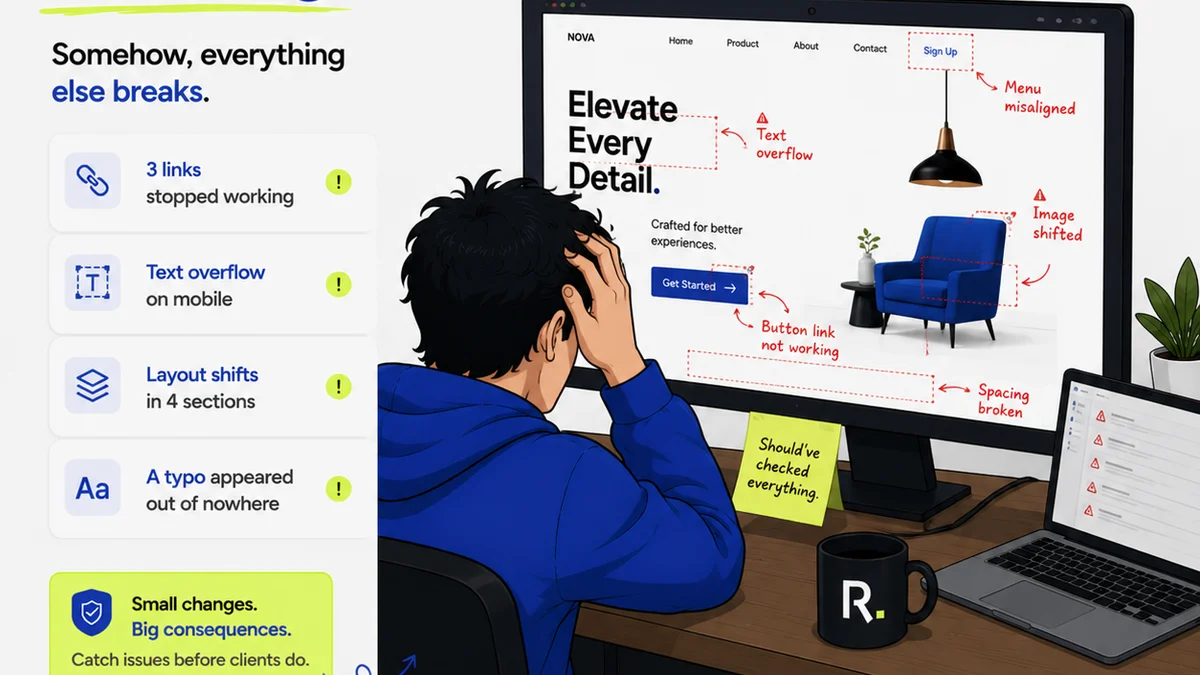
- Quality Control: Ensure that every piece of creative work goes through a structured review process, catching errors and ensuring alignment with client briefs *before* final delivery. This is assistive intelligence for quality assurance.
While generative AI might create the initial draft of an ad banner, Revue ensures that the client’s feedback on that banner is captured, understood, and actioned efficiently. It provides the structure and oversight that makes the entire creative lifecycle – from ideation through to final approval – smoother, more transparent, and ultimately, more successful.
Revue doesn’t try to generate your creative. It helps you manage, refine, and approve it with unparalleled clarity and efficiency. It’s the essential layer that makes both human creativity and AI-assisted creation work better together.
5. Final Thought
The AI revolution isn’t about replacing your creatives. It’s about empowering them. The true opportunity lies not in chasing the novelty of generative AI, but in strategically integrating assistive AI and robust workflow tools to amplify human expertise.
Are you building an AI-powered content mill, or are you building a smarter, more strategic creative powerhouse?
Frequently asked questions
What is the main difference between generative and assistive AI?
Generative AI creates new content (text, images, etc.), while assistive AI enhances existing human tasks and workflows, improving efficiency and quality without creating entirely new outputs.
Can generative AI replace creative professionals?
Generative AI can automate certain tasks and assist in idea generation, but it lacks the strategic understanding, context, and nuanced judgment of human creatives. It's a tool to augment, not replace.
How does assistive AI benefit creative agencies?
Assistive AI improves efficiency by automating repetitive tasks, enhances quality by catching errors, provides deeper insights for better decision-making, and streamlines collaboration, freeing up human talent for strategic work.
Is generative AI useful for agencies at all?
Yes, generative AI is useful for tasks like creating initial drafts, exploring variations, and generating concepts quickly. However, its output typically requires significant human refinement and strategic direction.
How can tools like Revue complement AI in an agency?
Revue provides the essential workflow structure for managing feedback, revisions, and approvals. It ensures that AI-generated or AI-assisted creative work is properly reviewed, refined, and approved, bridging the gap between creation and client delivery.