Everyone talks about alignment. Global brands need it. Their creative teams, scattered across continents and time zones, absolutely require it. It’s the holy grail of large-scale creative operations.
You hear a lot about shared vision, clear briefs, and regular check-ins. None of that is wrong. But it’s incomplete.
The real secret to global creative alignment isn't just about communication tools or even strong leadership. It’s about building a robust, repeatable operational framework that manages the *flow* of creative work and feedback, no matter where the people are.
1. The Illusion of the Single Source of Truth
Many organizations believe that a centralized document repository or a project management tool automatically creates alignment. They think if everyone can access the latest files, they’re aligned.
This is a dangerous assumption.
Access to files is not the same as understanding the context behind them. It doesn't guarantee that feedback is being interpreted correctly, or that revisions are being tracked systematically. It’s like giving everyone a map but no compass and expecting them to arrive at the same destination without any navigation.
The Deeper Truth: Context is King
Global brands understand that alignment stems from shared understanding, not just shared access. This means:
- Clear Rationale: Every creative decision, every revision request, needs a clear, documented 'why.' This context travels with the asset.
- Version Control with Purpose: It’s not just about labeling files 'v1' and 'v2'. It’s about understanding *what changed* between versions and *why* those changes were made.
- Feedback Loops, Not Black Holes: Feedback must be actionable and traceable. When a client or stakeholder provides input, the team needs to know it was received, understood, and acted upon – or why it wasn't.
Without this layered context, even the most well-intentioned teams can drift apart, leading to misinterpretations and wasted effort.
2. Standardizing the Unstandardizable
Creative work is inherently fluid. How do you standardize something that thrives on novelty and subjective interpretation? Many try to force creative processes into rigid, off-the-shelf project management methodologies, and it breaks.
The result? Frustration. Workarounds. And ultimately, misalignment.
The Hard Truth: Standardize the *Process*, Not the *Creativity*
Global brands don't try to dictate the creative ideas themselves. Instead, they standardize the *operational backbone* that supports creativity. This involves:
- Defined Stages and Gates: Clearly outlining the phases of creative development (e.g., Briefing, Concepting, Development, Review, Finalization) and the specific criteria for moving between them.
- Structured Feedback Mechanisms: Implementing consistent methods for collecting, organizing, and assigning feedback. This includes defining who gives feedback, when, and how it should be articulated.
- Revisable Workflows: Building flexibility into the process. While the *steps* might be standardized, the *time* spent in each step or the *number* of iterations needed can adapt to project demands.
This approach provides a predictable framework without stifling creative exploration. It’s about creating guardrails, not cages.
3. The Myth of Real-Time Collaboration
With so many collaboration tools available, the assumption is that everyone is, or should be, working in perfect, real-time sync. This is often a logistical nightmare for global teams.
Trying to schedule live meetings that work for London, New York, and Singapore simultaneously is a fool's errand.
It leads to exhausted teams and superficial discussions. The asynchronous nature of global work is a feature, not a bug, if you manage it correctly.
The Practical Reality: Asynchronous Excellence
The most effective global brands leverage asynchronous communication and workflows to their advantage. This means:
- Documentation Over Discussion: Prioritizing clear, concise written documentation for briefs, feedback, and decisions. This allows team members to engage with information on their own schedule.
- Contextualized Comments: Using tools where feedback can be attached directly to specific elements of the creative work (e.g., a comment on a specific paragraph of copy, or a point on an image). This eliminates the need for lengthy explanations in real-time.
- Defined Response Windows: Setting clear expectations for how quickly feedback will be acknowledged and addressed. This manages expectations across time zones and prevents bottlenecks.
Asynchronous doesn't mean disconnected. It means creating a system where work can progress smoothly, with clear handoffs and feedback points, even when people aren't online at the same moment.
4. The Feedback Black Hole Problem
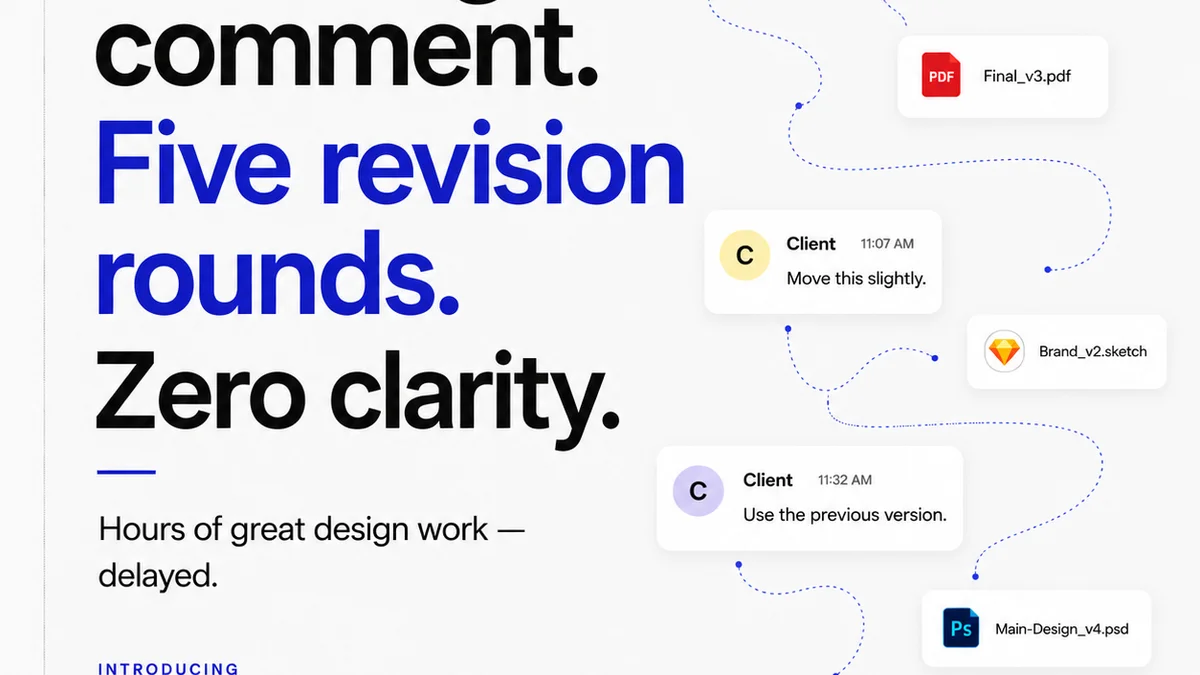
This is where most creative operations break down, especially at scale. Feedback is given, but it's lost, misinterpreted, or never acted upon. Clients get frustrated, teams feel like they're running in circles, and final deliverables miss the mark.
It’s the single biggest killer of alignment.
The Operational Fix: Centralized, Actionable Feedback Management
Global brands don't leave feedback to chance. They build systems to ensure it's:
- Collected Consistently: Using a single platform where all feedback, from all stakeholders, is logged.
- Organized and Prioritized: Grouping similar comments, identifying key action items, and distinguishing between critical revisions and minor suggestions.
- Tracked and Resolved: Ensuring that every piece of feedback is assigned, addressed, and marked as resolved. This creates an audit trail and builds confidence.
- Version-Linked: Critically, feedback must be tied to specific versions of the creative asset. This prevents confusion about which iteration the feedback applies to.
This systematic approach turns feedback from a chaotic mess into a clear roadmap for iteration.
Where Revue Fits In
Managing creative feedback and revisions across multiple global teams and clients is a monumental task. Trying to wrangle this through endless email chains, scattered spreadsheets, and disjointed chat messages is a recipe for disaster. It’s inefficient, error-prone, and a direct path to misalignment.
Revue provides the operational backbone for this complex process. It’s designed to centralize client feedback, making it impossible for crucial input to get lost. Every comment, every revision request, is logged and tracked in one place, linked directly to the specific version of the creative asset it pertains to.
This clarity ensures that your global teams are not just seeing the same files, but are working from the same, unambiguous understanding of what needs to be done. It streamlines the revision and approval process, providing visibility into the status of every asset and every piece of feedback. For large brands managing complex projects across dispersed teams, this level of control and transparency is not a luxury; it's a necessity for maintaining alignment and delivering high-quality creative work consistently.
Final Thought
Alignment isn't an accident. It’s the result of deliberate, well-engineered operational processes. Global brands that master creative alignment understand that the magic isn't in the spontaneous spark of genius, but in the structured, repeatable systems that allow that genius to be channeled effectively, across any distance, on any project. How well-engineered are your creative operations?
Frequently asked questions
What's the biggest misconception about creative alignment for global teams?
The biggest misconception is that alignment comes solely from communication tools or shared vision statements. While important, true alignment for global teams is built on a foundation of standardized, repeatable operational processes that manage the flow of work and feedback consistently across different locations and time zones.
How can we ensure feedback isn't lost or misinterpreted across global teams?
Implement a centralized feedback management system. All feedback should be collected in one place, linked to specific creative assets and their versions, organized, prioritized, and tracked through to resolution. This creates a clear audit trail and ensures everyone is working from the same, actionable input.
Is it better to standardize creative ideas or creative processes for global teams?
It's far more effective to standardize the *processes* that support creativity, rather than trying to standardize the creative ideas themselves. This means defining clear stages, gates, feedback mechanisms, and workflow structures that provide a predictable framework without stifling innovation.
How do global teams handle collaboration across different time zones?
Effective global teams leverage asynchronous communication and workflows. This prioritizes clear, documented information (briefs, feedback) over mandatory real-time meetings. By setting clear response windows and using tools that allow contextualized comments, work can progress smoothly even when team members are not online simultaneously.