Everyone knows endless revisions cost money. It’s the most obvious drag on agency profitability. More hours, more complexity, more time spent nudging pixels instead of creating great work.
None of that is wrong. But it’s incomplete.
The real cost of endless revisions isn't just the hours logged. It’s the hidden drain on creativity, team morale, and your agency's long-term strategic potential. It's a silent killer of growth.
1. The Erosion of Creative Momentum
Creativity isn't a tap you can just turn on and off. It’s a flow state. Constant back-and-forth, chasing down minor tweaks, and rehashing decisions kills that flow.
Imagine a designer deep in a creative groove. They’re solving problems, exploring ideas, and building something new. Then, an email lands: “Can we just make the logo slightly bigger?”
That single request, seemingly small, shatters the focus. It takes significant mental energy to re-engage, re-center, and get back into that creative space. Often, you never fully get back there on that particular task.
The Ripple Effect
This isn't just about one designer on one project. It ripples:
- Lost Ideas: The brilliant concept that was just about to emerge gets buried under a mountain of minor adjustments.
- Reduced Innovation: Teams become risk-averse, sticking to safe, easily tweakable solutions rather than pushing creative boundaries.
- Demoralized Talent: The best creatives leave for places where their ideas are respected and they can actually *create*, not just iterate endlessly.
The true cost is the unseen innovation that never happens.
2. The Morale Killer
Your team is the engine of your agency. When that engine sputters, everything slows down.
Endless revisions are soul-crushing. They make talented people feel like their work isn't valued, or that the client has no clear direction.
Consider the project manager or account lead. They’re the buffer. They absorb client frustration, translate feedback (often contradictory), and try to keep the train on the tracks.
Symptoms of Burnout
When revisions become the norm, you’ll see:
- Increased staff turnover.
- Passive-aggressive communication.
- A general lack of enthusiasm for new projects.
- Mistakes creeping into work due to fatigue.
Happy, motivated teams produce better work, faster. Unhappy, exhausted teams do the opposite.
3. The Strategic Drift
Every agency has a vision. A mission. A target client profile. Endless revisions pull you away from that.
When you’re constantly reacting to minor client demands, you lose sight of the bigger picture. You’re not strategically guiding clients; you’re just executing their every whim.
This can lead to:
- Serving the Wrong Clients: You attract and retain clients who are difficult to please and don't value your expertise, often because you haven't established clear boundaries.
- Diluted Portfolio: Your agency’s work starts to look generic because you’re not allowed to inject your unique style or strategic thinking.
- Missed Opportunities: Time spent on endless tweaks is time NOT spent on business development, developing new service offerings, or improving internal processes.
You end up busy, but not necessarily growing in the direction you intended.
4. The Financial Black Hole
Yes, we have to talk about money. It’s not just about billable hours.
When projects spiral, cash flow suffers. You might be working more, but getting paid less effectively.
Think about it:
- Delayed Invoicing: Projects that drag on mean delayed invoices, impacting your ability to pay staff and overhead.
- Under-Billing: Often, agencies are hesitant to bill for *all* the extra time, eating the cost to keep the client happy, which is unsustainable.
- Opportunity Cost: The resources (people, time, money) tied up in a revision-heavy project could have been used for more profitable, strategic work.
This isn't just bad math; it's a threat to your agency's survival.
Where Revue Fits In
The chaos of endless revisions often stems from a lack of clarity and control. Feedback gets lost in email chains, decisions are forgotten, and scope creep feels like an unstoppable force.
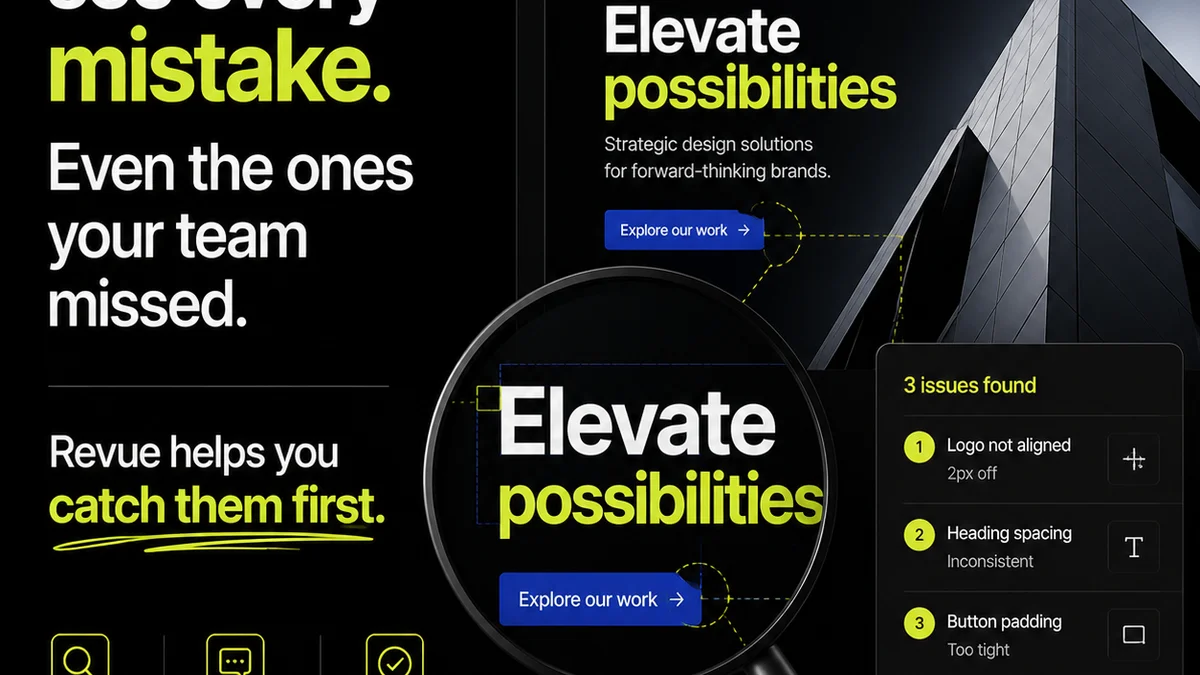
Revue is built to combat this. It provides a single source of truth for client feedback, making the entire review and approval process transparent.
- Centralized Feedback: All comments, markups, and discussions live in one place, attached to the specific creative asset. No more hunting through inboxes.
- Clear Revision History: See exactly what changed, when, and why. This visual trail helps manage expectations and identify patterns of excessive revisions.
- Streamlined Approvals: Formal sign-offs become clear milestones, reducing ambiguity and the likelihood of
Frequently asked questions
What are the most common hidden costs of endless revisions?
Beyond direct labor costs, hidden costs include eroded team morale, loss of creative momentum, reduced innovation, strategic drift away from agency goals, and negative impacts on cash flow due to delayed invoicing and under-billing.
How does scope creep relate to endless revisions?
Scope creep is often the root cause of endless revisions. It occurs when project requirements expand beyond the original agreement, leading to more work, more feedback loops, and a continuous cycle of changes that were not initially planned or priced for.
Can technology help manage endless revisions?
Yes, specialized tools like Revue can centralize feedback, provide clear version control, and streamline the approval process. This transparency helps manage client expectations, track changes effectively, and reduce the ambiguity that often fuels endless revision cycles.
What's the first step an agency should take to combat endless revisions?
The first step is acknowledging the problem and its true costs. Then, establish clear processes for feedback and approvals from the outset of every project, including detailed scope definitions and revision limits outlined in client contracts.