Everyone knows that revisions take time. You log the hours, you track the tasks, you invoice the client. It seems straightforward. But for enterprise creative teams, the seemingly endless revision cycle carries a hidden cost far beyond billable hours. It’s a drain on productivity, a killer of morale, and a silent saboteur of client relationships.
The assumption is that more feedback, more revisions, equals a better final product. That’s not entirely wrong. But it’s a dangerously incomplete picture.
The real truth? Every extra revision round erodes efficiency, amplifies miscommunication, and ultimately devalues the creative output itself. It’s not just about the time spent; it’s about the momentum lost, the trust fractured, and the innovation stifled.
1. The Erosion of Momentum
Creative work thrives on momentum. A project starts with a spark, a clear vision. Each revision, especially when poorly managed, chips away at that initial energy.
Think of it like a snowball rolling downhill. It gains speed and mass. Now imagine that snowball periodically being stopped, reshaped by committee, and then nudged back onto the slope. It’s still moving, but it’s slower, less powerful, and far more prone to getting stuck.
The Cumulative Effect
A single extra round might seem manageable. But when these cycles repeat across multiple projects, the cumulative effect is devastating:
- Delayed launches
- Missed market opportunities
- Team burnout
- Reduced capacity for new, exciting work
This isn't just about feeling busy. It's about the strategic disadvantage enterprise teams face when their core output is perpetually stuck in a holding pattern.
2. The Amplification of Miscommunication
Revisions are a symptom, not the disease. The real problem is often a breakdown in communication and clarity. When feedback becomes a tangled web of subjective opinions and conflicting directives, revisions multiply.
Enterprise environments are complex. Multiple stakeholders, different departments, and layers of approval create fertile ground for misinterpretation. Without a clear system, feedback gets diluted, misunderstood, or ignored.
Feedback Chaos
Consider the typical enterprise feedback loop:
- An email chain with dozens of replies, each a minor tweak or a major pivot.
- A Slack thread where crucial feedback gets lost in the noise.
- A live meeting where notes are taken inconsistently, leading to differing interpretations later.
- Ambiguous comments like “make it pop” or “needs more energy” that offer no actionable direction.
Each instance of unclear feedback necessitates another revision round, not to improve the work, but to simply decipher what was actually asked for.
3. The Devaluation of Creative Work
When creative assets are subjected to an endless stream of subjective tweaks, their inherent value diminishes. The original concept, the strategic intent, gets lost under layers of minor adjustments.
This leads to a perception that the creative itself is not fixed or final, but perpetually in flux. It trains clients to expect endless iteration, and it demoralizes the creative team tasked with executing it.
The
Frequently asked questions
What are the biggest hidden costs of endless revisions for enterprise teams?
Beyond billable hours, the hidden costs include eroded team morale, lost project momentum, missed market opportunities due to delays, increased potential for miscommunication, and a devaluation of the creative output itself.
How does unclear feedback contribute to endless revision cycles?
Ambiguous or subjective feedback (e.g., 'make it pop') lacks actionable direction, forcing creative teams to guess or seek further clarification, leading to multiple rounds of iteration just to align on basic requirements.
Can technology help manage revision cycles in enterprise settings?
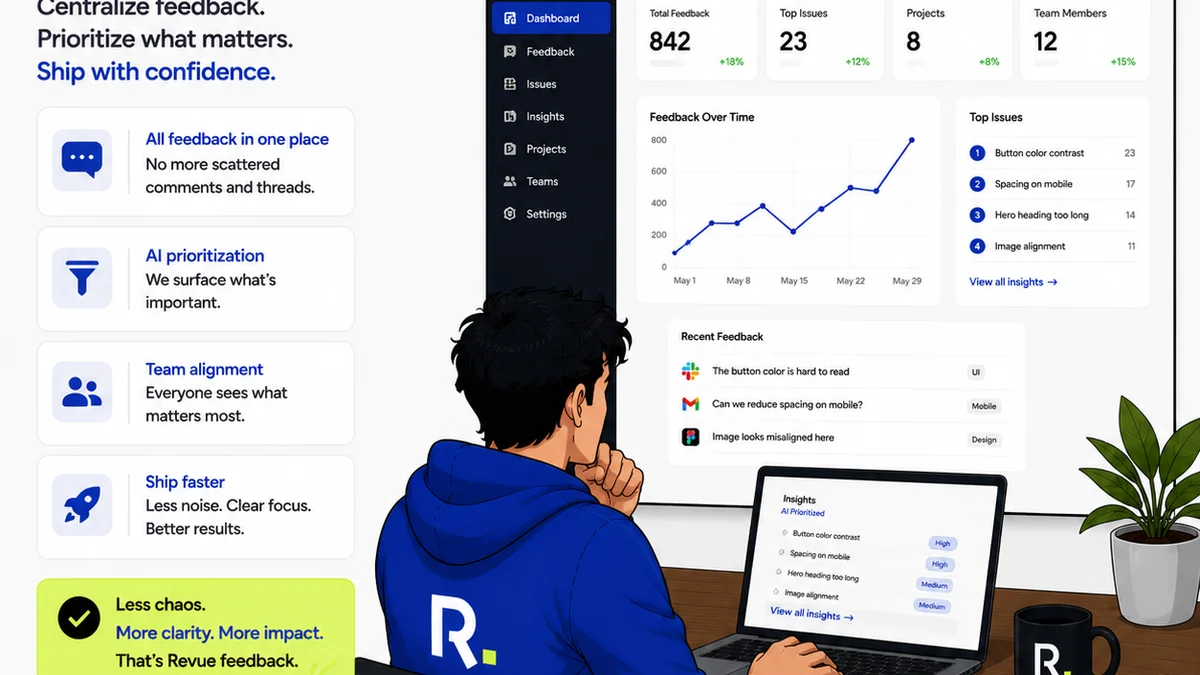
Yes, specialized tools can centralize feedback, provide clear version control, and streamline the approval process, reducing miscommunication and accelerating revision cycles for enterprise teams.
How does endless revision impact team morale?
Constantly reworking designs based on shifting or unclear feedback can be demoralizing, leading to burnout, frustration, and a feeling that one's creative contributions are not valued or respected.