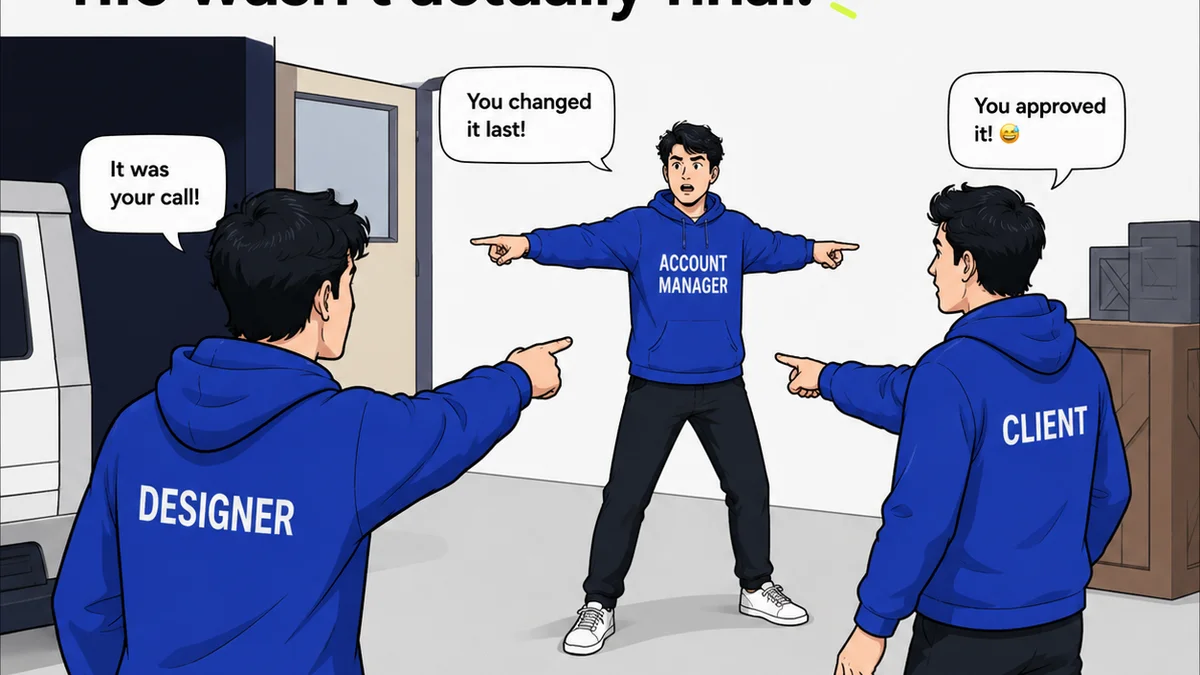
Everyone talks about brand consistency. Logos must be the right size. Colors must be exact. Fonts must be on-point. It’s the bedrock of good branding, right?
None of that is wrong. But it’s incomplete.
The common assumption is that brand consistency is purely a *visual* concern. A matter of design guidelines and brand books. The hard truth is that true brand consistency is an *operational* imperative. And its absence costs agencies far more than just a few off-brand social posts.
1. The Erosion of Client Trust
Imagine a client who hired you for your strategic thinking and creative execution. They expect a unified experience. From the initial pitch deck to the final campaign assets.
When touchpoints are inconsistent, it signals a lack of control. It suggests your agency isn't as buttoned-up as it claims to be.
A Disconnected Client Experience
Think about the client journey:
- The initial proposal: sleek, professional, on-brand.
- The kickoff meeting presentation: slightly different color palette, a font that’s *almost* right.
- The first round of concepts: a mix of styles that don’t quite align with the brief or the initial pitch.
- The final deliverables: a hodgepodge of assets that feel like they came from different teams, or even different agencies.
Each inconsistency is a tiny crack in the foundation of trust.
Clients start to question your attention to detail. Then your strategic alignment. Eventually, they question your entire capability.
This isn't about nitpicking a hex code. It’s about delivering a cohesive narrative that reassures clients they made the right choice.
2. Internal Inefficiency and Rework
Inconsistent branding isn't just an external problem. It breeds internal chaos.
When there's no single source of truth for brand assets and guidelines, teams operate in silos.
The
Frequently asked questions
What is the primary difference between visual and operational brand consistency?
Visual consistency focuses on the aesthetics—logos, colors, fonts. Operational consistency ensures that the *experience* of interacting with the brand, and the internal processes that create it, are aligned and predictable, reflecting the brand's core values at every touchpoint.
How does inconsistent branding directly impact an agency's profitability?
It leads to increased rework, longer project timelines, and the potential loss of clients due to eroded trust. These inefficiencies directly eat into profit margins and require more resources to rectify.
Can a small agency suffer from inconsistent branding?
Absolutely. In fact, for smaller teams, the impact can be even more pronounced. A single inconsistent deliverable can disproportionately damage reputation and client relationships when you don't have a large portfolio to fall back on.
What's the first step an agency should take to improve brand consistency?
Establish a centralized, easily accessible repository for all brand assets and clear, concise brand guidelines. Then, implement a workflow that ensures these assets and guidelines are referenced and used consistently across all projects and communications.