The common wisdom for improving campaign design is simple: hire more designers. More hands on deck means more creative output, right?
None of that is wrong. But it’s incomplete.
The hard truth is that more people often means more overhead, more communication friction, and more time spent managing. It doesn't automatically translate to better creative work. In fact, it can dilute your existing talent and slow down your entire operation.
The real path to better campaign design, without the bloat of new hires, lies in optimizing your existing workflow, clarifying your processes, and leveraging the right tools.
1. Audit Your Current Design Process
Before you can fix anything, you need to know what's broken. Most agencies assume their process is fine, or at least, 'good enough'. They get by. But 'getting by' is the enemy of exceptional.
Take a hard look at how creative work actually gets done from brief to final delivery. Where are the bottlenecks? Where does feedback get lost? Where do revisions drag on endlessly?
The Symptoms of a Leaky Process
- Designers are constantly chasing down feedback.
- Clients are confused about what version they’re approving.
- Revisions loop back to the same points repeatedly.
- There’s no clear record of why decisions were made.
- Internal reviews are haphazard and inconsistent.
- Key stakeholders are always 'too busy' to provide timely input.
- Creative briefs are vague or change mid-project.
These aren't minor annoyances. They are direct drains on creative energy and project profitability.
2. Define Clear Roles and Responsibilities
Ambiguity kills efficiency. When everyone *could* be responsible, often no one *is* truly accountable. This is especially true in the feedback and approval stages.
Who owns the final sign-off? Who is empowered to give constructive criticism versus subjective opinion? Who manages the client relationship on the creative front?
You need crystal clarity on who does what, especially for:
- Briefing: Who crafts and approves the creative brief?
- Creative Direction: Who sets the strategic and aesthetic vision?
- Feedback: Who provides consolidated, actionable feedback?
- Approvals: Who gives the final 'go' or 'no-go'?
- Revision Management: Who tracks and assigns revisions?
This isn't about micromanagement; it's about establishing a predictable, repeatable system that allows designers to focus on designing, not deciphering.
3. Standardize Your Briefing Process
A weak brief is the most common killer of great creative. If the foundation is shaky, the entire structure is compromised. Designers can't read minds, and clients often don't know what they want until they see it – but a good brief sets expectations and provides guardrails.
Your creative brief should be more than a formality. It's a contract.
It needs to include:
- Clear campaign objectives and KPIs.
- Target audience definition.
- Key messaging and calls to action.
- Mandatory elements (logos, legal disclaimers).
- Brand guidelines and tone of voice.
- Deliverables and required formats.
- A realistic timeline with defined review stages.
Make the brief the single source of truth. Any deviation from it must be a documented change request, not a casual email.
4. Implement Structured Feedback Loops
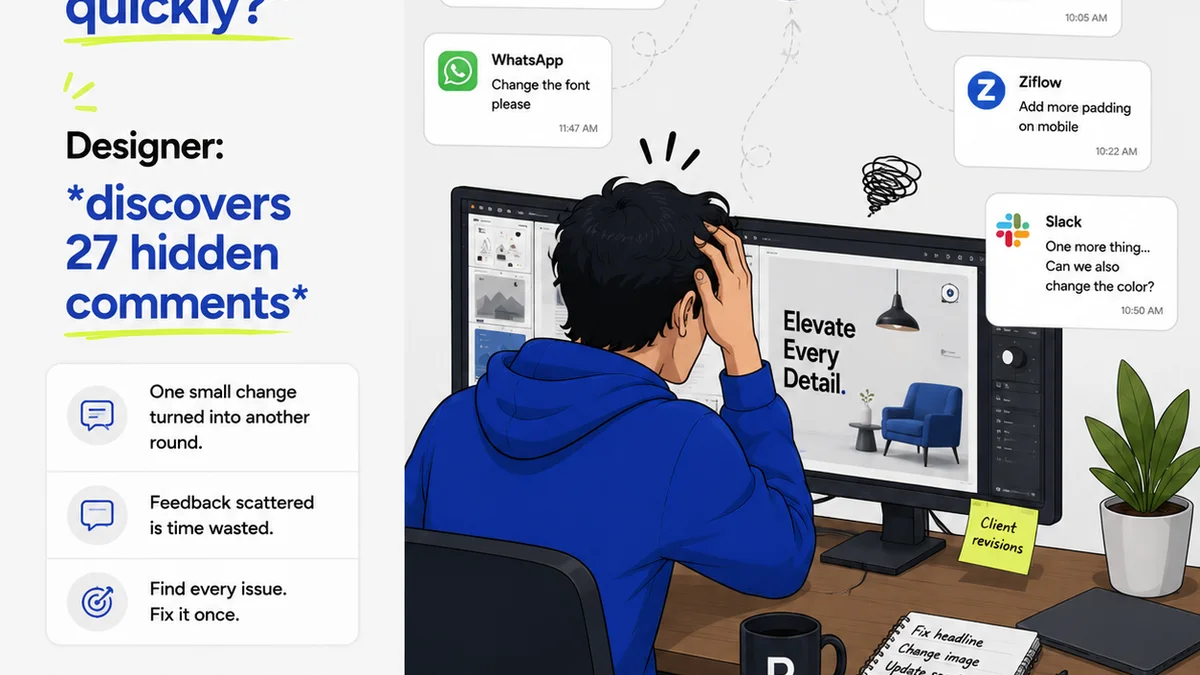
Unstructured feedback is a black hole. A client scribbling notes on a PDF, an account manager relaying ‘feelings’ from a call – this is a recipe for disaster. It’s inefficient, prone to misinterpretation, and impossible to track.
You need a system for feedback that is:
- Centralized: All feedback in one place.
- Contextual: Tied directly to the creative asset.
- Actionable: Clear, specific, and constructive.
- Consolidated: Filtered to avoid conflicting messages.
- Trackable: Who said what, when, and what was done about it.
This means moving away from email chains and ad-hoc meetings. It means using tools designed for creative collaboration.
5. Optimize Revision and Approval Workflows
This is where most agencies bleed time and money. Revisions aren't the problem; endless, unclear, and unmanaged revisions are.
The goal is clarity and efficiency. Every revision request should be:
- Justified: Linked back to the brief or previous feedback.
- Prioritized: Clearly marked as critical, important, or minor.
- Assigned: To a specific person for action.
- Tracked: With clear deadlines and status updates.
Approvals need to be just as structured. A simple ‘Looks good’ is insufficient. You need a clear sign-off from the designated approver, confirming they accept the work against the agreed-upon brief and feedback.
6. Invest in Process-Enhancing Tools
Relying on spreadsheets, email, and shared drives for complex creative projects is like building a skyscraper with hand tools. It’s possible, but incredibly slow and prone to error.
The right technology can automate tedious tasks, provide visibility, and reduce friction without adding headcount.
Think about tools that can help with:
- Project Management: Centralizing tasks, deadlines, and communication.
- Creative Proofing: Visual annotation, version control, and consolidated feedback.
- Client Collaboration: Streamlined communication and approval tracking.
- Asset Management: A single source of truth for final files.
These tools aren't a silver bullet, but they are force multipliers for your existing team.
Where Revue Fits In
Revue is built for the realities of creative production. It’s designed to tackle the inefficiencies that plague agencies and in-house teams who are trying to do more with less.
Instead of fighting through endless email threads for feedback, Revue centralizes client comments directly on your creative assets. This means feedback is contextual, clear, and actionable, eliminating the guesswork and misinterpretation that leads to wasted revisions.
The platform provides clear visibility into the revision and approval process. Stakeholders can see exactly what needs their attention, and you get a clear audit trail of who approved what, and when. This structured approach prevents scope creep and ensures everyone is aligned.
By streamlining these critical touchpoints – from initial feedback to final quality checks – Revue helps your team produce better work, faster, without the need to scale your headcount proportionally.
Final Thought
Growth doesn't always mean getting bigger. Sometimes, it means getting smarter, more efficient, and more focused.
The next time you feel the pressure to hire to meet design demand, pause. Ask yourself: what process improvements could unlock the same, or even better, results from the talent you already have?
Frequently asked questions
How can I get better creative feedback from clients?
Implement a centralized feedback system where clients can comment directly on creative assets. Ensure feedback is contextual, consolidated, and actionable, moving away from scattered emails or verbal comments.
What's the quickest way to reduce revision cycles?
Standardize your creative brief and ensure all revision requests are tied back to it or previous feedback. Use a structured approval process with clear sign-offs from designated stakeholders.
Is hiring more designers always the answer to increased demand?
Not necessarily. Often, optimizing existing processes, improving communication, and using the right tools can significantly increase output and quality without the overhead of new hires.
How do I ensure consistency in design quality across projects?
Establish clear brand guidelines and a standardized briefing process. Implement internal review stages and use tools that provide version control and a clear audit trail for all feedback and approvals.