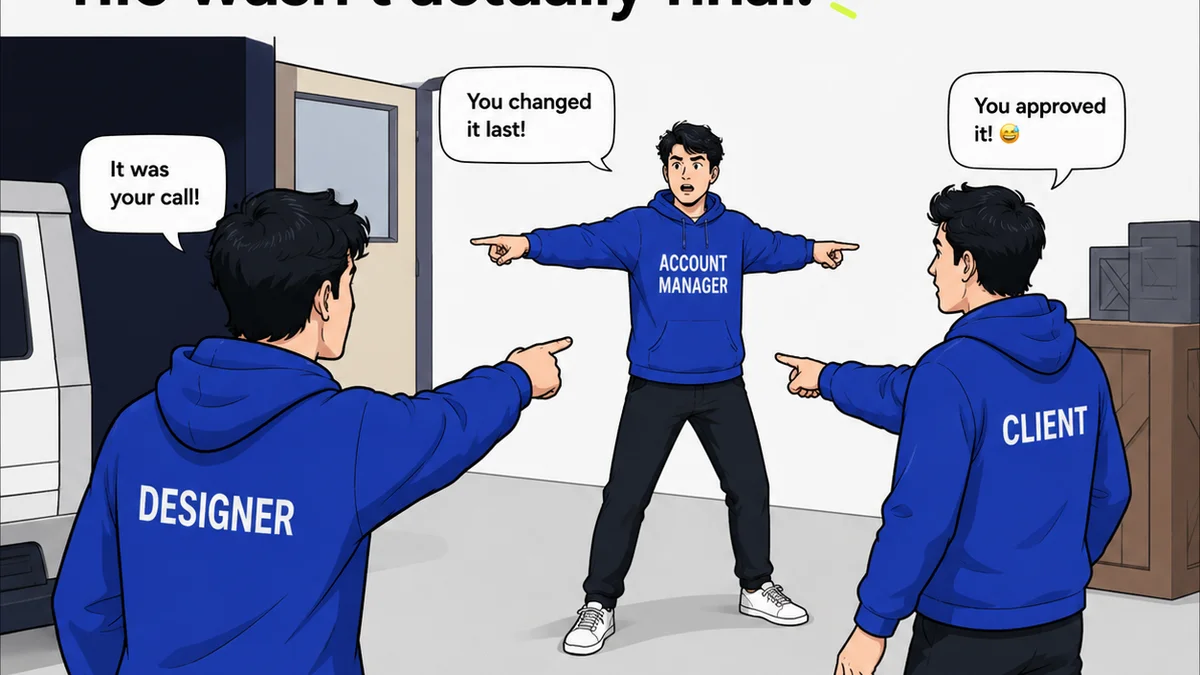
Everyone thinks creative accuracy is a designer problem. Just tell them to be more careful, pay closer attention to detail, proofread better. That’s the common wisdom. And none of that is wrong. But it’s incomplete.
The hard truth? Creative accuracy isn’t primarily about the designer’s focus. It’s about the clarity, consistency, and accessibility of feedback. When feedback is a mess, accuracy suffers. Period.
We’re going to break down why your current approach to feedback is actively sabotaging accuracy and what you can do about it. It’s not about badgering your team; it’s about fixing your system.
1. The Feedback Black Hole
Think about the last time a client project went sideways due to an error. A misplaced logo. The wrong product name. A typo in a headline that slipped through three rounds of review. Where did the breakdown happen?
Was it a designer who “wasn’t paying attention”? Or was it a chaotic email chain, a Slack message lost in the noise, a verbal note from a client that was never clearly documented, or conflicting feedback from different stakeholders?
Most agencies operate on a feedback model that’s fundamentally broken:
- Feedback arrives in disparate channels: email, Slack, project management tools, video calls, even text messages.
- There’s no single source of truth for what the client *actually* wants or has approved.
- Verbal feedback is common, but rarely documented accurately or shared with the entire team.
- Reviewers often don’t see the full context of previous feedback or the overall project goals.
- Ambiguity is the default. “Make it pop more” is not actionable feedback.
This creates a feedback black hole. Information goes in, but clarity and actionable direction rarely come out. Designers are left to interpret fragmented, often contradictory, instructions. Is it any wonder mistakes happen?
2. The Illusion of Control: Why
Frequently asked questions
What are the main causes of creative inaccuracy in agencies?
Creative inaccuracy often stems from unclear, inconsistent, or fragmented client feedback. When feedback is scattered across multiple channels, lacks clear direction, or is misinterpreted, designers are prone to making errors, regardless of their attention to detail.
How can agencies improve creative accuracy without slowing down designers?
The key is to streamline and centralize the feedback process. Implement a single platform for all client comments, revisions, and approvals. This ensures clarity, reduces misinterpretation, and provides a clear audit trail, allowing designers to work more efficiently and accurately.
What is the role of a centralized feedback system in accuracy?
A centralized system acts as a single source of truth for all project feedback and approvals. It eliminates confusion by consolidating comments, tracking revisions, and providing clear visibility to the entire team. This reduces the chances of errors caused by missed or misinterpreted feedback.
How can we ensure all stakeholders provide clear and actionable feedback?
Educate your clients and internal stakeholders on providing constructive feedback. Encourage them to be specific, reference visual elements directly, and avoid subjective language. A structured feedback tool can guide them in this process, making their input more precise and useful.