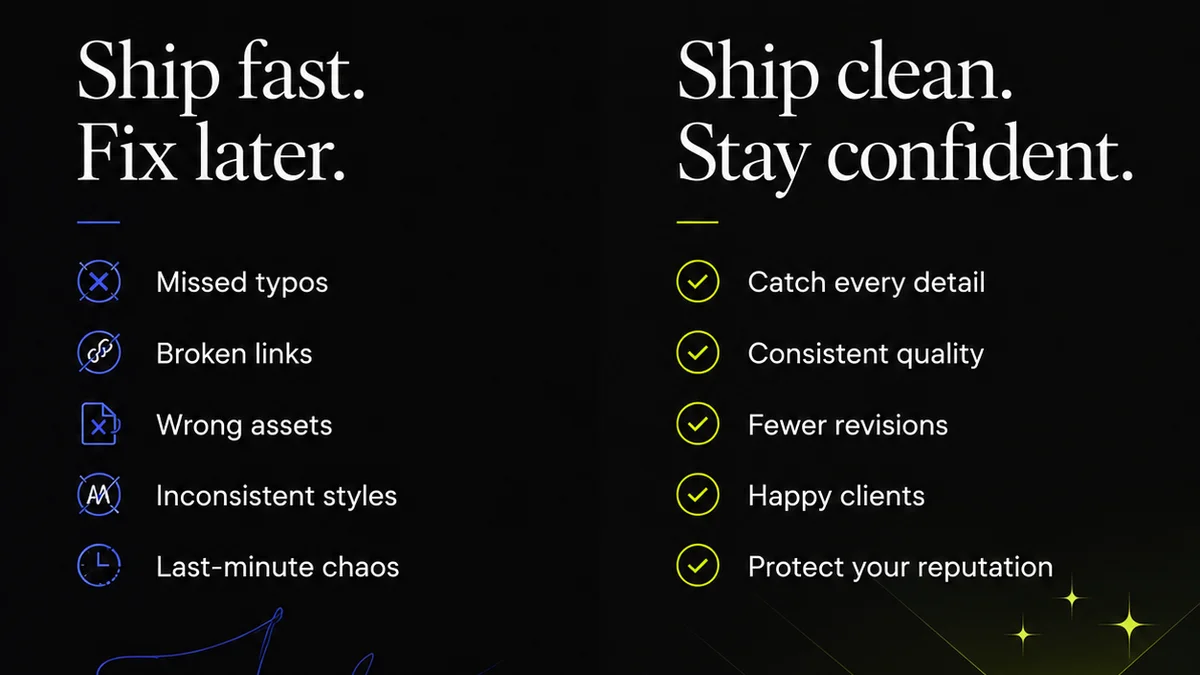
Everyone wants better creative operations KPIs. Faster turnaround times. Fewer revisions. Happier clients. Higher profit margins. Sounds great, right?
Most advice focuses on tools. Better project management software. More efficient communication platforms. Faster rendering machines. None of that is wrong. But it’s incomplete.
The hard truth? Your KPIs are a symptom, not the disease. Chasing better numbers without fixing the underlying workflow issues is like trying to cure a fever by changing the thermometer. It doesn't address the infection.
True improvement in creative operations KPIs comes from ruthless process optimization. It’s about digging into the messy reality of how creative work actually gets done, identifying the bottlenecks, and systematically removing them. It’s less about the tools you use, and more about how you use them – or *don’t* use them.
1. Define What
Frequently asked questions
What are the most important creative operations KPIs for agencies?
Beyond vanity metrics, focus on KPIs that reflect true operational health. Key ones include project profitability, client satisfaction scores (NPS or direct feedback), revision cycle time, on-time delivery rate, resource utilization, and error/rework rates. These give a clearer picture of workflow efficiency and client value.
How can I identify bottlenecks in my creative workflow?
Map out your entire creative process, from brief to final delivery. Then, observe where work gets stuck. Common bottlenecks include: slow client feedback loops, unclear briefs, excessive internal reviews, inefficient handoffs between teams (e.g., design to development), and lack of clear approval stages. Talk to your team – they know where the friction points are.
What's the difference between improving tools and improving processes?
Improving tools means acquiring new software or upgrading existing ones, hoping they’ll magically fix things. Improving processes means analyzing *how* work gets done, identifying inefficiencies, and redesigning the steps, roles, and communication to be more effective. Tools support processes, but they don't create them. A broken process will remain broken, just perhaps with fancier software.
How does centralized feedback improve KPIs?
Centralizing feedback in one system (like Revue) eliminates scattered email threads, missed comments, and version confusion. This speeds up the review process, reduces the chance of errors from miscommunication, and provides a clear audit trail. The result is faster approvals, fewer revisions, and ultimately, better project profitability and client satisfaction.