Everyone agrees that good design documentation is crucial. It’s the bedrock of clear communication, efficient handoffs, and happy clients. The assumption? To get *good* documentation, you need more people. More project managers. More dedicated technical writers. More budget.
None of that is wrong. But it’s incomplete.
The hard truth is that documentation isn't an add-on. It’s a core output of the creative process itself. And you can dramatically improve it without adding a single headcount. It just requires a shift in perspective and a smarter workflow.
1. Stop Treating Docs as an Afterthought
For too long, documentation has been the thing you do *after* the design is done. It’s the final step before a handover, often rushed and incomplete.
This leads to a cascade of problems:
- Lost context for new team members.
- Inconsistent brand application across projects.
- Endless back-and-forth clarification emails.
- Client confusion and scope creep.
- Designers duplicating work because they can't find existing assets or guidelines.
Documentation needs to be woven into the fabric of your design process, not just tacked on at the end.
Integrate Documentation into Milestones
Think of documentation as a deliverable for each stage, not just the final one. A mood board isn't just pretty pictures; it's a visual contract. A wireframe set isn't just layouts; it's a functional blueprint. Each needs a brief, digestible summary of decisions made and rationale.
Define
Frequently asked questions
What is the biggest mistake agencies make with design documentation?
The biggest mistake is treating documentation as an afterthought. It's often rushed at the end of a project, leading to incomplete or inaccurate information that causes problems down the line. Good documentation should be integrated into the design process from the start.
How can a small agency improve documentation without hiring?
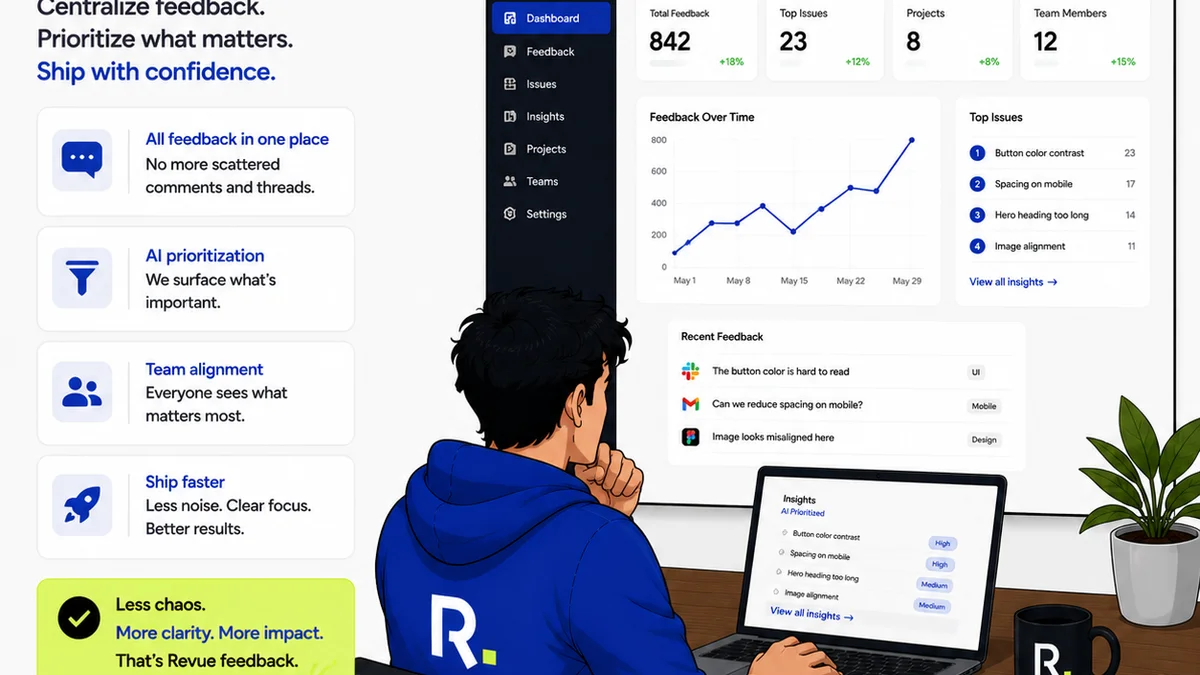
Focus on process and tools. Standardize templates, use collaborative platforms for real-time updates, and train your existing team on the importance of clear, concise documentation at every stage. Leverage tools like Revue to centralize feedback and approvals, which naturally generates a documented history.
What types of documentation are most critical for design projects?
Key documents include project briefs, user personas, wireframes with annotations, style guides, final design assets with specifications, and a clear record of client feedback and approvals. The critical factor is consistency and accessibility.
How does centralized feedback improve documentation?
Centralized feedback systems ensure all comments, revisions, and approvals are logged in one place. This creates an irrefutable, chronological record of decisions, reducing ambiguity and serving as a rich source for project documentation and future reference.