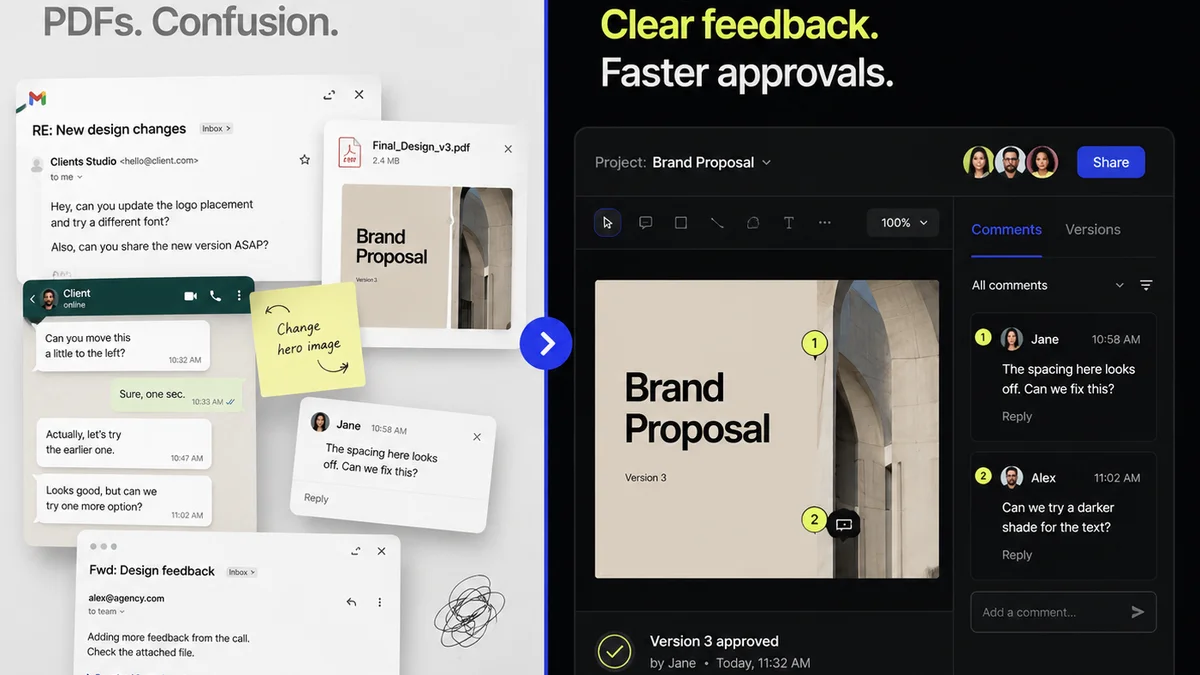
Everyone thinks the bottleneck in creative agencies is client approvals. Or maybe it’s account managers juggling too many projects. Or perhaps it’s the designers themselves, buried under endless revisions.
None of that is wrong. But it’s incomplete.
The real, often invisible, choke point? Design handoff. It's the messy middle where polished designs meet development reality, and it’s where teams often bleed hours, introduce errors, and frustrate everyone involved – all without adding a single headcount.
You don’t need more people to fix design handoff. You need a smarter system.
1. The Illusion of
Frequently asked questions
What are the biggest challenges in design handoff?
Common challenges include unclear specifications, missing assets, scope creep during the handoff phase, communication breakdowns between design and development, and a lack of a centralized system for feedback and approvals, leading to version control issues and rework.
How can I ensure all necessary assets are included in the handoff?
Implement a checklist for every handoff. Ensure your design tool or handoff platform automatically bundles all required assets (fonts, images, icons, specs) and provides clear export options. Document any custom assets or states explicitly.
Can a small agency improve handoff without expensive software?
Yes. Start with clear internal processes and documentation. Standardize your file naming conventions, use shared cloud storage effectively, and establish a clear communication protocol for questions. While dedicated software helps, process is king.
How does better design handoff benefit developers?
Developers benefit from clear, organized assets, precise specifications (spacing, typography, color), and a single source of truth for design. This reduces guesswork, minimizes assumptions, and speeds up their implementation time, leading to fewer bugs and faster delivery.