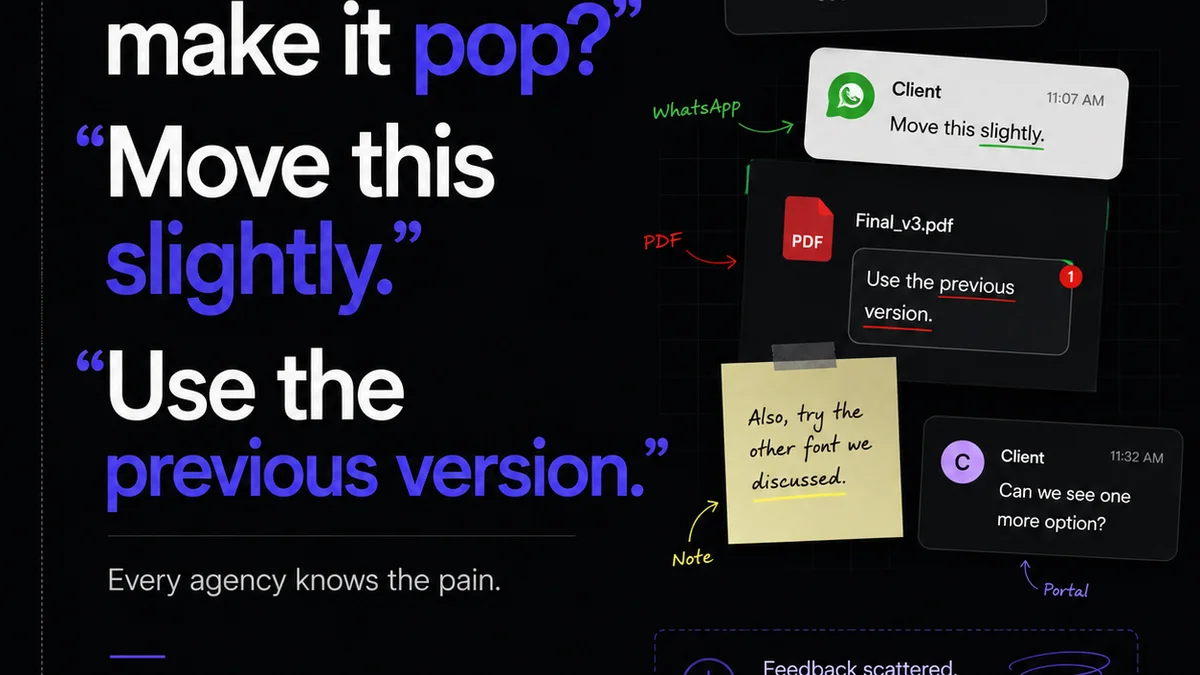
Everyone wants more designer productivity. It’s the holy grail for agencies and in-house teams alike. The common advice? Get the latest software, faster hardware, maybe a standing desk. That’s all fine. But it’s incomplete.
The hard truth is, true productivity gains don't come from the shiny new object. They come from clarity. From eliminating friction. From a workflow that actually supports creative output, instead of hindering it.
1. The Illusion of Tool-Driven Productivity
We love to blame tools for our problems. The software is too slow. The hardware can't keep up. This is a comfortable narrative because it shifts blame outward. It suggests a simple fix: buy better stuff.
But this ignores the biggest productivity killer: complexity and miscommunication.
The Feedback Loop Breakdown
Think about your typical project. How much time is spent chasing down feedback? How often is feedback vague, contradictory, or lost in email chains?
- Client emails a PDF with redlines.
- Designer marks them up.
- Project manager consolidates feedback.
- Another round of emails.
- Someone misses a crucial comment.
- More rework than necessary.
- Everyone's frustrated.
This isn't a tool problem. It's a process problem. The software might be capable, but the way feedback flows through it is broken.
Revision Hell is Real
Endless revisions aren't a sign of a demanding client; they're often a symptom of unclear communication and a lack of structured review. When feedback is a free-for-all, designers get pulled in multiple directions, often working on subjective changes that don't move the project forward.
The Cost of Context Switching
Every time a designer has to stop what they’re doing to hunt for feedback, answer a clarifying question via Slack, or check an email, their focus is broken. Re-establishing that flow takes time. Significant time.
This constant context switching is a massive drain on creative energy and output.
2. The Real Bottlenecks: Communication and Process
Productivity isn't about working harder; it's about working smarter. And smarter work requires a streamlined process, especially around client collaboration and internal review.
Centralized Feedback is Non-Negotiable
Scattered feedback is a productivity black hole. When feedback lives in emails, Slack messages, Google Docs, and random PDF comments, you create silos of information. Designers have to be detectives, piecing together the full picture. This is inefficient and prone to error.
A centralized system ensures all feedback lives in one place, tied directly to the creative asset. This eliminates the need for manual consolidation and reduces the chance of missed comments.
Visibility into Revisions and Approvals
When was the last time you had a clear, real-time view of where a project stood in the revision or approval process? Without it, you’re operating blind.
Designers waste time chasing status updates. Account managers spend hours compiling reports. Stakeholders are left in the dark, leading to more follow-up questions.
Clear visibility means everyone knows what's needed, who's responsible, and what the next step is. This proactive approach prevents delays before they even start.
Quality Control, Built-In
The final stage of review is critical. Are all the requirements met? Are the client's specific requests addressed? Are there any lingering technical issues?
A structured quality check process, integrated into the workflow, ensures that feedback is not only captured but also acted upon systematically. This prevents critical issues from slipping through the cracks and reduces the need for last-minute fixes that derail schedules.
3. Defining a Productive Workflow
What does a truly productive workflow look like? It’s one that prioritizes clarity, minimizes friction, and empowers your team.
Clear Briefs, Clear Expectations
This sounds basic, but it's foundational. A well-defined brief at the start of any project sets the stage. Ambiguity here ripples through the entire process.
Ensure briefs include:
- Project goals
- Target audience
- Key messages
- Deliverables
- Mandatories and constraints
- Success metrics
When everyone understands the
Frequently asked questions
What is the biggest myth about increasing designer productivity?
The biggest myth is that productivity is primarily about having the latest software or fastest hardware. While tools matter, the real gains come from optimizing communication, streamlining processes, and eliminating workflow friction.
How does centralized feedback improve designer productivity?
Centralized feedback ensures all comments and revisions are in one accessible place, directly linked to the asset. This eliminates the need for designers to hunt for information across emails and chats, reduces miscommunication, and prevents missed feedback, saving significant time and reducing rework.
What are the key components of a productive creative workflow?
A productive workflow includes clear project briefs, a centralized system for feedback and approvals, real-time visibility into project status, and structured quality control checks. It minimizes context switching and empowers the team.
How can agencies manage client revisions more effectively?
Effective revision management involves establishing clear processes for feedback submission, using tools that allow for contextual comments, and ensuring stakeholders provide consolidated, actionable feedback. This prevents endless back-and-forth and keeps projects on track.