Everyone's talking about AI in design. It’s the shiny new object, promising to revolutionize everything. You hear about faster ideation, hyper-personalized content, and automated workflows. And none of that is wrong. But it’s incomplete.
The hard truth is that most agencies and creative teams are measuring AI success with the wrong yardstick. They're focused on the *potential* rather than the *proven impact*. This leads to wasted investment and missed opportunities.
Let's cut through the noise. What actually matters when you bring AI into your creative process?
1. Efficiency Gains, Not Just Speed
The most obvious benefit of AI is speed. But speed alone is a vanity metric if it doesn't translate to tangible efficiency. We need to look beyond how quickly a task is done and focus on how it impacts overall project velocity and resource allocation.
Time Saved Per Task
This is the foundational KPI. Track the time it takes for a specific task (e.g., generating initial concepts, creating variations, writing copy) with and without AI assistance. The difference is your raw time savings.
Resource Reallocation
This is where efficiency truly shines. If AI handles 2 hours of a designer's 8-hour day, what does that designer do with the extra 2 hours? Are they freed up for higher-value strategic work, client interaction, or taking on more projects? Track this shift.
Reduction in Rework Cycles
AI can help catch errors or inconsistencies earlier. If AI-powered quality checks reduce the number of revision rounds needed, that's a massive efficiency win. Measure the average number of revision rounds before and after implementing AI-driven QC.
Cost Per Project/Asset
Ultimately, efficiency should reduce costs. Calculate the cost per project or per creative asset. If AI streamlines processes and reduces billable hours spent on repetitive tasks, your cost per output should decrease.
The real win isn't doing things faster. It's doing more with the same resources, or doing better work with fewer resources.
2. Quality Improvement and Consistency
AI isn't just about doing things quicker; it's about doing them better. This is harder to quantify but crucial for long-term success.
Error Rate Reduction
For tasks like copy editing, image tagging, or even code generation, AI can identify and correct errors that humans might miss, especially under deadline pressure. Track the baseline error rate and the rate post-AI implementation.
Adherence to Brand Guidelines
AI can be trained to ensure creative output consistently adheres to brand guidelines. Measure the percentage of assets that pass automated brand compliance checks. This is invaluable for large organizations or franchises.
Client Satisfaction Scores (Correlated)
While not a direct AI KPI, improved quality and consistency often lead to happier clients. Look for correlations between AI implementation and improvements in client feedback or Net Promoter Scores (NPS). Ensure the AI isn't just automating mediocrity.
Creative Exploration Scope
AI tools can generate a far wider range of initial concepts or variations than a human team could manually. While subjective, track the *breadth* of initial creative directions explored. Did AI unlock avenues previously unfeasible?
3. Enhanced Creative Output and Innovation
This is the frontier. AI should not just optimize the existing; it should enable the new.
Novelty of Concepts Generated
Can AI propose ideas or combinations that the human team wouldn't have conceived? This is qualitative but can be assessed through team debriefs and by tracking how many AI-generated concepts move forward into client presentations.
Personalization at Scale
For marketing or content teams, AI's ability to personalize creative assets for different audience segments is a huge leap. Measure the number of unique personalized variations generated and their performance uplift (e.g., conversion rates).
New Service Offerings
Has AI enabled your agency to offer new services? For example, AI-powered data visualization, hyper-targeted ad creative generation, or predictive design trend analysis. Track revenue and client acquisition from these new AI-driven services.
Team Skill Development
Are your designers learning to leverage AI tools effectively? Track training hours, adoption rates of new AI features, and qualitative feedback on how AI is augmenting, not replacing, creative skills.
4. Risk Mitigation and Compliance
In regulated industries or for sensitive projects, AI can be a powerful tool for reducing risk.
Compliance Pass Rate
For AI tools used in legal review, accessibility checks, or data privacy compliance, the KPI is straightforward: the percentage of output that meets regulatory standards without human intervention.
Reduction in Security Incidents
If AI is used to scan for vulnerabilities in code or identify sensitive data in creative assets, track the reduction in security-related incidents or data breaches.
Intellectual Property (IP) Audit Trails
AI tools can help maintain clear records of asset creation and modification, aiding in IP protection and audits. Measure the completeness and accessibility of these audit trails.
Where Revue Fits In
Implementing AI is only part of the equation. Managing the workflow, feedback, and approvals around AI-generated or AI-assisted creative is critical. This is where a platform like Revue becomes essential.
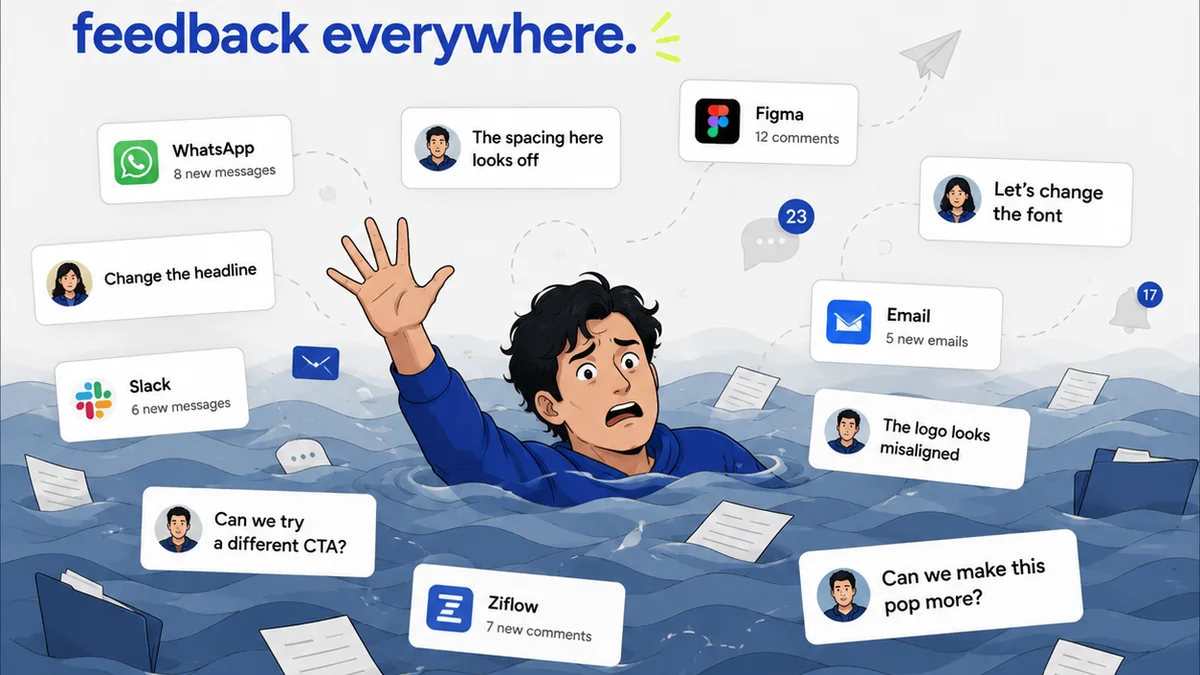
Centralized Feedback: AI can generate dozens of options. Instead of scattered comments across emails and chat, Revue provides a single source of truth for all feedback on AI-generated assets. This ensures clarity and reduces misinterpretations.
Revision and Approval Visibility: Track the lifecycle of AI-assisted projects. See which versions were approved, who approved them, and any specific feedback tied to those decisions. This audit trail is invaluable for accountability and learning.
Quality Checks: Integrate AI-powered quality checks directly into your workflow. Revue can help manage the process, ensuring AI-flagged issues are addressed before final delivery, maintaining the high standards your clients expect.
Without a system to manage the output of AI, you risk creating more chaos, not less.
Final Thought
AI in design isn't a magic bullet. It's a powerful tool that requires strategic implementation and measurement. Are you measuring the right things? Are you focused on true value creation, or are you just caught up in the hype?
Frequently asked questions
What are the most common mistakes agencies make when measuring AI in design?
The most common mistake is focusing solely on speed or task completion without considering the impact on overall efficiency, quality, or resource reallocation. Chasing 'potential' without proving tangible results is another frequent pitfall.
How can I measure the 'quality' improvement from AI?
Measure quality through quantifiable metrics like error rate reduction, adherence to brand guidelines (using automated checks), and reduction in revision cycles. Qualitative assessments of creative novelty and client satisfaction can also be correlated.
Is it possible to measure the ROI of AI in a creative agency?
Yes, by tracking efficiency gains (time saved, resource reallocation), cost reductions per project, new revenue from AI-enabled services, and improvements in client retention due to higher quality output. It requires a holistic view beyond just initial cost.
How does AI impact the role of a designer?
AI should augment, not replace, designers. It frees them from repetitive tasks, allowing focus on strategy, complex problem-solving, and higher-level creative direction. Measuring team skill development and adoption of AI tools is key.