Everyone’s talking about creative automation. They say it’s about speed. It’s about efficiency. It’s about freeing up your teams for more strategic work.
None of that is wrong. But it’s incomplete.
The hard truth is, if you’re not measuring the *right* things, your automation efforts might be a lot of busywork with zero actual impact.
You could be automating the wrong tasks. Or optimizing for the wrong outcomes. Or simply not seeing the forest for the trees.
1. Time Savings: The Obvious Win (But How Do You Measure It?)
This is the low-hanging fruit. Automation is supposed to save time. But simply saying “we save X hours” isn’t enough. You need to be specific.
Manual vs. Automated Time
Break down the time spent on a task before automation versus after.
- Example: A social media post used to take 30 minutes to build, proof, and schedule. Now, with a template and automated approval routing, it takes 10 minutes. That’s a 20-minute saving per post.
Multiply that by the volume of posts. Suddenly, you’re looking at significant hours saved across the team.
Task Completion Time
Measure the end-to-end time for a specific, repeatable task. This includes:
- Initiation
- Asset gathering
- Creation/Modification
- Review cycles
- Approvals
- Final delivery/publishing
Automation should shorten this cycle. If it doesn’t, something is wrong with the process or the automation itself.
Team Allocation Shifts
Where is your team’s time *now* compared to before?
- Are designers spending less time on repetitive layout tasks?
- Are project managers spending less time chasing approvals?
- Are proofreaders dedicating more time to strategic quality assurance rather than basic checks?
This is where the real value lies – shifting high-value talent to higher-value work.
2. Revision & Approval Cycles: The Bottleneck Buster
This is where many creative operations grind to a halt. Automation isn’t just about creating assets faster; it’s about moving them through the pipeline faster.
Number of Revision Rounds
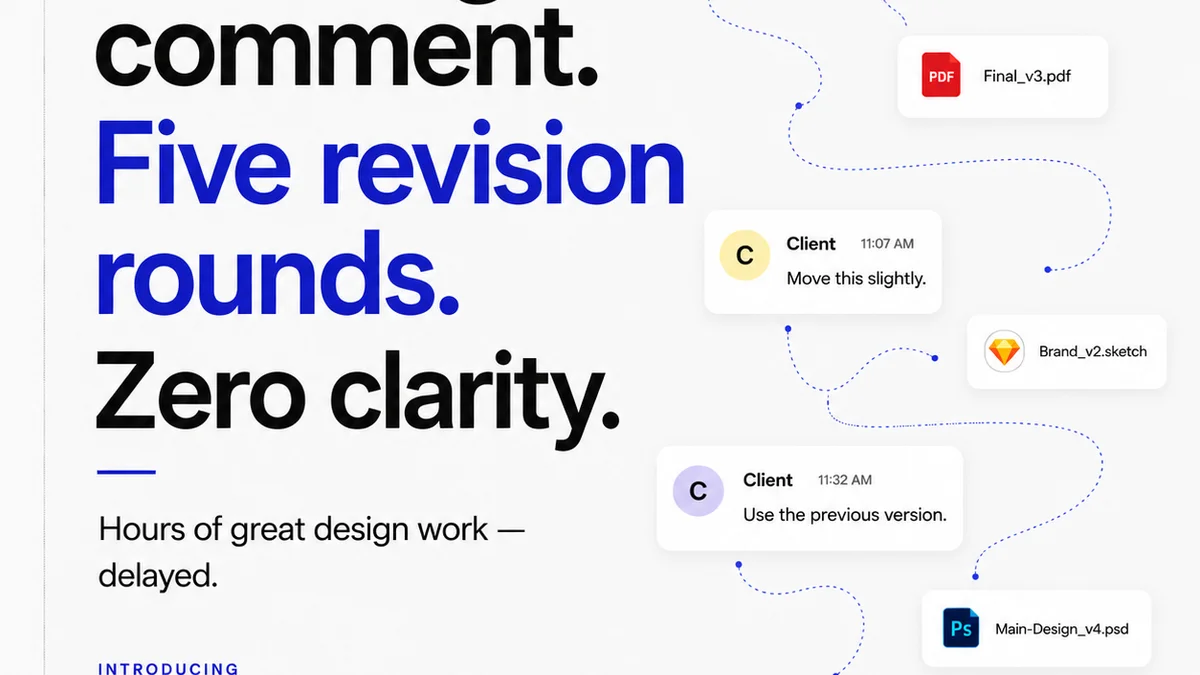
Are clients or internal stakeholders requesting fewer rounds of revisions because the automated process ensures clarity and accuracy upfront?
This is tricky. It might not be a direct KPI of automation, but if your automation includes better brief capture or automated QC checks, it can influence this.
Approval Turnaround Time
How long does it take for an asset to get from submission to final sign-off?
- Track the average time for each stakeholder or client to provide feedback.
- Track the total time an asset sits in the approval queue.
Automated notifications and clear audit trails can drastically reduce the time assets languish waiting for a click.
Reduction in
Frequently asked questions
What's the difference between efficiency and effectiveness in creative automation?
Efficiency in creative automation is about doing tasks faster and with fewer resources (e.g., time saved per asset). Effectiveness is about achieving the desired outcomes (e.g., higher quality output, better client satisfaction, increased revenue) as a result of that automation.
How can I track time savings accurately for creative automation?
Before implementing automation, meticulously log the time spent on specific tasks. After implementation, repeat the logging process for the same tasks. The difference, multiplied by volume, is your time saving. Focus on specific, repeatable tasks rather than broad estimates.
Can creative automation really reduce the number of revision rounds?
Yes, indirectly. If your automation includes better brief intake, automated quality checks, or clearer version control, it can lead to fewer errors and clearer communication, which often results in fewer revision rounds. It's not always a direct automation feature, but a consequence of a more streamlined process.
What are the most important KPIs for agencies implementing automation?
For agencies, the most critical KPIs often revolve around profitability and client satisfaction. This means tracking changes in project profitability (due to reduced labor costs), client turnaround times, and the number of billable hours shifted from low-value tasks to higher-value strategic work or client servicing.