Everyone agrees that good design needs rigorous quality assurance. You have checklists. You have sign-offs. You have a general sense of whether the work is "good enough."
None of that is wrong. But it’s incomplete.
The hard truth? Without measurable KPIs, your design QA process is just guesswork. You can’t improve what you don’t measure. And in a fast-paced agency, guesswork leads to wasted time, missed deadlines, and unhappy clients.
1. Defect Density: Finding the Bugs Before They Bite
Defect density is a classic software metric, but it’s gold for design QA too. It’s simply the number of bugs or issues found per unit of work. For design, a "unit" could be a page, a screen, a campaign, or even a single asset.
Why is this crucial? It tells you where your QA process is weakest and where your design or development teams might need more support. A high defect density in a specific area signals a recurring problem.
Tracking Defect Density
- Define Your Unit: Is it a web page? A mobile screen? A print ad? Be consistent.
- Categorize Defects: Minor (typos, alignment), Major (broken functionality, incorrect content), Critical (brand compliance, security flaw).
- Count and Divide: Number of defects / Number of units = Defect Density.
A declining defect density over time is a clear sign your processes are improving.
2. Resolution Time: How Fast Are We Fixing Things?
Finding a bug is only half the battle. How quickly does it get fixed? Resolution time measures the average duration from when a defect is identified to when it's resolved and verified.
Long resolution times kill productivity and morale. They mean designers are waiting for dev to fix something, or devs are waiting for designers to clarify feedback. This bottleneck directly impacts project timelines and client satisfaction.
Optimizing Resolution Time
- Set SLAs: Define target resolution times based on defect severity. Critical bugs in hours, major in days, minor in a week.
- Clear Ownership: Assign specific individuals or teams responsibility for fixing different types of defects.
- Communication Channels: Ensure clear, direct communication between QA, design, and development.
Faster resolution means faster delivery and happier clients.
3. First Pass Yield (FPY): Getting it Right the First Time
First Pass Yield is a measure of how much work passes QA without needing any revisions or fixes. For design QA, this means how many assets or deliverables are approved on the first review cycle.
A high FPY is the holy grail. It indicates well-defined requirements, strong creative execution, and effective initial reviews. Low FPY means rework, wasted effort, and often, scope creep.
Boosting First Pass Yield
- Robust Briefs: Ensure project briefs are crystal clear and signed off.
- Prototyping & Wireframing: Catch structural and usability issues early.
- Client Alignment: Conduct early stakeholder reviews on concepts before full execution.
Aim for a higher FPY with every project.
4. Rework Percentage: The Cost of Second Chances
Rework percentage quantifies the amount of work that had to be redone after initial delivery. This is closely related to FPY but focuses specifically on the proportion of *effort* spent on fixes.
Every hour spent on rework is an hour not spent on new client work or business development. It’s a direct hit to your agency’s profitability and your team’s capacity.
Reducing Rework
- Pre-flight Checks: Implement thorough internal checks before client delivery.
- Standardized Processes: Use templates and style guides consistently.
- Feedback Loops: Ensure feedback is consolidated, clear, and actionable.
Minimizing rework frees up your team for higher-value activities.
5. Client Satisfaction Scores (Related to QA): Are They Happy with the Process?
While not a direct QA metric, client satisfaction scores are the ultimate indicator of your QA’s effectiveness. Surveys or direct feedback focusing on the revision and approval process can be invaluable.
Clients care about clarity, speed, and accuracy. If they’re frustrated by endless revisions or confused about the process, your QA is falling short, no matter how many bugs you catch internally.
Improving Client Perception
- Transparency: Keep clients informed about the QA process and timelines.
- Centralized Feedback: Use a single source of truth for all comments and approvals.
- Manage Expectations: Clearly define what QA covers and what constitutes a revision.
A smooth QA process leads to a smoother client relationship.
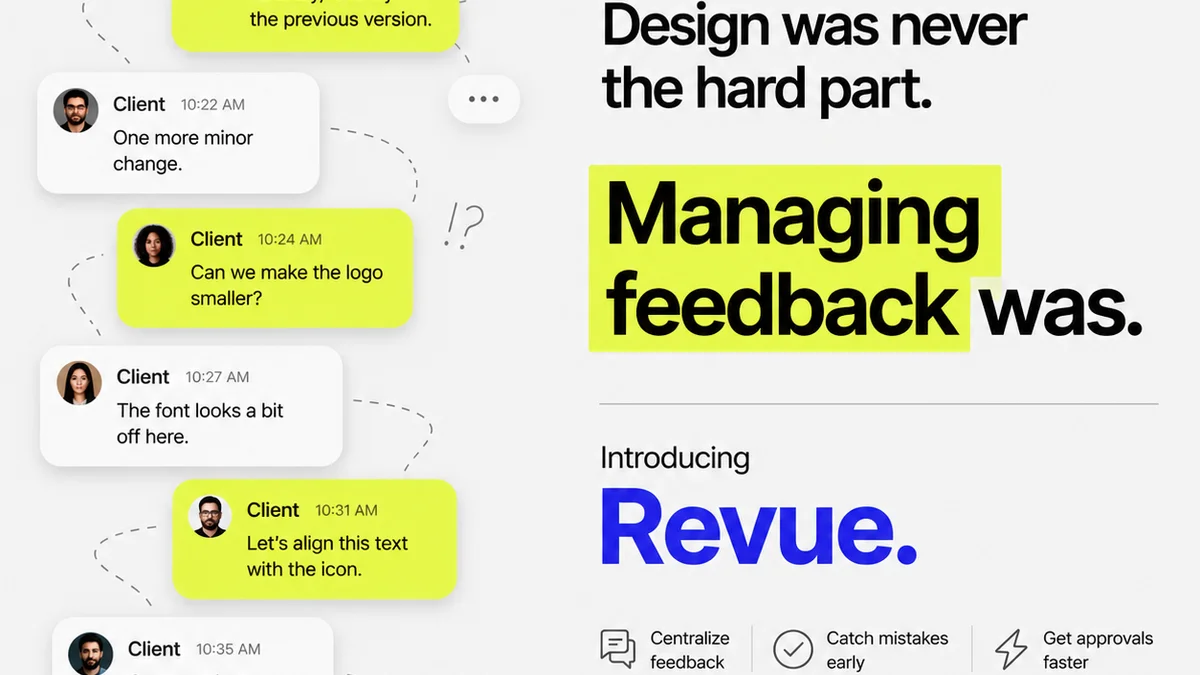
Where Revue Fits In
Managing these KPIs requires visibility and control over your creative workflow. Guessing when a revision is
Frequently asked questions
What is Defect Density in design QA?
Defect Density measures the number of issues or bugs found per unit of work (e.g., per page, per screen). It helps identify problem areas in your design or development process.
Why is First Pass Yield (FPY) important for design?
FPY indicates how much work passes QA without needing revisions. A high FPY means your initial execution and reviews are effective, saving time and resources.
How can agencies reduce rework percentage?
Reducing rework involves clear briefs, strong internal pre-flight checks, standardized processes, and effective, centralized feedback mechanisms to catch issues before client delivery.
Can client satisfaction be a KPI for design QA?
Yes, client satisfaction related to the revision and approval process is a crucial indicator. It reflects the transparency, speed, and clarity of your QA efforts from the client's perspective.