Localization. Most agencies think it’s just translation. You get a campaign, translate the copy, swap out some images, and call it a day.
None of that is wrong. But it’s incomplete.
The hard truth? True localization isn’t about adapting your existing work. It’s about building work that’s *born* global, or at least *designed* to be easily and effectively adapted. It’s about understanding cultural nuances, user behaviors, and market expectations so deeply that your creative resonates just as powerfully in Tokyo as it does in Toronto.
This isn’t just about avoiding embarrassing gaffes. It’s about unlocking massive growth opportunities. And for creative agencies, it’s a strategic imperative that separates the global players from the local ones.
1. Beyond Words: What Localization Really Means
Forget the idea that localization is just a plug-and-play translation service. That’s a surface-level approach that rarely hits the mark.
Localization is the process of adapting a product, service, or content to a specific local market and its culture. This goes far beyond language.
The Core Components of Localization
- Language: The obvious one. Translation, yes, but also ensuring the tone, idiom, and register are appropriate for the target audience.
- Cultural Nuances: Colors, symbols, gestures, humor, social etiquette, religious sensitivities. What’s acceptable or appealing in one culture might be offensive or nonsensical in another.
- Visuals and Imagery: Models, settings, and even the style of photography or illustration can alienate or attract audiences.
- User Experience (UX) and Interface (UI): Navigation patterns, data formats (dates, times, currency), legal requirements, and even the physical layout of a digital product can differ significantly.
- Market-Specific Features: Payment methods, popular social media platforms, local regulations, and preferred communication channels.
Think of it this way: a direct translation might convey the literal meaning, but localization conveys the *intended feeling* and *purpose*.
2. The High Cost of Getting Localization Wrong
The internet has made the world smaller, but it hasn’t made it homogenous. Cultural missteps in global campaigns aren’t just embarrassing; they can be financially devastating.
A poorly localized campaign can:
- Damage brand reputation irreparably.
- Lead to significant financial losses due to campaign failure.
- Alienate entire customer segments.
- Trigger legal or regulatory issues.
- Result in wasted creative and media spend.
Remember the infamous examples? The car models with unfortunate names in other languages? The ad campaigns that used imagery considered taboo? These aren’t isolated incidents; they’re cautionary tales.
For agencies, this means the pressure is on. You’re not just delivering creative; you’re delivering cultural fluency. Failure here reflects directly on your client’s business and your agency’s credibility.
3. Strategic Localization: Building for Global from the Start
The most effective localization isn't an afterthought; it's baked into the creative process from day one.
This requires a shift in thinking. Instead of designing for your home market and then *adapting*, you design with multiple markets in mind.
Key Strategies for Global-First Creative
- Develop a Global Brand Voice, Not Just a Global Message: Create a core brand identity and tone that can be adapted, rather than a rigid message that needs to be forced into different contexts.
- Design with Adaptability in Mind: Use flexible layouts, modular design systems, and placeholders for culturally relevant imagery or text. Ensure visual elements are easily swappable.
- Prioritize Cultural Research Early: Don’t wait until the campaign is built. Understand the target markets, their values, and their communication styles *before* concepting.
- Build a Diverse Creative Team: Having team members or consultants with native or deep cultural understanding is invaluable.
- Leverage Technology Wisely: Translation Memory (TM) tools, Machine Translation (MT) with human post-editing (MTPE), and localization management platforms can streamline workflows, but they are tools, not replacements for human insight.
This approach reduces rework, minimizes risks, and ultimately produces more impactful global campaigns.
4. The Localization Workflow: From Brief to Launch
Integrating localization effectively requires a structured workflow. It’s not a separate track; it’s a parallel stream that runs alongside core creative development.
Phases of a Localized Project
- Discovery & Research: Understand the client’s global ambitions, target markets, competitive landscape, and any existing localization efforts. Conduct deep dives into cultural nuances, consumer behavior, and regulatory environments for each key market.
- Strategy & Planning: Define the localization strategy. Which markets are prioritized? What level of adaptation is needed for each? Develop a localization style guide and glossary. Plan for asset creation and adaptation.
- Concepting & Creative Development: Ideate with localization in mind. Ensure concepts are culturally neutral or easily adaptable. Brief international teams or partners early.
- Content Creation & Adaptation: Develop core assets. Translate and adapt copy, visuals, and other elements. This is where collaboration with local teams or linguists is critical.
- Review & Quality Assurance (QA): Conduct linguistic QA (accuracy, tone, consistency) and functional QA (UX, UI, technical aspects) in each target locale. Ensure cultural appropriateness.
- Implementation & Launch: Deploy localized assets across all channels. Monitor performance in each market.
- Post-Launch Analysis & Iteration: Gather feedback, analyze campaign performance by region, and inform future localization efforts.
Each phase needs clear ownership and communication channels.
5. Where Revue Fits In
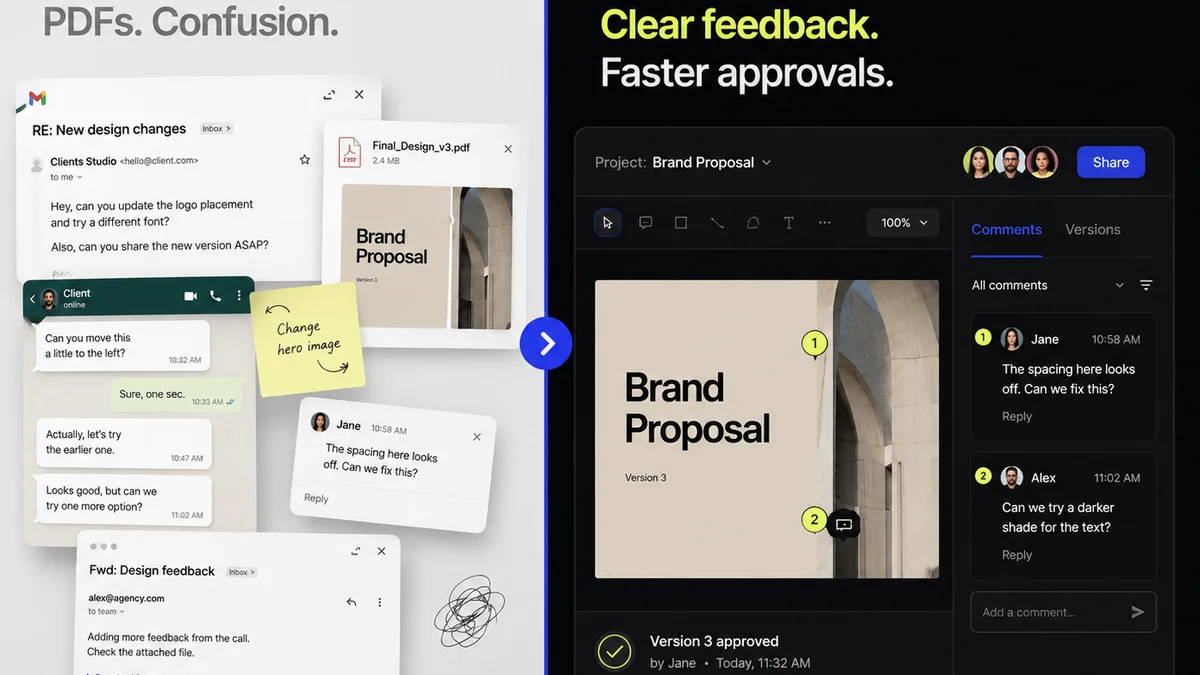
Managing a global campaign with multiple stakeholders, languages, and assets can quickly become chaotic. Keeping track of feedback, revisions, and approvals across different markets is a monumental task.
This is where a centralized platform like Revue becomes indispensable.
- Centralized Feedback Hub: Consolidate all client and stakeholder feedback, regardless of location or language, in one place. No more hunting through emails or scattered documents.
- Version Control & Revision History: Easily track every iteration of an asset. See who approved what, when, and why. This clarity is crucial for managing complex localized projects.
- Streamlined Approvals: Implement clear, auditable approval workflows for each localized asset and market. Ensure sign-off happens at the right stages and by the right people.
- Quality Assurance Tracking: Use the platform to manage and track localization QA processes, ensuring linguistic accuracy and cultural appropriateness before launch.
- Visibility Across Teams: Provide all team members, including international partners, with a single source of truth for project status, feedback, and approvals.
Revue helps bring order to the complexity, ensuring that the meticulous work of localization doesn’t get derailed by disorganization.
6. Final Thought
Localization is no longer a niche service for multinational corporations. It’s a fundamental requirement for any agency serious about delivering impactful, globally relevant creative work.
The agencies that thrive will be those that move beyond simple translation and embrace true cultural adaptation. They’ll build global-ready strategies, foster diverse teams, and leverage technology to streamline the process.
The question isn't whether you *can* do localization. It's whether you're prepared to do it *right*.
Frequently asked questions
What's the difference between translation and localization?
Translation focuses on converting text from one language to another. Localization adapts content, products, and services to a specific local market, considering cultural nuances, visual elements, user experience, and local regulations, in addition to language.
Why is localization important for creative agencies?
Localization is crucial for agencies to help their clients achieve global market penetration and resonance. Getting it right avoids costly cultural missteps, enhances brand reputation, and unlocks significant growth opportunities. It's a key differentiator for agencies aiming for international clients.
How can agencies start building a localization strategy?
Begin by integrating cultural research early in the creative process. Develop a global-first mindset, design assets with adaptability in mind, build diverse teams, and establish clear localization workflows. Prioritize markets and understand their unique requirements.
Can machine translation be used for localization?
Machine translation (MT) can be a starting point, often used with human post-editing (MTPE). However, for nuanced creative work, MT alone is rarely sufficient. Human linguists and cultural experts are essential to ensure accuracy, tone, and cultural appropriateness.