Everyone knows magazine production involves a lot of steps. You’ve got editorial, design, pre-press, printing, and distribution. Sounds straightforward, right?
None of that is wrong. But it’s incomplete.
The real challenge isn't just listing the steps; it's orchestrating them. It’s about how you manage the constant flow of feedback, revisions, and approvals that make or break your deadline and your final product. That’s the hard truth.
1. The Editorial Foundation
Before a single pixel is placed or a headline is tweaked, the editorial team lays the groundwork. This phase is critical and often underestimated in its complexity.
Content Strategy and Planning
This starts with the big picture. What’s the magazine's purpose? Who is the target audience? What kind of content will resonate?
- Defining editorial calendar themes
- Outlining key articles and features
- Assigning writers and setting deadlines
- Establishing tone of voice and style guides
A clear content strategy prevents aimless wandering later.
Research and Writing
This is where the core content is generated. It’s not just about putting words on a page; it’s about accuracy, depth, and engagement.
- Conducting interviews and gathering information
- Fact-checking and verifying sources
- Drafting articles, features, and columns
- Ensuring adherence to style guides and tone
This stage demands rigor. Errors here ripple downstream.
Editing and Proofreading
This is the crucial quality control gate for content. It’s multilayered.
Substantive Editing: Focuses on structure, clarity, flow, and overall message. Does the piece make sense? Is it compelling?
Line Editing: Focuses on sentence-level improvements, word choice, and rhythm. Is it well-written?
Copyediting: Focuses on grammar, spelling, punctuation, and consistency with the style guide. Is it correct?
Proofreading: The final check for any remaining errors before design. This is the last chance to catch typos.
Each stage requires a different eye and a different focus. Rushing this is a false economy.
2. The Design and Layout Phase
Once content is locked, the visual aspect takes over. Design transforms raw text into a compelling magazine experience.
Concept and Art Direction
This sets the visual tone. It's about more than just pretty pictures.
- Developing mood boards and style guides for visuals
- Briefing photographers and illustrators
- Selecting imagery that complements the content
- Ensuring brand consistency across the publication
Strong art direction guides the entire visual process.
Layout and Typesetting
This is where the content meets design. It’s a meticulous process.
- Establishing grid systems for consistency
- Applying typography that enhances readability
- Integrating text and images harmoniously
- Designing for print and digital formats (responsive design for digital)
A well-designed layout guides the reader’s eye and enhances comprehension. Think about the type system in Material Design for principles that apply across mediums.
Visual Content Creation
Photography, illustration, and infographics all play a role.
- Commissioning custom photography or illustrations
- Sourcing stock imagery effectively
- Creating infographics and data visualizations
- Retouching and preparing images for print/digital
High-quality visuals are non-negotiable.
3. Pre-Press and Production
This is the technical bridge between the creative files and the physical (or digital) output. It’s often where projects get derailed by overlooked details.
File Preparation
Ensuring all assets are ready for the printer or digital platform.
- Checking image resolution and color modes (CMYK for print, RGB for digital)
- Verifying font embedding and outlining
- Setting up bleeds and trim marks for print
- Optimizing files for web or app delivery
Incorrect file prep is a common, costly mistake.
Proofing and Approvals
This is a critical, often contentious, step. It’s not just about catching typos; it’s about ensuring the final product aligns with expectations.
- Digital proofs (PDFs) for review
- Physical proofs (e.g., contract proofs) for color accuracy
- Client and stakeholder review cycles
- Sign-off procedures for final approval
This stage needs clear communication and defined responsibilities. Ambiguity here leads to expensive reprints or redesigns.
Color Management
Ensuring color consistency from screen to print.
- Calibrating monitors
- Using ICC profiles
- Understanding CMYK vs. RGB differences
- Working with the printer on color targets
What looks good on screen might not print the same. Manage expectations.
4. Distribution and Archiving
The magazine is printed or published, but the workflow isn’t over.
Printing and Binding (for physical magazines)
Coordinating with the print vendor.
- Managing print runs and schedules
- Overseeing quality control at the printer
- Arranging shipping and logistics
This requires precise timing and clear communication with your print partner.
Digital Publishing
Preparing and deploying the digital version.
- Formatting for web, e-readers, or apps
- Ensuring accessibility standards are met (e.g., WCAG guidelines)
- Optimizing for various devices and screen sizes
Accessibility is key for reaching a wider audience. Refer to the Web Content Accessibility Guidelines (WCAG) for best practices.
Distribution Logistics
Getting the magazine to its audience.
- Coordinating with distribution partners
- Managing subscriber lists and delivery
- Tracking sales and circulation data
A smooth distribution ensures the content reaches its intended readers.
Archiving
Storing final assets for future reference.
- Organizing and backing up final design files
- Creating a searchable archive of past issues
- Maintaining rights and licensing information
A well-organized archive is invaluable for historical reference and future projects.
Where Revue Fits In
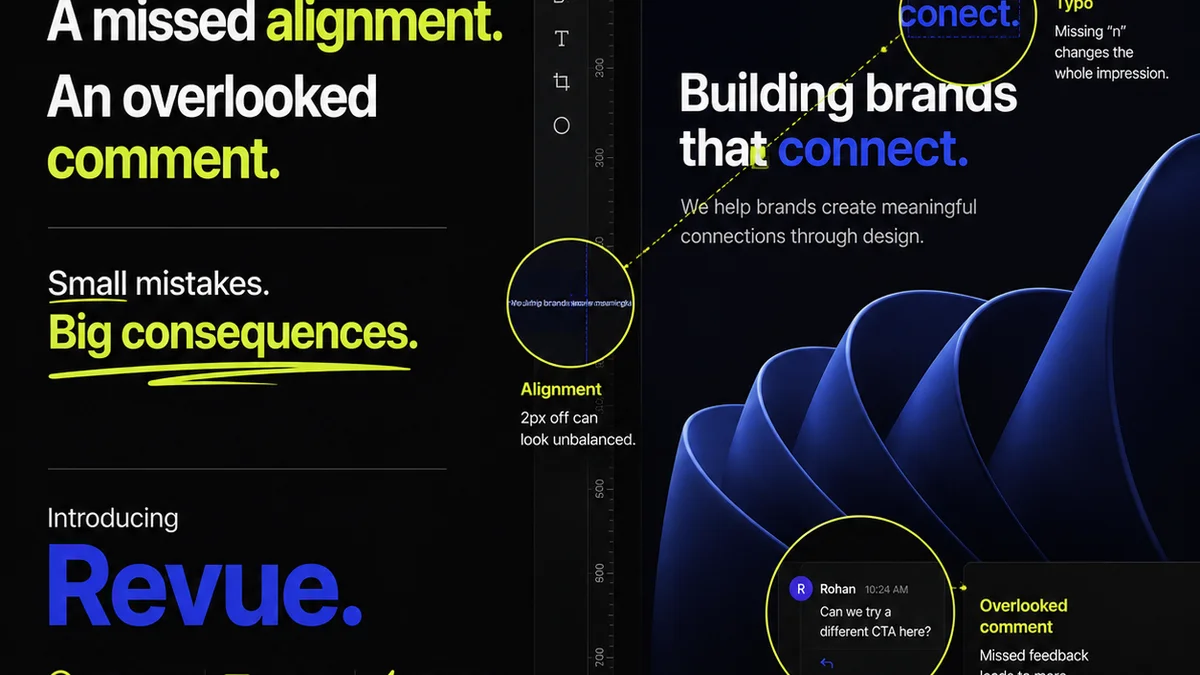
The complexity of magazine production, especially with multiple stakeholders and revision rounds, can easily lead to chaos. Scattered feedback, missed comments, and unclear approvals are the norm without the right system.
Revue provides a centralized platform to manage the entire feedback and approval process. Instead of sifting through endless email threads or Slack messages, all comments are tied directly to the specific design element or page. Version control becomes clear, revision history is tracked, and final approvals are unambiguous.
This streamlining doesn't just save time; it reduces errors and ensures everyone is working from the most current version. It brings clarity to a process often plagued by confusion, directly impacting the quality and timeliness of your magazine production workflow.
Magazine Production Checklist
Here’s a practical checklist to guide your workflow. Use it as a starting point and adapt it to your specific needs.
Editorial
- Define content strategy and themes
- Create editorial calendar
- Assign writers and set deadlines
- Develop style guide
- Conduct research and interviews
- Write first drafts
- Substantive edit
- Line edit
- Copyedit
- Proofread
- Obtain editorial sign-off
Design
- Develop art direction and mood boards
- Brief photographers/illustrators
- Select and acquire imagery
- Create/commission custom visuals
- Establish grid systems
- Design layouts and apply typography
- Format for print and digital
- Incorporate feedback and revise designs
- Obtain design sign-off
Pre-Press
- Prepare final files (resolution, color mode, fonts)
- Set up print-specific elements (bleeds, crop marks)
- Optimize for digital formats
- Generate digital proofs (PDFs)
- Conduct client/stakeholder review
- Manage revision rounds
- Issue final physical proofs (if applicable)
- Obtain final pre-press approval
- Coordinate with printer/vendor
Production & Distribution
- Manage printing and binding process
- Oversee print quality control
- Prepare digital publication
- Coordinate distribution logistics
- Track circulation/sales
- Archive final assets
Final Thought
Magazine production is a symphony of moving parts. It demands precision, collaboration, and rigorous quality control at every stage. The assumption is that a well-defined process is enough. The reality is that effective workflow management—especially around feedback and approvals—is the conductor that ensures all instruments play in harmony.
How are you ensuring your workflow isn't just a list of steps, but a cohesive, efficient system?
Frequently asked questions
What are the key stages of magazine production?
The key stages include Editorial (content strategy, writing, editing), Design (art direction, layout, typography), Pre-Press (file preparation, proofing, color management), and Distribution (printing, digital publishing, logistics).
Why is proofreading so important in magazine production?
Proofreading is the final check for errors in grammar, spelling, punctuation, and formatting before publication. Catching mistakes at this stage prevents costly errors in the final printed or digital product and maintains the magazine's credibility.
How does color management affect magazine production?
Color management ensures that colors appear consistently across different devices and in print. This involves calibrating monitors, using correct color profiles (CMYK for print, RGB for digital), and coordinating with the printer to achieve accurate color reproduction.
What is the role of digital proofs in magazine production?
Digital proofs (usually PDFs) allow stakeholders to review content and design before final printing. They facilitate feedback and approval cycles, helping to catch errors or make necessary adjustments efficiently.
How can a tool like Revue help streamline magazine production?
Revue centralizes client feedback and revision tracking, eliminating scattered communication across emails and messages. It provides clear version control and approval visibility, reducing errors and speeding up the review process for design and editorial content.