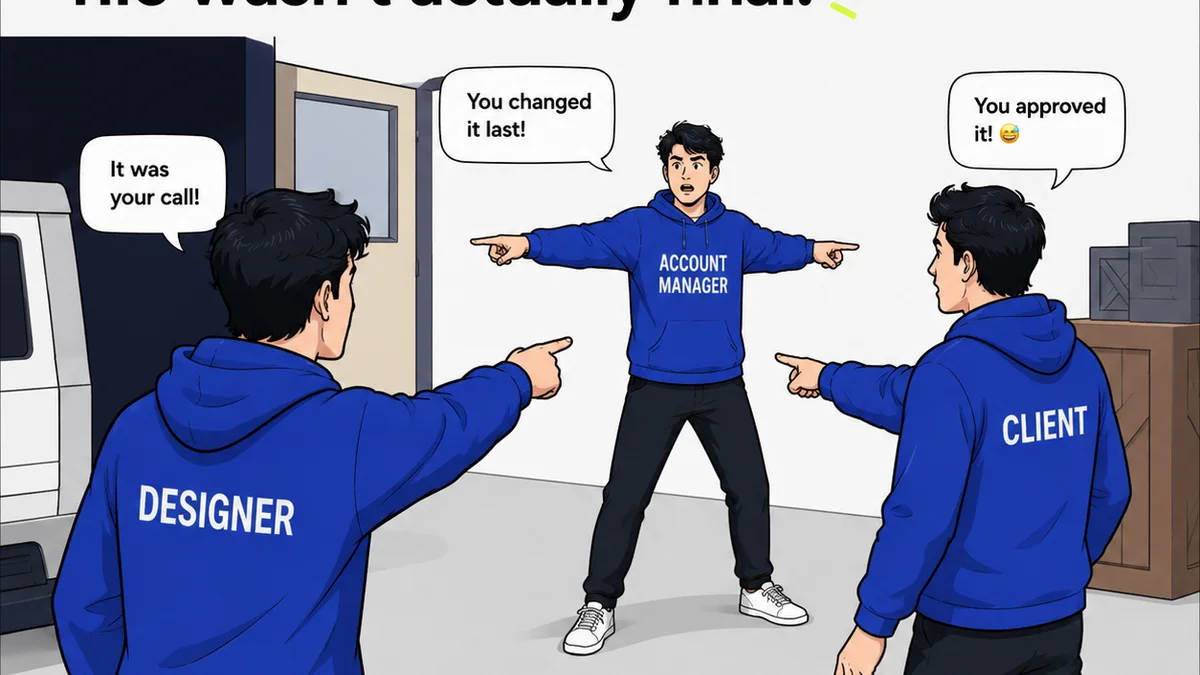
Everyone thinks magazine production is about InDesign, print specs, and deadlines. That’s the surface. It’s the obvious stuff.
But that’s not the whole story. Not even close.
The real challenge, the thing that separates a smooth operation from constant chaos, is managing the *people* and the *process* around the creative output. It’s about how feedback flows, how revisions get tracked, and how approvals are secured without drowning in emails and spreadsheets.
1. Beyond the Blueprint: The Hidden Layers of Magazine Production
A magazine production workflow is more than just a sequence of steps. It’s a complex ecosystem of communication, collaboration, and quality control.
Think of it like building a house. You need blueprints, sure. But you also need a foreman who can coordinate the plumbers, electricians, and framers, manage client walk-throughs, and ensure no one’s stepping on anyone else’s toes. That’s the operational layer.
For agencies producing magazines, this means understanding:
- The true cost of miscommunication.
- The bottleneck points in your current revision cycle.
- The hidden time sinks in tracking stakeholder feedback.
- The risk of errors creeping in due to scattered information.
This deeper operational truth is where efficiency is won or lost.
The Myth of the Linear Workflow
The common assumption is that magazine production follows a straight line: Design → Edit → Proof → Print.
This is rarely the reality.
Feedback loops, multiple rounds of revisions, unexpected stakeholder input, and last-minute changes fracture that linearity. A truly effective workflow embraces this messiness, providing structure where there would otherwise be anarchy.
2. Deconstructing the Magazine Production Cycle
Let’s break down the typical stages, but with an eye on the operational friction points.
Pre-Production & Planning
This phase sets the stage. It’s not just about assigning tasks; it’s about defining the rules of engagement.
- Editorial Briefing: What’s the story? Who’s the audience? What’s the tone? Clarity here prevents downstream confusion.
- Design Concepting: Establishing the visual direction. Getting early buy-in is crucial.
- Content Gathering: Sourcing articles, images, and data. This often runs parallel to design.
- Defining Feedback Loops: This is critical. Who sees what, when? What’s the approval hierarchy? How many rounds are allowed?
Friction Point: Vague briefs, unclear roles, or undefined feedback processes lead to wasted effort later.
Content Creation & Design
This is where the magazine starts to take shape.
- Writing & Editing: Drafting, revising, and fact-checking.
- Image Sourcing & Editing: Finding, selecting, and preparing visuals.
- Layout & Design: Bringing text and images together in InDesign or similar software.
- Internal Reviews: Creative directors, editors, and project managers provide initial feedback.
Friction Point: Inconsistent feedback, scope creep on design elements, or delays in content delivery.
Review & Revision Cycles
This is often the most turbulent phase.
- Stakeholder Review: Clients, legal, marketing teams get their turn.
- Feedback Consolidation: Gathering all comments from various sources. This is where things get messy.
- Revision Implementation: Designers and editors make the requested changes.
- Re-Review: The cycle repeats until approval.
Friction Point: Unstructured feedback (scribbles on PDFs, emails buried in threads), lack of version control, and multiple conflicting opinions from the same stakeholder.
Pre-Press & Production
The final checks before hitting the print button.
- Proofreading: Final check for typos, grammatical errors, and layout issues.
- Color Correction & Trapping: Ensuring print accuracy.
- File Preparation: Packaging InDesign files for the printer.
- Printer Approval: Often involves a digital proof or a physical press check.
Friction Point: Last-minute changes discovered here are costly and time-consuming.
Post-Production & Distribution
The magazine is out, but the work isn't always done.
- Digital Distribution: Preparing files for online platforms.
- Print Distribution: Managing shipping and delivery.
- Archiving: Storing final files and assets.
Friction Point: Inefficient digital asset management or tracking print runs.
3. The Operational Truth: Feedback Management is King
The biggest differentiator between a high-performing agency and one constantly in crisis mode isn't their design software. It’s how they handle feedback and revisions.
Scattered feedback is the enemy of efficient magazine production.
When comments come from:
- Emails
- Slack messages
- Annotated PDFs
- Verbal conversations
- Sticky notes
...you create a black hole of information. This leads to:
- Missed comments.
- Conflicting instructions.
- Endless back-and-forth clarification.
- Frustrated designers and editors.
- Missed deadlines and budget overruns.
Centralizing Feedback
The hard truth is that you need a single source of truth for all feedback and revisions. This isn’t just about convenience; it’s about accuracy and accountability.
A centralized system ensures:
- All comments are visible in one place.
- Each comment is tied to a specific element on the page.
- The history of revisions is logged automatically.
- Approvals are clear and documented.
This eliminates the guesswork and reduces the time spent chasing down information.
Streamlining Approvals
Approvals shouldn't be an afterthought. They need to be built into the workflow with clear stages and defined stakeholders.
When approvals are murky:
- Projects stall indefinitely.
- Scope creep becomes rampant.
- Client relationships suffer.
Clear approval gates, with automated notifications and visible status updates, keep the project moving forward predictably.
4. Quality Control: The Unsung Hero
Beyond managing feedback, a robust magazine production workflow incorporates rigorous quality control at every stage.
This isn't just about the final proofread.
- Content Accuracy: Fact-checking, spelling, grammar.
- Design Consistency: Adherence to brand guidelines, style guides, and layout grids.
- Technical Accuracy: Correct image resolution, color profiles, bleed settings, and font embedding for print.
- Usability (Digital): For online versions, ensuring navigation and readability are optimal.
Implementing checklists and automated checks where possible can catch errors early, saving significant time and cost.
Where Revue Fits In
Managing a complex magazine production workflow requires tools that bring order to the creative chaos. This is where a platform like Revue becomes invaluable.
Revue helps agencies centralize client feedback, making it easy to collect, organize, and act upon comments from all stakeholders in one place. No more digging through endless email threads or deciphering scribbled notes.
Our platform provides clear visibility into the revision and approval process. You can track the status of each feedback round, see who has approved what, and maintain a clear audit trail. This transparency reduces ambiguity and keeps projects on schedule.
Furthermore, Revue aids in quality checks by ensuring that all feedback is addressed and that the final approved version is the one being produced. It streamlines the entire process, from initial draft to final sign-off, allowing creative teams to focus on delivering exceptional work, not managing administrative overhead.
5. Implementing Your Optimized Workflow
Transitioning to a more efficient workflow isn't about adopting a rigid, one-size-fits-all solution. It's about understanding your specific needs and adapting best practices.
Assess Your Current Process
Where are the biggest bottlenecks? What tasks consume the most time? Talk to your team. They know where the friction lies.
Define Clear Roles and Responsibilities
Who is the ultimate approver? Who provides editorial feedback? Who handles technical checks? Clarity prevents confusion.
Standardize Communication Channels
Consolidate feedback into a single system. Avoid ad-hoc communication for critical project details.
Leverage Technology
Tools designed for creative project management can automate repetitive tasks, centralize communication, and provide essential visibility.
Iterate and Improve
Your workflow isn't static. Regularly review what's working and what's not, and make adjustments.
Final Thought
Magazine production is a craft that blends creative vision with meticulous execution. The difference between a publication that consistently hits its mark and one that’s perpetually playing catch-up often comes down to the operational backbone – the workflow that supports the creative process.
Are you managing the workflow, or is the workflow managing you?
Frequently asked questions
What is the most crucial element of a magazine production workflow?
While design and editorial content are vital, the most crucial element for an efficient magazine production workflow is effective feedback management. Centralizing comments, streamlining revision cycles, and ensuring clear approvals prevents delays and errors.
How can agencies avoid common bottlenecks in magazine production?
Agencies can avoid bottlenecks by clearly defining roles and responsibilities, standardizing communication channels for feedback, implementing a centralized system for revisions and approvals, and conducting regular reviews of their workflow to identify and address inefficiencies.
What role does technology play in magazine production workflows?
Technology plays a critical role by automating repetitive tasks, centralizing communication and feedback, providing visibility into project status, and enabling efficient collaboration among team members and with clients. Tools like Revue help manage the entire process from concept to final approval.
How many revision rounds are typical in magazine production?
The number of revision rounds can vary significantly based on the project's complexity, client involvement, and the clarity of the initial brief. A well-defined workflow aims to minimize unnecessary rounds by ensuring feedback is consolidated, clear, and actionable from the outset.