Everyone talks about design systems as the silver bullet for consistency. Build a robust system, lock down your components, and voilà—your brand is suddenly uniform across every touchpoint. It’s a nice thought.
And none of that is wrong. But it’s incomplete.
The real challenge of maintaining a design system at scale isn't just about the pixels or the code. It’s about the people, the process, and the perpetual, often chaotic, flow of feedback and approvals.
The Hard Truth About Design System Scale
A design system is only as good as its adoption and its evolution. If designers aren't using it, or if it becomes a rigid artifact that can't adapt, it’s dead on arrival. Scaling means ensuring it’s accessible, understood, and, critically, that it can bend without breaking when faced with real-world project demands.
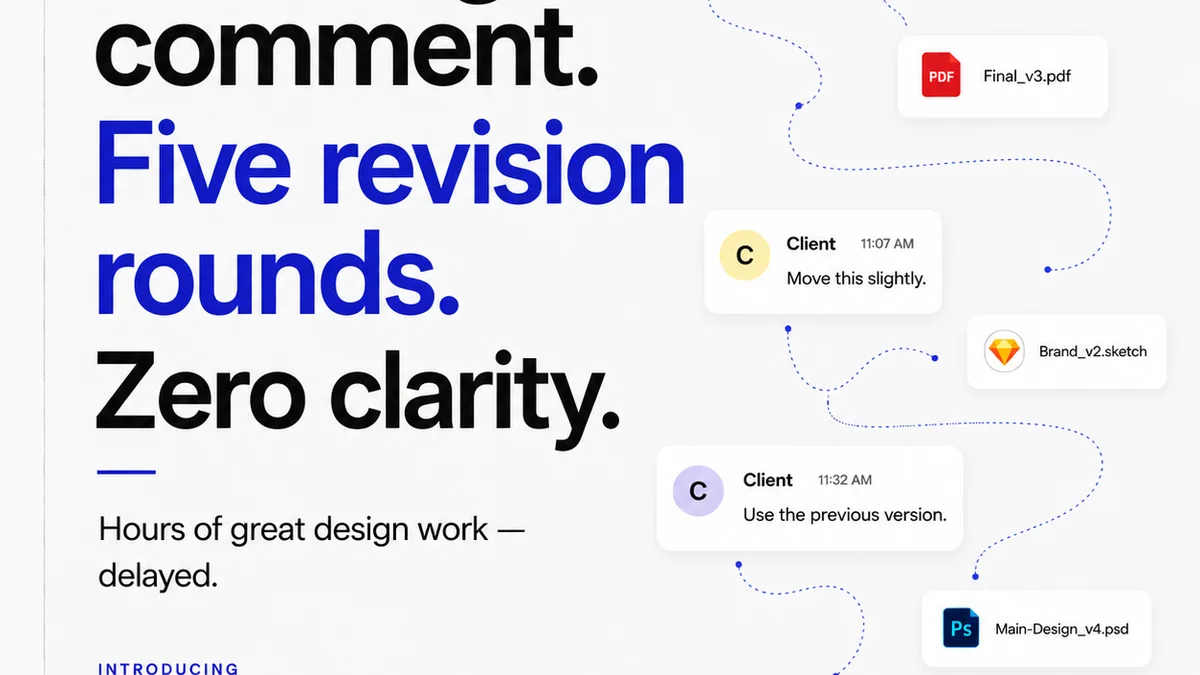
The operational friction points that kill design systems aren't usually technical. They're rooted in how creative work actually gets done: the endless email chains, the scattered Slack messages, the ambiguity of stakeholder feedback, and the sheer effort required to track revisions and ensure sign-off.
This is where most design systems falter at scale.
1. The Feedback Black Hole
The assumption: Stakeholders give clear, actionable feedback. The reality: Feedback is often vague, contradictory, or buried under layers of miscommunication.
When you’re working with a large product or multiple clients, the feedback loop can become a nightmare. A single component or screen might receive input from:
- Product managers
- Marketing leads
- Legal departments
- Sales teams
- External clients
- End-users (via testing)
Each of these voices has a valid perspective, but without a structured way to capture and reconcile their input, it becomes a guessing game. Who said what? Which revision incorporated which comment? Was that 'make it pop' comment for the button or the headline?
This ambiguity doesn't just slow down the process; it actively undermines the design system.
The Cost of Ambiguity
When feedback is unclear, designers either:
- Make educated guesses, leading to off-brand or inconsistent results.
- Over-correct, deviating too far from the original intent.
- Get stuck in endless clarification cycles, burning valuable time.
Neither outcome serves a scalable design system. Consistency erodes. The system becomes a suggestion, not a standard.
2. Revision Hell: Tracking and Approvals
The assumption: Approvals are straightforward sign-offs. The reality: Approvals are often protracted, involve multiple stakeholders, and lack clear version control.
Think about a large-scale project. A new feature might go through dozens of iterations. Each iteration requires review and approval from various parties. Without a clear system for managing this:
- Which version is the
Frequently asked questions
What is the biggest challenge in scaling a design system?
The biggest challenge isn't technical; it's managing the human element. This includes inconsistent feedback, unclear approval processes, and ensuring widespread adoption and adherence across teams and projects.
How does feedback impact a design system's scalability?
Vague, contradictory, or unmanaged feedback leads to inconsistencies, forcing designers to deviate from the system or get stuck in endless clarification loops. This erodes trust in the system and hinders its adoption at scale.
Why is tracking revisions crucial for a design system?
Effective tracking ensures everyone is working from the latest approved version, preventing outdated components or designs from being implemented. It provides a clear audit trail and reduces the risk of errors and rework.
Can a design system become too rigid?
Yes, if not managed with flexibility. A design system needs a clear process for evolution and updates. Rigidity leads to workarounds and eventual abandonment, especially as project needs change.
How can tools help maintain design systems at scale?
Tools that centralize feedback, manage revisions and approvals, and provide visibility into the design process are essential. They help tame the chaos of communication and ensure adherence to the system without stifling creativity.