Everyone's talking about AI, hybrid work, and the metaverse shaping creative teams by 2026. It sounds like science fiction, but the reality is far more grounded. None of that is wrong. But it’s incomplete.
The real shift isn't about new tech; it's about a deeper understanding of how creative work actually gets done. The hard truth is that managing creative teams in the near future hinges on mastering the fundamentals of workflow, communication, and clear processes, regardless of the tools.
1. The Myth of the Always-On Creative
We're told creatives need constant inspiration, flexible hours, and minimal oversight to be productive. This often translates into a chaotic environment where deadlines are fluid, feedback is vague, and quality suffers.
The assumption is that creativity thrives in a vacuum of structure. That structure stifles innovation.
This is a dangerous oversimplification. While creatives need freedom, they also need clarity. They need boundaries. They need a predictable system that allows them to focus on the actual work, not on navigating internal confusion.
The Cost of Ambiguity
When expectations are unclear, creative teams spin their wheels.
- Endless revisions on the wrong track.
- Missed deadlines due to scope creep.
- Burnout from constant, unfocused effort.
- Frustration from unclear client feedback.
By 2026, agencies and in-house teams that embrace structured, yet flexible, workflows will outperform those still clinging to the myth of the unstructured genius.
2. Feedback Isn't Free: It's a Process
Client feedback. It's the lifeblood of creative projects, and often, the source of immense pain. The common assumption is that feedback is a simple exchange: client says, creative does.
But effective feedback management is a core operational discipline, not an afterthought.
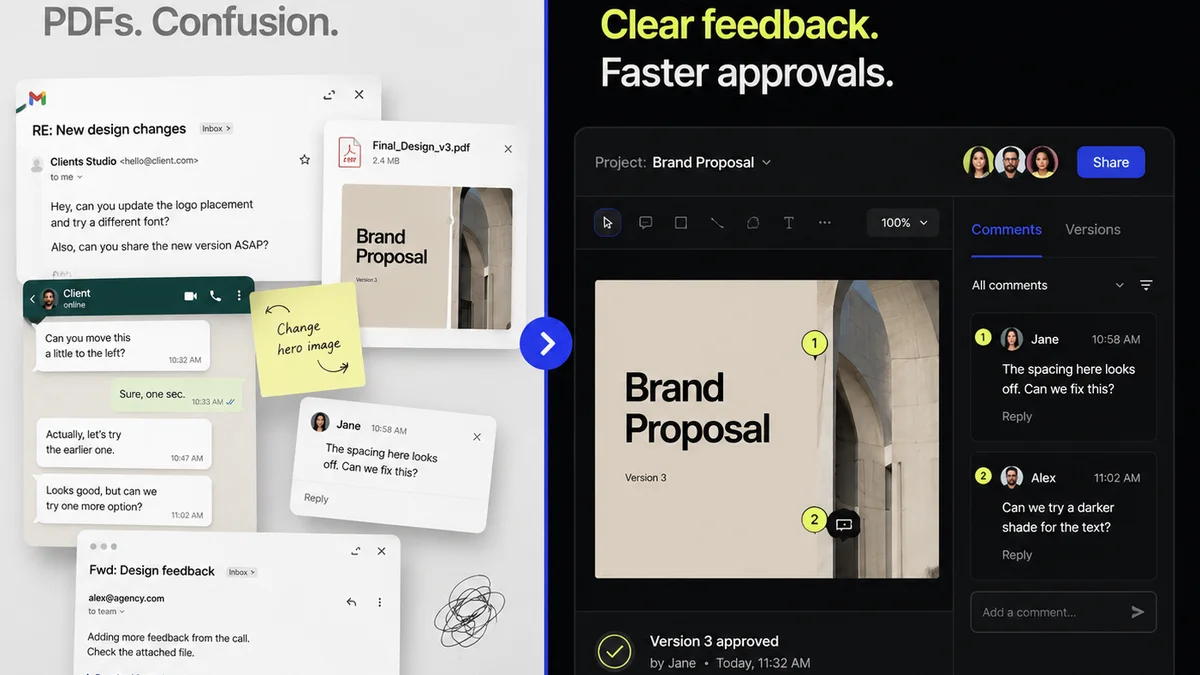
By 2026, teams that treat feedback as a structured process, with clear channels and accountability, will see dramatic improvements in efficiency and client satisfaction. This means moving beyond email chains and scattered Slack messages.
Building a Feedback Framework
What does structured feedback look like?
- Defined Channels: Centralizing all feedback in one place.
- Clear Ownership: Knowing who gives feedback and who acts on it.
- Actionable Input: Training clients (and internal stakeholders) on how to give constructive, specific critiques.
- Version Control: Easily tracking changes and approvals.
- Decision Authority: Establishing who makes the final call.
This isn't about adding bureaucracy; it's about removing friction. It's about ensuring that every piece of feedback moves the project forward, not sideways.
3. Revision Cycles: From Black Hole to Black Box
Revision cycles are where projects go to die. We assume they're just a necessary evil, a phase of iteration.
But uncontrolled revisions are a symptom of deeper workflow problems: poor initial briefs, unclear feedback, and a lack of visibility into the approval process.
By 2026, the teams that master their revision cycles will be the ones who can deliver high-quality work on time, every time. This requires transforming revision cycles from a mysterious black hole into a transparent black box.
The Transparency Imperative
What does a transparent revision cycle entail?
- Visibility: Everyone involved can see the current status, who is working on what, and what feedback is pending.
- Accountability: Clear ownership for each stage of the revision and approval process.
- Efficiency: Streamlined workflows that minimize back-and-forth.
- Audit Trail: A clear record of all feedback, changes, and approvals for reference and learning.
This focus on transparency reduces misunderstandings, speeds up delivery, and builds client trust. It means no more guessing games about where a project stands.
4. Quality Assurance: The Final Gatekeeper
Many creative teams view quality assurance (QA) as a final check, a box to tick before delivery. The assumption is that if the creative vision is met, the technical execution will follow.
This overlooks the critical role QA plays in maintaining brand consistency, usability, and technical integrity. It’s not just about catching typos; it’s about ensuring the work performs as intended.
By 2026, integrated QA processes will be non-negotiable for any team serious about delivering polished, professional work. It’s the final, crucial gatekeeper.
Integrating Quality
Effective QA isn't just a last step; it's woven throughout the process.
- Brief Alignment: Ensuring the creative output directly addresses the initial brief.
- Technical Standards: Checking against platform specifications, accessibility guidelines (WCAG, for example), and brand guidelines.
- User Experience: Verifying that the design is intuitive and easy to navigate.
- Cross-Platform Consistency: Ensuring the work looks and functions correctly across different devices and browsers.
This proactive approach prevents costly rework and ensures that the final output meets the highest standards, both creatively and technically.
5. Where Revue Fits In
Managing creative workflows in 2026, with all their complexities, demands a centralized system. Trying to juggle feedback, revisions, and approvals across disparate tools is a recipe for disaster.
This is where a platform like Revue becomes essential. It’s built to address the core operational challenges that will define successful creative teams in the coming years.
- Centralized Feedback: No more hunting through emails or chat logs. All client and stakeholder feedback lives in one place, attached directly to the creative asset.
- Revision Visibility: Track every version, every change, and every approval. Understand the history of a project at a glance.
- Streamlined Approvals: Clear workflows ensure that the right people review and approve assets efficiently, reducing bottlenecks.
- Integrated Quality Checks: While Revue doesn't replace dedicated QA, its structured process helps ensure that feedback is clear, revisions are tracked, and the final output aligns with expectations, making QA smoother and more effective.
Revue helps bring order to the creative chaos, allowing teams to focus on what they do best: creating exceptional work.
Final Thought
The future of managing creative teams isn't about the next shiny object. It's about building robust, transparent, and efficient operational systems. It's about mastering the workflow so that creativity can truly flourish, unimpeded by unnecessary friction.
As we move towards 2026, will your team be defined by its adoption of new tools, or by its mastery of the fundamental processes that drive real results?
Frequently asked questions
What's the biggest misconception about managing creative teams in the near future?
The biggest misconception is that new technologies like AI will solve all management problems. While tools are important, the core challenge remains mastering fundamental workflows, clear communication, and structured processes for feedback and revisions.
How can I improve client feedback processes by 2026?
Focus on establishing clear channels for feedback, defining who provides it and who acts on it, and training stakeholders to give specific, actionable input. Centralizing feedback on assets, rather than in scattered communications, is key.
What does 'transparent revision cycles' mean for creative teams?
It means having full visibility into the revision process: who is working on what, what feedback is pending, and the history of changes and approvals. This transparency reduces confusion, speeds up delivery, and builds trust.
Is quality assurance (QA) still important in 2026?
Yes, QA is more critical than ever. It's not just a final check, but an integrated part of the process ensuring creative output meets brand, technical, and usability standards. Proactive QA prevents costly rework and ensures high-quality delivery.