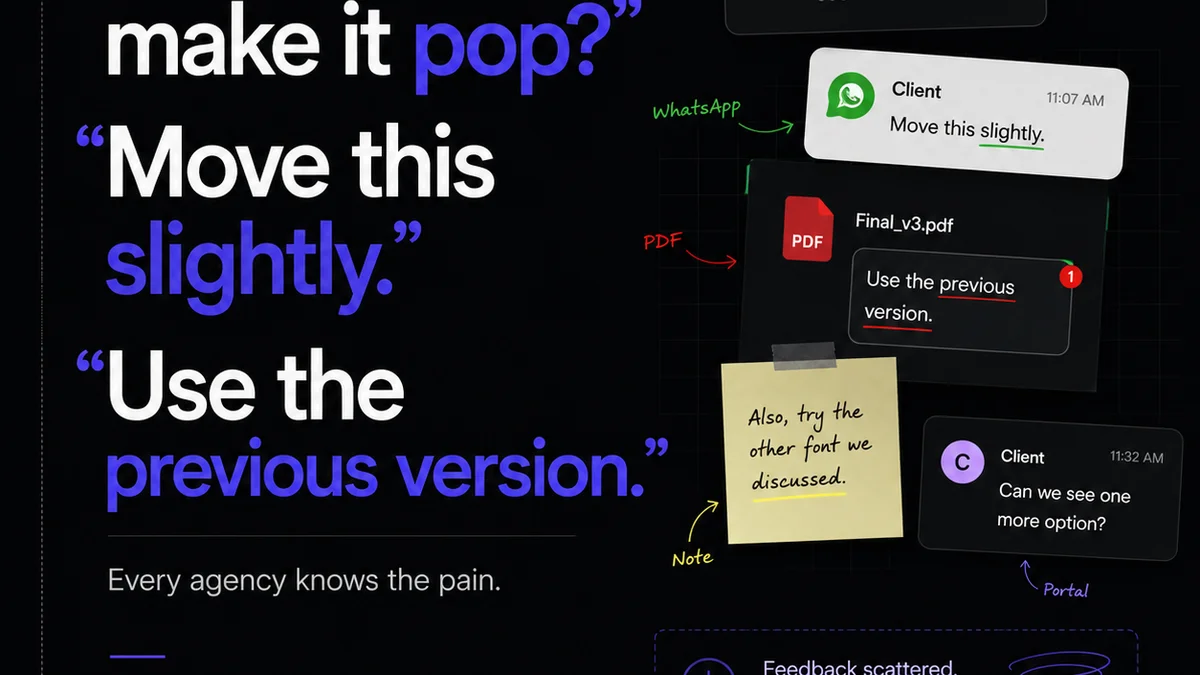
Everyone thinks managing multiple clients is about staying organized. A good calendar. A CRM. Maybe a project management tool. None of that is wrong. But it’s incomplete.
The hard truth? The real difficulty with juggling multiple clients isn’t remembering who wants what. It’s the friction inherent in the feedback, revision, and approval process itself. That friction costs time, erodes margins, and kills creative momentum.
1. The Illusion of 'On Time, On Budget'
Agencies love to boast about delivering on time and on budget. It’s the bedrock of client trust. But often, this is achieved by a team of highly paid professionals working *around* the inefficiencies, not *fixing* them.
The Hidden Costs of Communication Chaos
Think about a typical project. A client gives feedback. It goes into an email. Then a Slack message. Then maybe a quick call to clarify. That feedback then needs to be translated into actionable tasks for designers, copywriters, or developers. Each handoff is a potential point of failure.
- Lost feedback buried in email chains.
- Misinterpreted comments leading to rework.
- Endless back-and-forth to clarify simple points.
- Lack of a single source of truth for approvals.
This isn't about disorganization. It’s about a broken workflow. The time spent chasing down feedback, deciphering instructions, and chasing approvals adds up. It’s often hidden in the project’s indirect costs, but it’s very real.
2. The Bottleneck of 'Review and Approval'
The review and approval stage is where most creative projects go to die. Or at least, to get incredibly sick. It’s not just about getting a 'yes' or 'no'. It’s about the *process* of getting there.
Why Traditional Methods Fail
Emailing PDFs for review is archaic. Sending annotated screenshots is chaotic. Relying on vague Slack messages for sign-offs is a recipe for disaster. Each method creates ambiguity and delays.
- Ambiguity: What exactly needs changing? Where?
- Delay: Waiting for the right person to see it.
- Disputes:
Frequently asked questions
What is the biggest misconception about managing multiple clients?
The biggest misconception is that it's solely about organization and time management. While important, the core challenge lies in the operational friction of communication, feedback, and approval processes across different clients and projects.
How does feedback chaos impact an agency's bottom line?
Feedback chaos leads to wasted time deciphering comments, unnecessary rework due to misinterpretations, and extended project timelines. This directly increases costs, reduces profit margins, and can strain client relationships.
What are the key stages where friction occurs in client projects?
Friction commonly occurs during the collection of feedback, the clarification of instructions, the revision process, and the final approval stages. Inefficient methods in these areas cause delays and errors.
How can an agency improve its client approval process?
Improvement comes from centralizing feedback, using visual annotation tools for clear comments, establishing clear approval workflows, and ensuring all communication and sign-offs are recorded in a single, accessible platform.