Everyone talks about client management in 2026. They’ll tell you to be responsive. To set clear expectations. To use project management tools.
None of that is wrong. But it’s incomplete.
The hard truth? Managing multiple clients effectively in today’s fast-paced agency world isn't about doing *more* of the same. It's about doing the *right* things with ruthless operational efficiency. It’s about systematically dismantling the friction points that slow you down, frustrate your team, and ultimately, cost you clients.
1. The Illusion of 'Responsiveness'
The first myth we need to bust is that 'responsiveness' means being glued to your inbox 24/7. That’s a fast track to burnout and errors. True responsiveness is about providing accurate, timely information and decisions, not just instant replies.
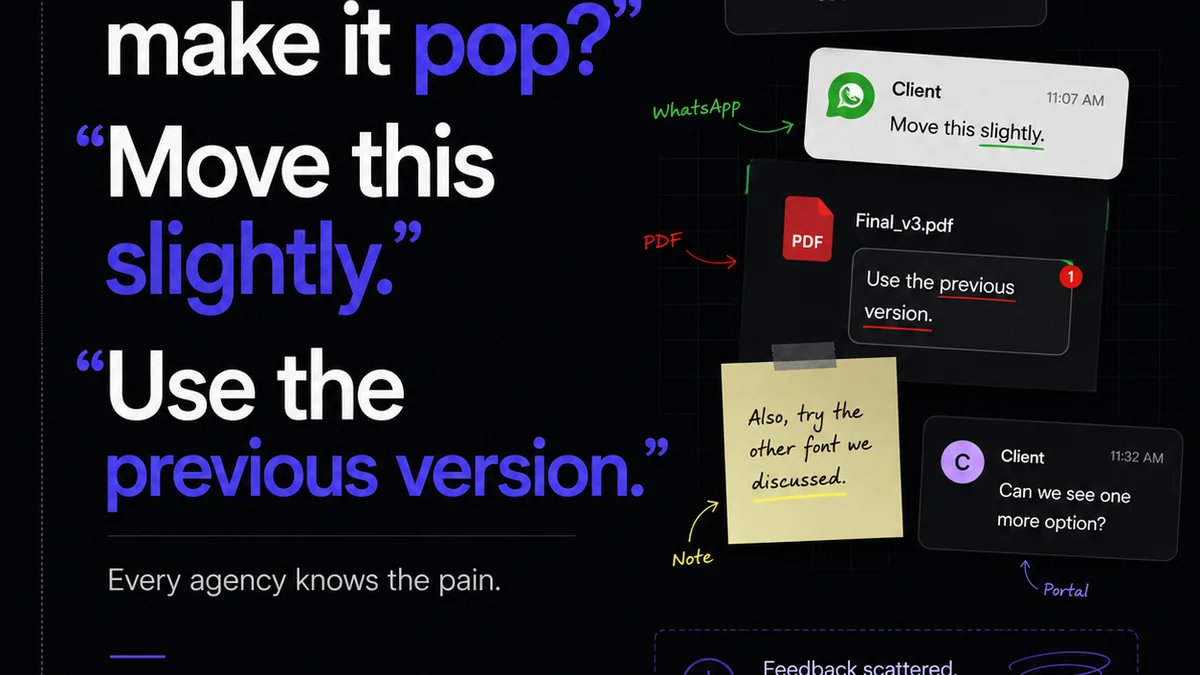
Think about the last time a client asked a complex question. Did you have the answer immediately? Or did you have to dig through emails, Slack threads, and scattered documents? That digging is operational friction. It’s wasted time. It’s potential for missed information.
The Hidden Cost of Scattered Communication
When client communication lives in multiple places, chaos ensues:
- Key decisions get buried in Slack threads.
- Feedback is given verbally and never documented.
- Asset versions are confused because no one knows which is the latest approved file.
- Team members spend hours trying to piece together project history.
- Mistakes happen due to incomplete or outdated information.
This isn't just inefficient; it's a breeding ground for client dissatisfaction. They see delays and confusion, and they assume incompetence, not operational drag.
2. Standardizing Client Onboarding for Scalability
You wouldn't build a house without a blueprint. Why do agencies treat client onboarding like an improvised jam session?
A standardized, robust onboarding process is non-negotiable when managing multiple clients. This isn't about making every client feel the same; it’s about ensuring every client receives a consistent, high-quality foundational experience, regardless of who handles their initial setup.
The Onboarding Checklist That Actually Works
Your onboarding should cover critical touchpoints:
- Clear Scope Definition: Document exactly what’s in and out of scope. No ambiguity.
- Access Provisioning: Grant necessary access to platforms, files, and systems—securely and efficiently.
- Communication Protocols: Define primary contact points, preferred channels, and expected response times (for both sides).
- Brand Guidelines & Assets: Collect and organize all essential brand materials upfront.
- Project Kick-off Meeting: A structured meeting to align on goals, timelines, and deliverables.
- Tooling Setup: Ensure all necessary software and platforms are configured and accessible for the client and your team.
This standardization reduces the cognitive load on your team and minimizes the chance of early-stage misalignments that fester throughout the project lifecycle.
3. The Myth of 'Flexible' Feedback Loops
Agencies often tout their 'flexibility' when it comes to feedback. This sounds good, but in practice, it usually means chaotic, unstructured feedback.
Clients don't want infinite flexibility; they want clarity and a process that leads to a good outcome without unnecessary back-and-forth. Unmanaged feedback is operational drag. It’s scope creep in disguise. It’s a drain on creative resources.
Taming the Feedback Beast
Here’s how to bring order:
- Centralized Feedback Hub: Use a single platform where all feedback lives. This eliminates the
Frequently asked questions
What is the biggest mistake agencies make when managing multiple clients?
The biggest mistake is relying on fragmented communication and unstructured processes. This leads to operational friction, wasted time, and client dissatisfaction, rather than focusing on efficient, centralized systems.
How can I improve client onboarding for multiple clients?
Standardize your onboarding process. Create checklists for scope definition, access provisioning, communication protocols, and asset collection to ensure a consistent, high-quality start for every client.
What's the best way to handle client feedback when managing many projects?
Centralize all feedback in a single platform. Define clear feedback rounds and deadlines. Use annotation tools for precise comments and ensure all feedback is actionable and documented to avoid confusion and scope creep.
How does technology help manage multiple clients?
Technology, like dedicated client feedback and workflow management tools, helps by centralizing communication, standardizing processes, providing clear visibility into project status, and automating routine tasks, thereby reducing operational friction.