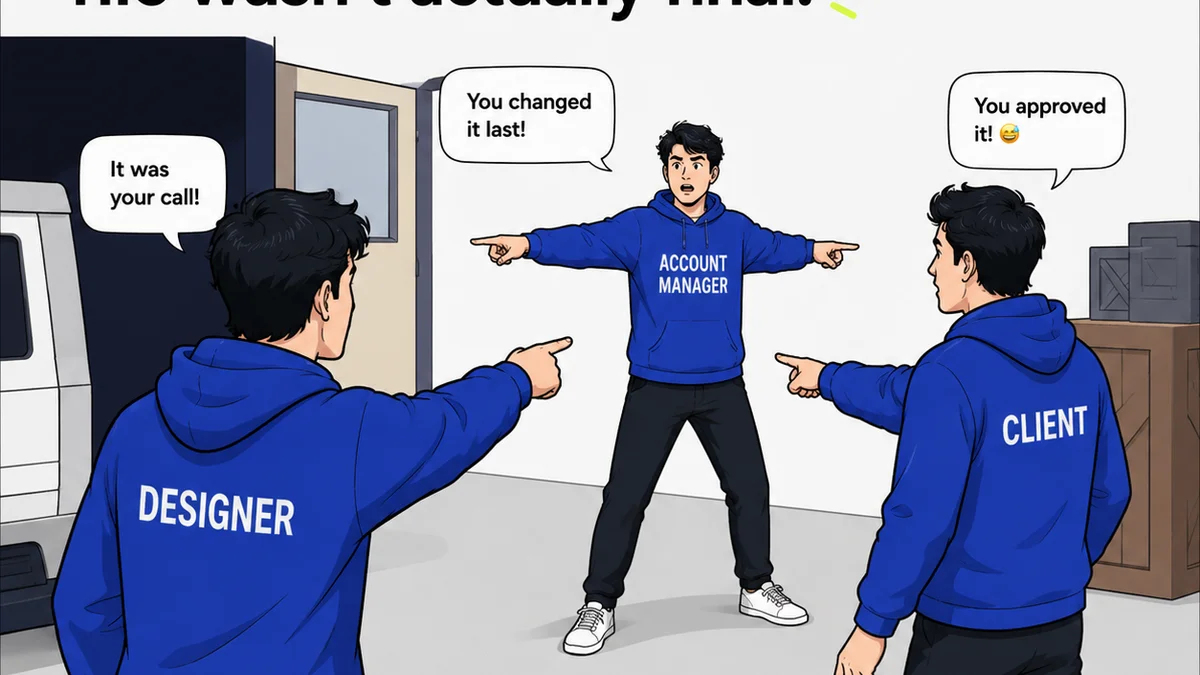
Everyone thinks managing multiple clients is about good time management. Color-coding your calendar, setting aggressive deadlines, maybe hiring an extra project manager. None of that is wrong. But it’s incomplete.
The real secret? It’s not about juggling tasks better. It’s about building a workflow that makes juggling *unnecessary*.
1. The Myth of the “Busy” Creative
Agencies love to wear busyness like a badge of honor. “We’re swamped!” is a common refrain. But is that busyness productive, or is it just chaos in disguise?
The truth is, most agencies drowning in multiple clients aren't busy with *strategic* work. They're busy reacting. Busy searching for files. Busy chasing down feedback. Busy re-doing work because clarity was lost somewhere between the brief and the final deliverable.
This isn't a sign of high demand; it's a sign of a leaky workflow.
The Cost of Constant Context Switching
Every time a creative or account manager has to switch gears from Client A to Client B, there’s a mental overhead. You lose momentum. You forget where you were. You might even pull the wrong version of a file.
This isn't just an annoyance; it's a direct hit to profitability and creative output.
- Lost billable hours hunting for assets.
- Increased errors leading to costly revisions.
- Burnout from constant mental gymnastics.
- Strained client relationships due to delays and confusion.
2. Centralization: The Antidote to Fragmentation
The core problem with managing multiple clients is fragmentation. Information lives in emails, Slack threads, shared drives, and maybe a few sticky notes. Assets are scattered.
The solution is radical centralization. Everything related to a client, a project, a deliverable, a piece of feedback, lives in one place. Period.
Beyond Simple File Storage
This isn't just about a shared drive. It's about a system designed for creative collaboration and review.
Think about it: where does feedback *really* live?
- In a long email chain with dozens of replies?
- In a Slack DM that gets buried?
- On a PDF annotation that someone has to manually transcribe?
This fragmented feedback loop is where projects go to die a slow, painful death. It’s the single biggest drain on agency resources when managing multiple clients.
Establishing Single Source of Truth
Your workflow needs a central hub. A place where:
- All project assets are stored and versioned.
- All client communication and feedback is logged and actionable.
- All revision rounds are tracked.
- Approvals are clearly recorded.
When this single source of truth exists, the frantic search for information stops. The context switching dramatically reduces. The
Frequently asked questions
What is the biggest mistake agencies make when managing multiple clients?
The biggest mistake is focusing solely on time management techniques like calendars and to-do lists. The real issue is usually a fragmented workflow that leads to wasted time searching for information, context switching, and errors, rather than building a centralized system that prevents these problems.
How can I reduce context switching when working with many clients?
Centralize all project information, feedback, and assets in a single platform. This minimizes the need to jump between different tools and communication channels, allowing your team to stay focused on the task at hand for each client.
Is it better to use email or a dedicated platform for client feedback?
A dedicated platform is almost always better for managing client feedback on creative work. It provides a clear, organized, and auditable trail of all comments, revisions, and approvals, preventing misinterpretations and lost feedback that often plague email chains.
How does a centralized system improve profitability?
By reducing time spent on administrative tasks like searching for files or clarifying feedback, creatives and project managers can focus more on billable work. It also minimizes errors and costly revisions, directly boosting profit margins.