You probably think manual quality control is the gold standard. That human eyes are the ultimate arbiter of creative quality. That a final check by a senior designer or a diligent producer catches every single mistake.
None of that is wrong. But it’s incomplete.
The hard truth? Manual quality control, when relied upon exclusively, is a ticking time bomb for any agency or creative team that wants to grow. It’s a bottleneck masquerading as a safeguard.
1. The Illusion of Consistency
We assume that with enough training and checklists, our teams can achieve perfect consistency. That every reviewer will spot the same issues, apply the same standards, and flag the same problems.
That’s a nice thought. It’s also a fantasy.
Humans are not machines. We get tired. We get bored. We get distracted.
- Inspection fatigue sets in after just a few hours.
- Personal biases creep into subjective reviews.
- The sheer volume of creative assets overwhelms even the most dedicated reviewer.
One day, a pixel-perfect alignment is paramount. The next, a minor typo gets overlooked because the reviewer’s mind is on their next meeting. This isn't negligence; it's human nature.
The Rework Ripple Effect
When inconsistency strikes, the rework costs are brutal. A missed brand guideline on a social asset. A broken link in an email campaign. A typo in a client presentation.
These aren't just small fixes. They trigger a cascade:
- Designer has to drop everything to fix it.
- The original timeline gets blown out.
- Client satisfaction dips.
- Your team’s morale suffers.
This cycle drains resources and erodes your agency’s reputation.
2. Scalability Issues: The Growth Killer
Your agency is landing bigger clients. You’re taking on more projects. The volume of creative output is surging.
This is where manual QC truly breaks.
You can’t just hire more reviewers indefinitely. The cost escalates exponentially. And even with more people, you run into the same consistency problems, just amplified.
Think about it:
- Adding more reviewers means more training.
- More reviewers mean more communication overhead.
- More reviewers mean a higher chance of conflicting feedback.
Your quality assurance process, meant to protect you, becomes a major drag on your ability to scale effectively. It’s a bottleneck that chokes growth.
The Myth of the 'Thorough' Review
A 'thorough' manual review often means spending an inordinate amount of time on each asset. Hours can turn into days just checking for minor errors across hundreds of deliverables.
This isn't efficient. It's not sustainable.
It pulls your best creative talent away from actual creative work and into tedious, repetitive tasks.
3. The Hidden Costs of Human Error
We talk about human error as if it’s a rare, unfortunate accident. But when it comes to large-scale creative production, it’s a predictable outcome of a flawed system.
Every missed detail, every subjective judgment call that lands wrong, every oversight due to fatigue – these are the direct results of relying solely on manual quality control.
Consider the financial impact:
- Time spent on rework.
- Time spent by clients pointing out what your team missed.
- Lost opportunities because your team is bogged down in fixes.
- Potential damage to client relationships.
These aren't line items on a P&L. They are silent killers of profitability and growth.
When 'Good Enough' Becomes the Standard
Because manual QC is so prone to error and inconsistency, teams often develop a tacit understanding: 'Let's just get this out the door and fix it if the client catches it.' This is a dangerous compromise.
It shifts the burden of quality assurance from your internal processes to your clients. And clients, especially at scale, will not tolerate that consistently.
4. When Automation Isn't Just About Speed
Many people think of automation in QC as purely about speed. Get things checked faster. That’s part of it, sure.
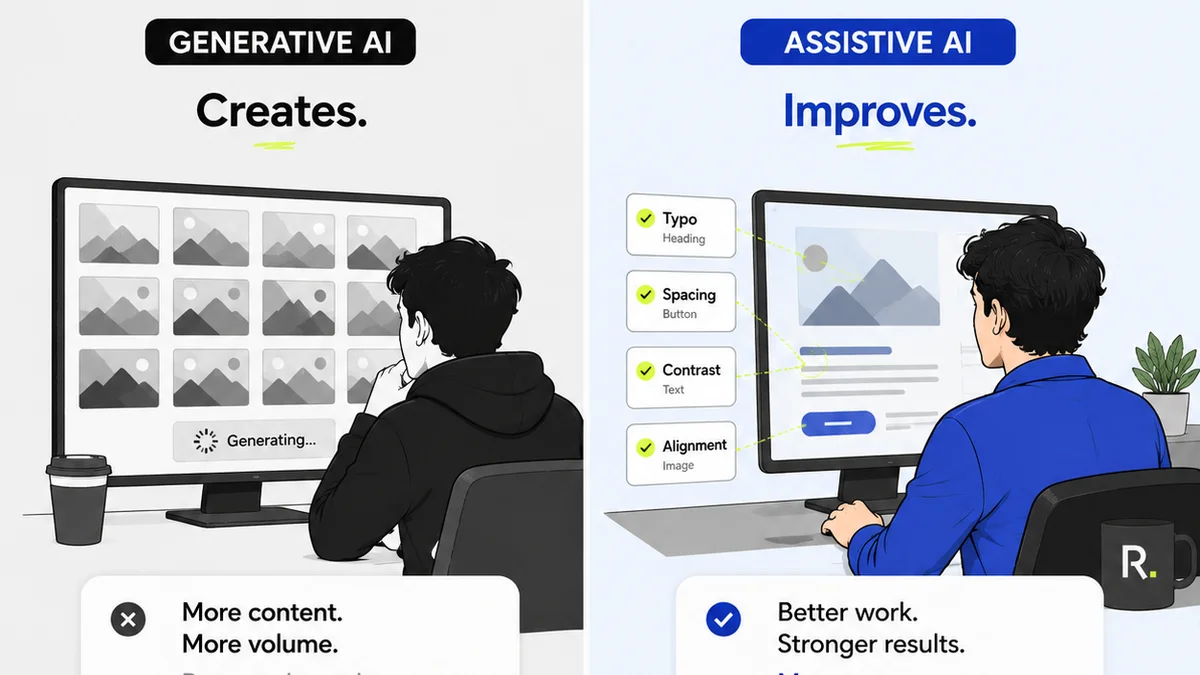
But the real power of automation in quality control is its ability to enforce consistency and reduce the impact of human error.
Automated checks don't get tired. They don't have bad days. They apply the same rules, every single time.
- Automated brand guideline checks.
- Automated file format and resolution checks.
- Automated link verification.
This frees up your human reviewers to focus on the subjective, strategic aspects of creative work – the things humans are actually good at. Is the message landing? Is the tone right? Does this truly meet the client’s strategic goals?
The B2B SaaS Perspective on Quality
For B2B SaaS companies marketing complex products, precision is non-negotiable. Every piece of collateral, every landing page, every email campaign must be flawless. A typo in a whitepaper for a financial institution isn’t a minor slip-up; it’s a red flag that can kill a deal.
This is where a robust, scalable quality assurance process becomes a competitive advantage. It’s not just about avoiding mistakes; it’s about demonstrating professionalism and reliability at every touchpoint.
A B2B SaaS company needs a quality control system that can handle the demands of a global market, multiple product lines, and a constant stream of marketing materials. Manual checks simply can’t provide that level of assurance.
Where Revue Fits In
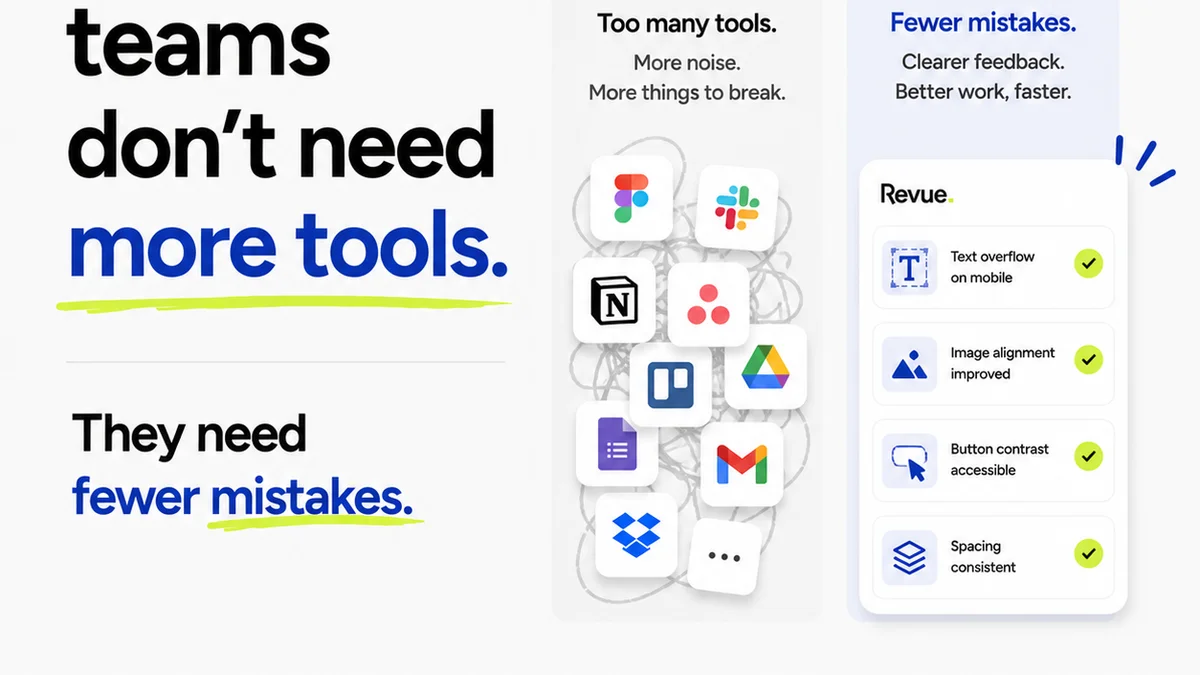
Manual QC is a symptom of a larger problem: a lack of centralized, transparent workflow management. When feedback is scattered across emails, Slack threads, and random documents, the QC process becomes a chaotic scavenger hunt.
Revue isn't a QC tool, but it fundamentally changes the game for quality assurance by providing:
- Centralized Feedback: All client comments and stakeholder input live in one place, linked directly to the creative asset. No more hunting for approvals or deciphering conflicting notes.
- Revision Visibility: Track every iteration, every change, and who approved what. This creates an audit trail that makes final QC checks far more efficient and defensible.
- Streamlined Approvals: Clear decision-making pathways mean fewer surprises and less ambiguity when it's time for final sign-off.
By bringing order to the feedback and revision process, Revue dramatically reduces the likelihood of errors slipping through the cracks. It makes the job of the reviewer – human or otherwise – infinitely easier and more effective.
Final Thought
Is your current quality control process a true safeguard, or is it a hidden drag on your agency's potential? The answer might be more uncomfortable than you think.
Frequently asked questions
What is inspection fatigue in quality control?
Inspection fatigue refers to the decline in a reviewer's ability to accurately detect defects over time due to prolonged or repetitive visual inspection tasks. It's a primary reason why manual QC becomes unreliable, especially with high volumes of creative work.
How does manual QC create scalability issues for agencies?
Manual QC struggles to scale because it requires a linear increase in human resources to handle increased output. This leads to escalating costs, communication overhead, and amplified inconsistency problems, making it difficult for agencies to grow without compromising quality.
What are the hidden costs of human error in creative operations?
The hidden costs include time spent on rework, client dissatisfaction, lost opportunities due to delays, damage to team morale, and potential harm to client relationships. These costs often outweigh the perceived savings of not investing in more robust QA processes.
Can automation replace human reviewers entirely?
Automation excels at objective, rule-based checks (like file formats, alignment, or spelling). It frees up human reviewers to focus on subjective, strategic elements of creative work – like tone, message effectiveness, and brand alignment – where human judgment is indispensable.