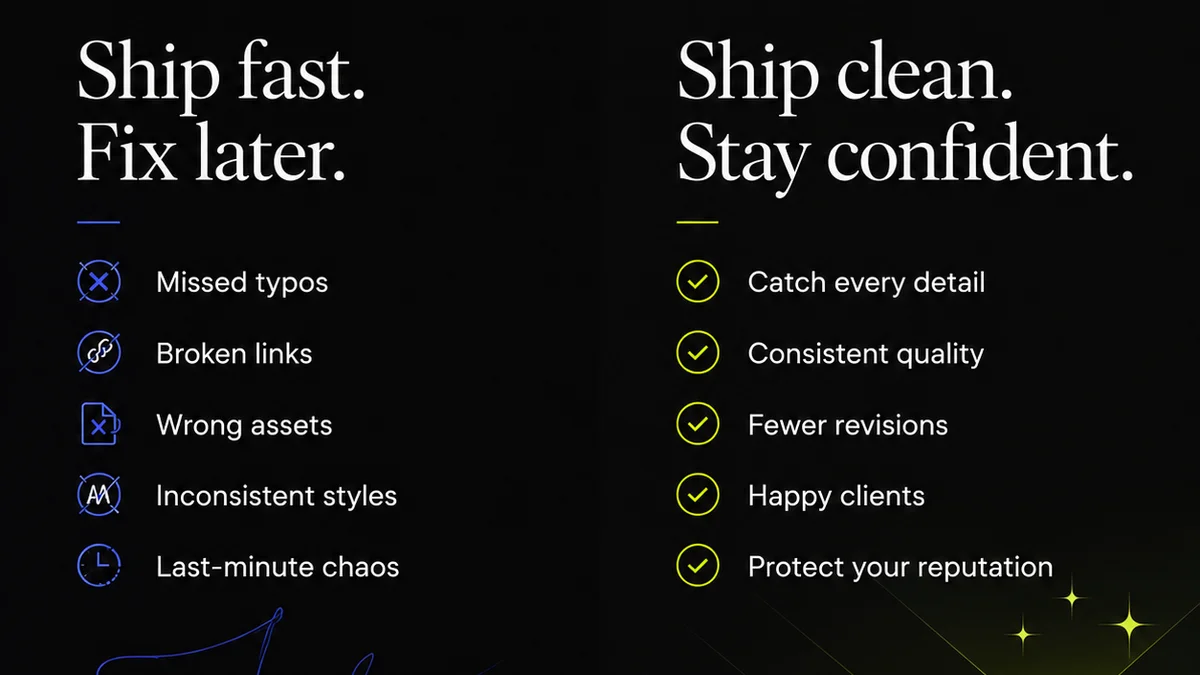
Everyone thinks the marketing approval process is about getting a signature. A final OK before launch. Simple, right?
None of that is wrong. But it’s incomplete.
The hard truth? The real value of an approval process isn't the sign-off itself. It's what happens before that moment.
It’s about clarity, alignment, and making sure everyone is on the same page, *before* the final tick.
1. The Illusion of Speed
We all want to move fast. Especially in marketing. But speed without clarity is just chaos in motion.
A broken approval process cripples your team's ability to deliver on time, every time.
Think about it:
- Endless email chains chasing feedback.
- Version control nightmares where nobody knows which file is final.
- Stakeholders who “didn’t see that change” after launch.
- Creative teams stuck waiting for input, burning billable hours.
This isn't just annoying. It's a direct hit to your bottom line and client relationships.
2. Who Needs to Approve What, and When?
This isn't a one-size-fits-all situation. The
Frequently asked questions
What is a marketing approval process?
A marketing approval process is a structured workflow designed to gather feedback, manage revisions, and obtain final sign-off on marketing assets or campaigns from relevant stakeholders before they are launched or published.
Why is a clear approval process important?
A clear process prevents confusion, reduces revision cycles, ensures brand consistency, minimizes errors, speeds up time-to-market, and maintains positive stakeholder relationships by setting clear expectations.
How can I improve my marketing approval process?
Improve your process by defining clear roles and responsibilities, establishing specific feedback deadlines, using centralized platforms for all communication and asset versions, and creating a tiered approval structure based on the asset's impact.
What are the common bottlenecks in marketing approvals?
Common bottlenecks include unclear feedback, delayed responses from stakeholders, lack of a defined review hierarchy, multiple decision-makers with conflicting opinions, and the use of fragmented communication channels like scattered emails and chats.