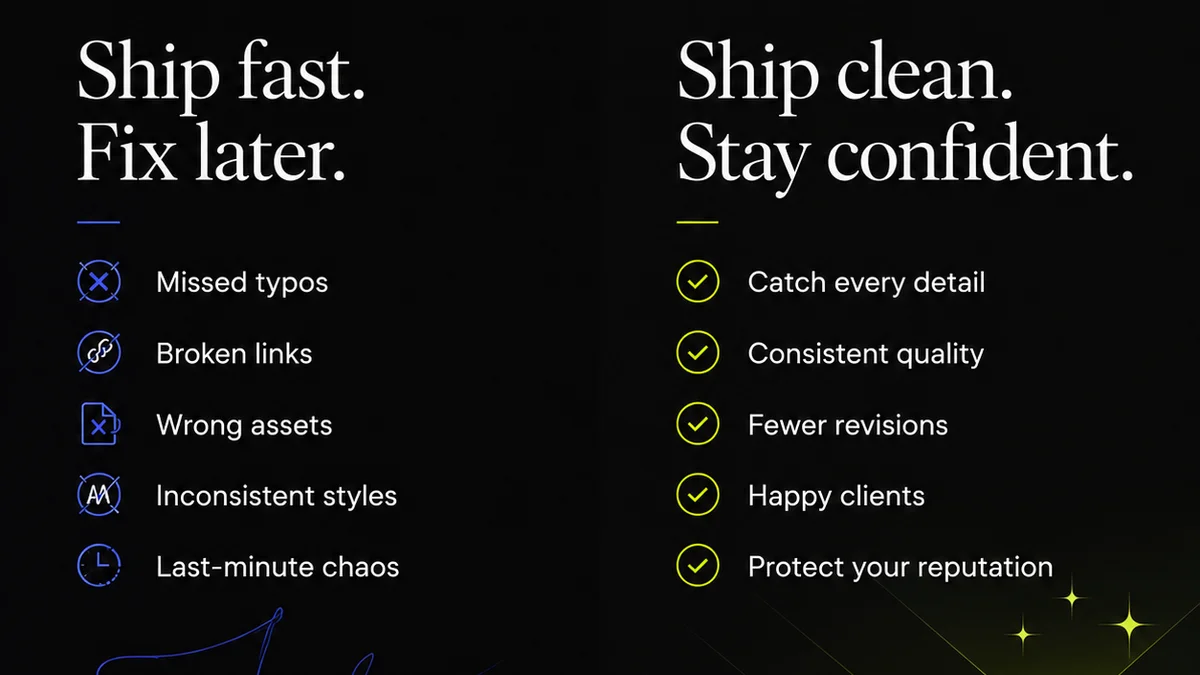
Everyone thinks a marketing approval workflow is just about getting a final sign-off. A quick look, a nod, and you’re good to go. That’s the assumption, anyway.
None of that is wrong. But it’s incomplete.
The hard truth? A sloppy approval process doesn’t just delay launches; it erodes quality, wastes resources, and frustrates everyone involved. It’s a bottleneck disguised as a formality.
1. The Illusion of Speed
We chase speed in marketing. Faster campaigns, quicker turnarounds, immediate feedback. This pressure often leads to a superficial approach to approvals.
The thinking: “Just get it approved and move on.”
This mindset treats approval as a gate, not a quality assurance step. It’s a hurdle to clear, not a chance to refine.
The Real Cost of Rushing
- Missed errors: Typos, broken links, incorrect data slip through.
- Brand inconsistency: Messaging or visuals don't align with guidelines.
- Compliance risks: Legal or regulatory oversights.
- Wasted rework: Discovering issues *after* launch is far more expensive.
Speed without accuracy is just faster failure.
2. Defining the *Real* Approval Process
A robust marketing approval workflow isn't a single event. It's a series of checks and balances woven into the creative and strategic process.
It starts before the first draft and ends long after the final approval.
Stages of Effective Approval
- Strategic Alignment Check: Does this piece meet the brief and overall marketing goals? This happens early, ideally before significant creative work.
- Creative Review: Does the execution align with brand guidelines, tone of voice, and target audience? This involves creative leads or brand guardians.
- Content Accuracy Review: Are all facts, figures, and claims correct? This often requires subject matter experts or data analysts.
- Legal & Compliance Review: Does it meet all necessary regulatory and legal standards? Crucial for regulated industries.
- Technical Review: For digital assets, are there any technical constraints or best practices missed? (e.g., accessibility, SEO tags, file formats).
- Final Stakeholder Approval: The final sign-off from the primary decision-maker, confirming all previous checks are satisfactory.
Each stage has a purpose. Skipping or merging them invites risk.
3. Who Owns What? Clarity is Key
Ambiguity is the enemy of efficient approvals. When no one is clearly responsible, things get missed, delayed, or fall into a black hole.
Clear ownership prevents dropped balls.
Common Roles and Responsibilities
- Creative Director: Oversees brand consistency, creative quality, and strategic alignment of creative output.
- Marketing Manager: Ensures the campaign meets objectives, budget, and timeline. Owns the overall campaign strategy.
- Content Lead/Editor: Verifies accuracy, tone, and grammar of written content.
- Legal Counsel: Approves compliance and risk mitigation for legal/regulatory aspects.
- Product Marketing Manager: Validates product-specific claims and features.
- Client/Senior Stakeholder: Provides final go-ahead, ensuring the deliverable meets their business needs.
Every piece of marketing collateral needs a clear RACI (Responsible, Accountable, Consulted, Informed) matrix, even if it’s just a simple internal document.
4. The Pitfalls of Manual Workflows
Many teams still manage approvals via email chains, shared folders, or endless Slack messages. It feels manageable when you’re small.
It’s a recipe for disaster as you scale.
Symptoms of a Broken System
- Endless email threads with conflicting feedback.
- Difficulty tracking which version is the latest.
- Uncertainty about who has seen what or who needs to approve next.
- Feedback buried in comments, missed by reviewers.
- No audit trail for decisions or changes.
- Bottlenecks form around specific individuals.
- Time wasted chasing down approvals.
This isn't just inefficient; it’s demoralizing.
5. Building a Better Approval Process
A good workflow is more than just a checklist. It’s a system designed for clarity, accountability, and quality.
It needs structure and the right tools.
Key Elements of a Strong Workflow
- Defined Stages: Clearly outline each step and who is involved.
- Clear Criteria: What constitutes approval at each stage?
- Version Control: Always know which is the master version.
- Centralized Feedback: All comments and revisions in one place.
- Automated Notifications: Reminders for reviewers and status updates.
- Audit Trail: A record of all feedback, decisions, and approvals.
- Role-Based Access: Ensure the right people see the right things.
This requires a shift from reactive sign-offs to proactive process management.
Where Revue Fits In
Managing complex marketing approval workflows demands visibility and control. Scattered feedback across emails, documents, and chat apps leads to chaos and missed details.
Revue offers a centralized platform designed to streamline this exact challenge. It brings all your creative assets and client feedback into one accessible space.
Imagine uploading a draft campaign visual or a piece of copy. Instead of emailing it around, you invite your reviewers directly into Revue. They can leave contextual comments, mark up specific areas, and provide clear feedback tied directly to the asset.
This eliminates the “which version is this?” confusion. Every iteration is tracked, and the approval status is always clear. You can see who has reviewed, who needs to approve, and where the bottlenecks are forming.
For agencies and in-house teams juggling multiple projects and stakeholders, this level of clarity is non-negotiable. It transforms the approval process from a source of friction into a predictable, quality-driving mechanism, ensuring your marketing efforts are polished and effective before they go live.
Final Thought
Are you treating marketing approvals as a necessary evil, or as a critical component of your quality assurance and brand integrity strategy?
The difference isn't just in efficiency; it's in the final impact of your work.
Frequently asked questions
What is a marketing approval workflow?
A marketing approval workflow is a structured process for reviewing and approving marketing materials before they are published or distributed. It involves multiple stakeholders and stages to ensure quality, accuracy, brand consistency, and compliance.
Why is a clear approval process important for marketing?
A clear process prevents errors, reduces rework, ensures brand consistency, mitigates legal risks, and speeds up time-to-market. Without it, marketing efforts can suffer from quality issues, delays, and internal friction.
Who should be involved in a marketing approval workflow?
Involvement varies by project, but typically includes creative leads, marketing managers, content editors, legal counsel, product specialists, and final decision-makers. Clear roles and responsibilities are essential.
How can I improve my marketing approval process?
Improve by defining clear stages, assigning specific roles, centralizing feedback, using version control, setting clear criteria for approval, and leveraging technology for notifications and audit trails.
What are the common pitfalls of marketing approvals?
Common pitfalls include unclear ownership, feedback scattered across multiple channels (email, chat), difficulty tracking versions, delayed reviews leading to bottlenecks, and a lack of a clear audit trail for decisions.